



Antique Sewing Pouch Table
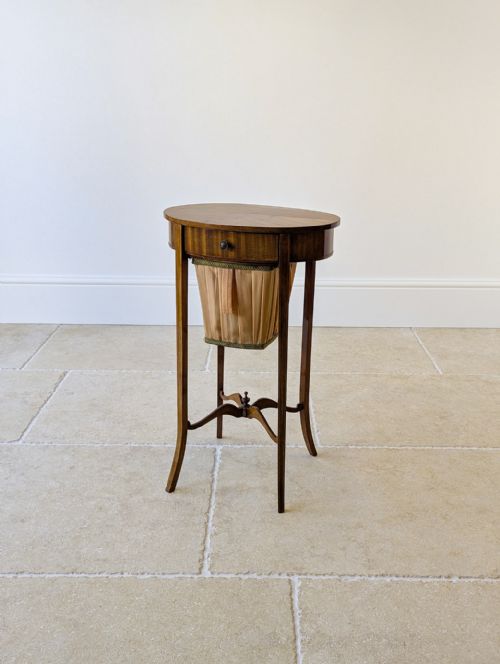
An antique sewing pouch table is a neat, small-scale piece designed for domestic needlework, offering hidden storage beneath a hanging fabric bag.
Antique Sewing Pouch Table
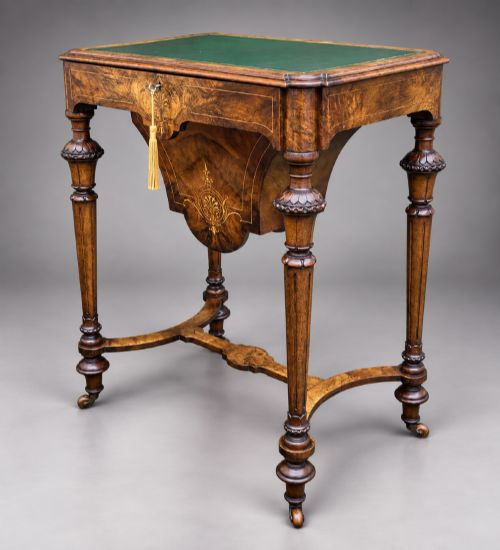
An antique sewing pouch table is primarily a small occasional table intended for the domestic needlework of the nineteenth or eighteenth centuries. These pieces appear frequently under various names in the records, including work tables, needlework tables, and side tables, reflecting their adaptable domestic function.
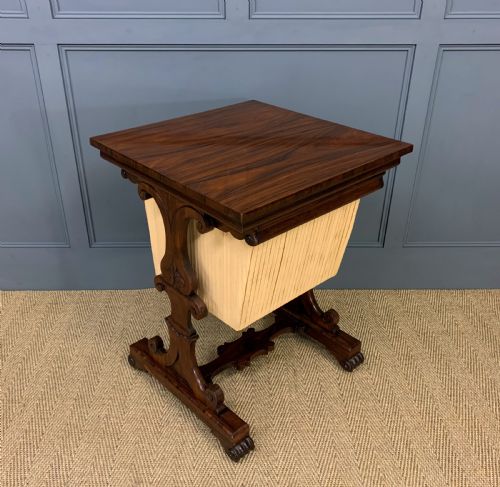
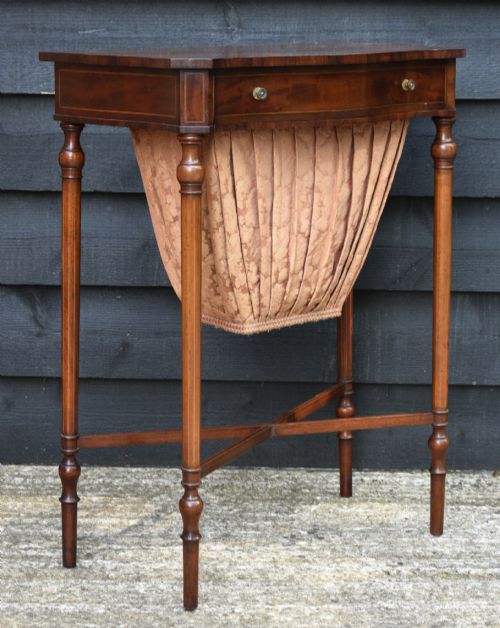
The physical form relies on a suspended fabric bag or pouch attached beneath a solid wooden top, designed to contain yarn, silk, cotton, and unfinished sewing projects. Many examples include fitted interiors with small compartments and tiny lids beneath the main surface to organise tools.
The historical span stretches from the Georgian and Sheraton periods through the Regency, William IV, and Victorian eras, up to Edwardian iterations. Regency and nineteenth-century rosewood and mahogany pieces dominate the available selection, often featuring pedestal bases or slender legs.
Woods, Inlays, and Fabric Materials
Cabinetmakers utilised dense timbers such as mahogany, rosewood, and burr walnut for the primary structure, often selecting satinwood and boxwood for contrasting stringing and marquetry. Drop leaves, octagonal tops, and serpentine edges required precise joinery to maintain stability on slender supports.
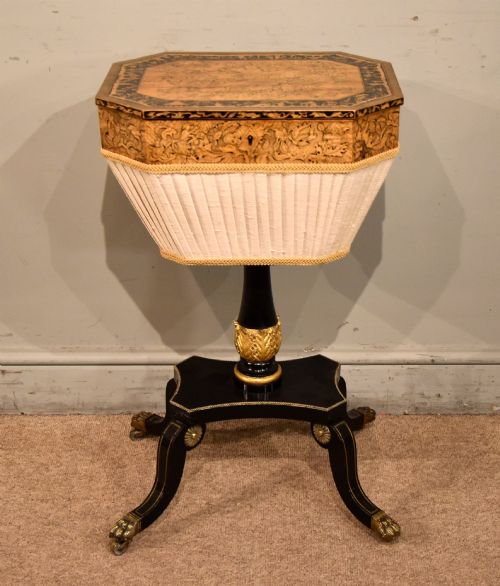
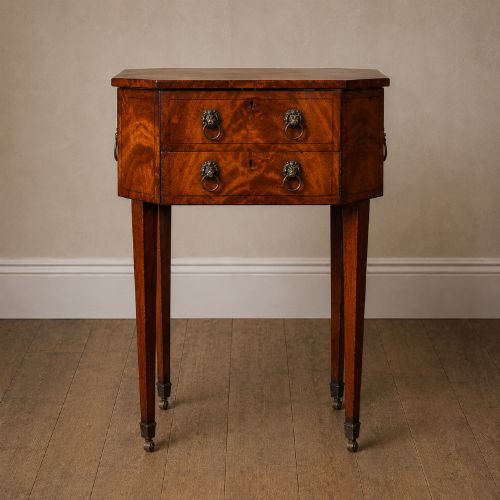
Decoration relied on fine brass inlay, penwork, and carved details like lion mask handles or lyre-ended supports. The hanging pouch itself employed woven textiles such as silk and cotton, gathered beneath the wooden frame to contrast with the polished timber above.
The listings span from 18th-century Sheraton designs to Edwardian interpretations, demonstrating a preference for mahogany and rosewood.
Distinctions in Execution and Timber Selection
Quality rests upon the choice of timber and the crispness of the cabinetmaker's joinery, particularly where contrasting stringing or marquetry meets the polished surface. Figured grains like burr walnut or heavily grained rosewood elevate the visual impact of the piece.
The internal fittings reveal the standard of construction, distinguishing simple utility boxes from elaborately compartmented trays designed for wealthy households. Additionally, the integration of brass mounts, penwork detail, or carved elements such as lyre ends indicates a higher tier of design.
The Antique Sewing Pouch Table Glossary
- Work table
- A multi-purpose piece of furniture designed for sewing and needlework, incorporating internal compartments and a hanging fabric pouch. It functions equally well today as a compact side table.
- Penwork
- A decorative technique utilising black ink on light wood to simulate more expensive marquetry or engraving. This delicate surface ornament appears frequently on Regency examples.
- Marquetry
- The art of applying pieces of veneer to a structural surface to form decorative patterns or pictures. Cabinetmakers utilised contrasting woods like satinwood and boxwood for this detailed work.
- Drop leaf
- A hinged flap on the side of a table that folds down to save space or lifts up to extend the surface area. Many eighteenth and nineteenth-century work tables employ this feature.
- Fitted interior
- A compartmented tray or arrangement beneath the main lid designed to hold spools, thimbles, and needles. These small wells often retain their original miniature covers.
Antique Sewing Pouch Table: Frequently Asked Questions
How were these tables used originally?
They functioned as portable workstations for domestic crafts like sewing, lacemaking, and embroidery. The hanging bag kept textiles out of sight while the wooden top provided a flat surface for working.
Inside the main compartment, small lidded boxes and partitions kept pins, threads, and scissors neatly separated. Some examples included writing slides or mirrors for broader personal use.
How do I identify a Regency sewing table?
Regency pieces often display classical architectural influences, such as pillar-and-base pedestals, brass inlay, and penwork decoration. Woods like rosewood and mahogany are characteristic of this period.
The silhouettes tend to be clean and geometric, sometimes incorporating lyre-shaped supports or brass lion mask handles. Proportions remain small and elegant to suit refined domestic interiors.
Can I use an antique work table today?
These tables adapt easily to modern rooms as bedside stands, lamp tables, or hallway side pieces. Their compact footprints suit smaller spaces where extra surface area is required.
The interior compartments prove useful for storing small modern items, while the lower pouch can hold magazines or current knitting projects.