

Antique Settee Couch
An antique settee couch brings character and deep seating comfort to a room, ranging from buttoned Chesterfields to carved Victorian frames.
Antique Settee Couch
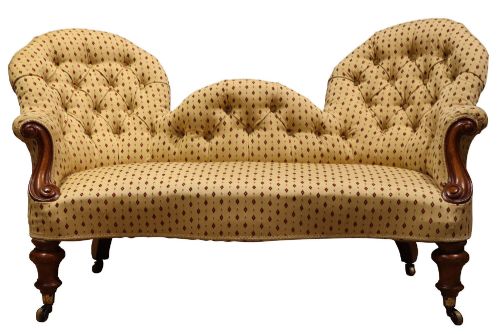
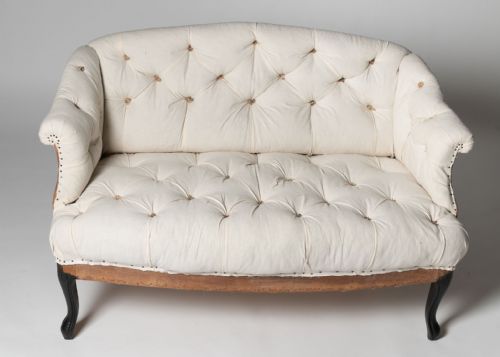
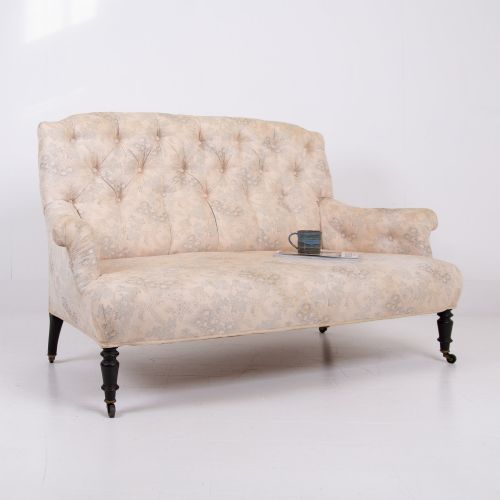
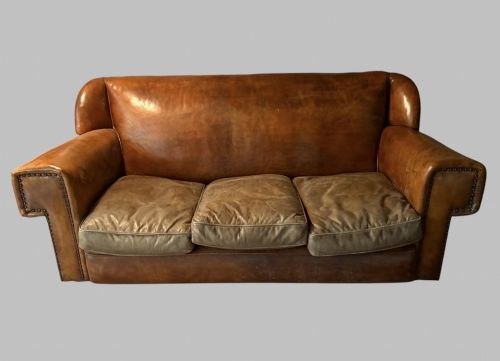
An antique settee couch covers a diverse group of large seating furniture spanning the nineteenth and early twentieth centuries. Buyers seeking an antique settee couch will encounter Victorian Chesterbacks, Edwardian models, and country house sofas upholstered in various textiles and leathers.
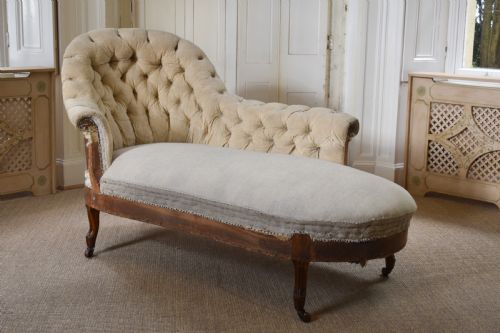
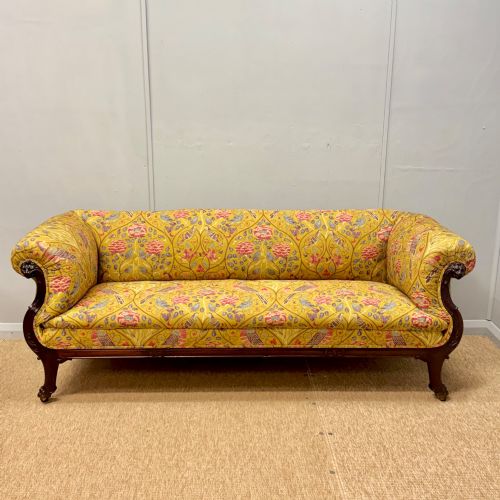
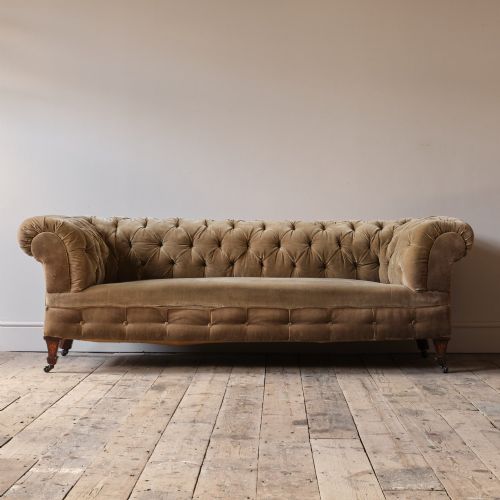
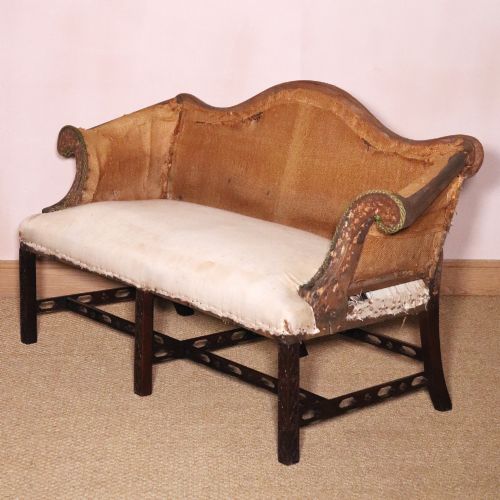
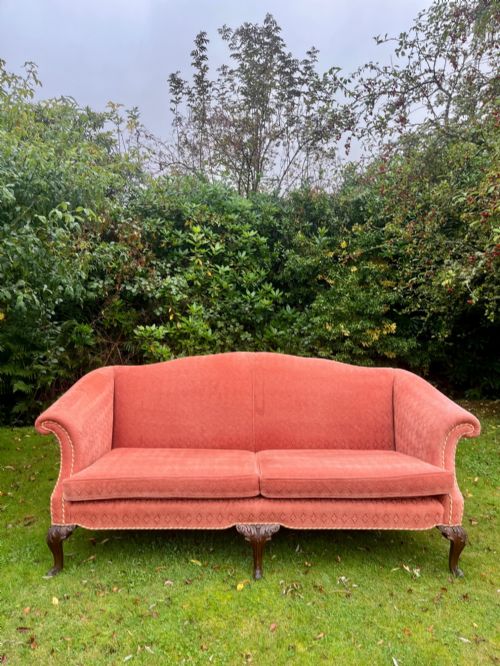
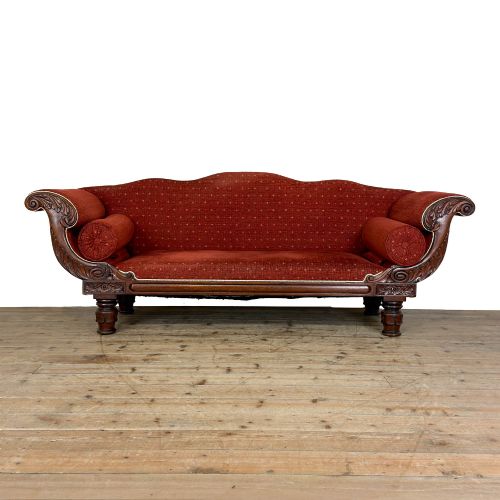
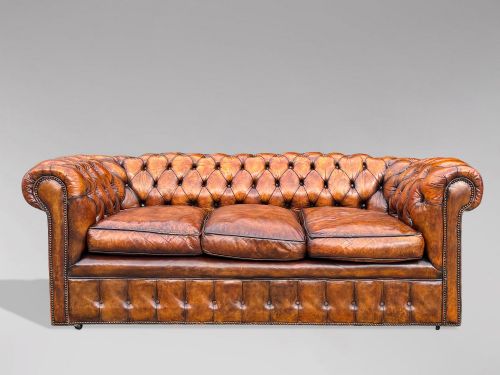
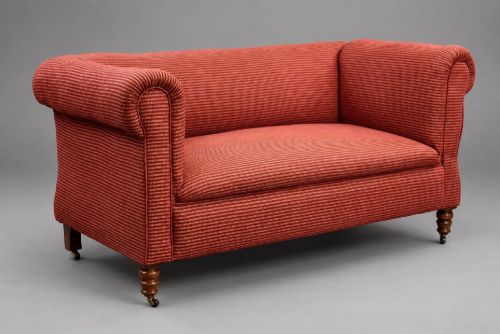
Victorian examples dominate the selection, often featuring carved mahogany or walnut frames alongside deep buttoning. Pieces range from two-seater drop-arm designs and camel backs to larger three-seater Chesterfields and chaise longues.
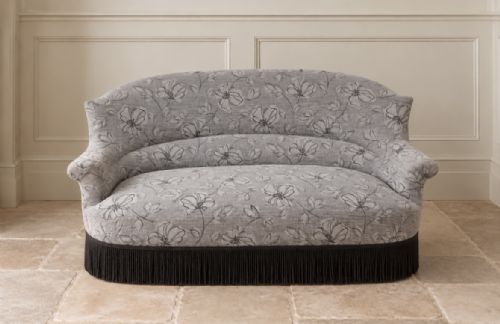
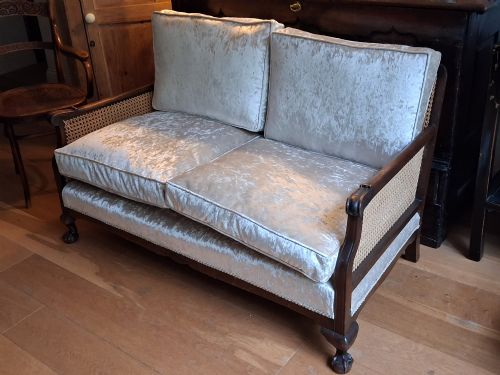
Edwardian and later twentieth-century iterations appear alongside French styles such as the Napoleon III buttoned seat or the cane-worked bergère. These seating forms offer varied proportions suitable for formal parlours and relaxed living spaces alike.
Materials and construction
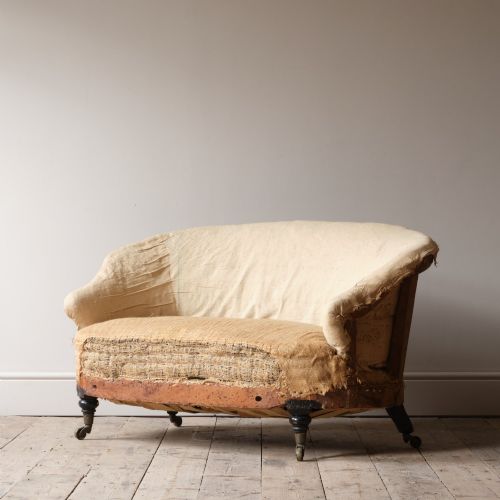
Frames rely predominantly on dense hardwoods such as mahogany, walnut, and oak, often shaped with hand-carved details or turned supports. Timber structures provide the robust skeleton necessary to support heavy internal spring systems and deep upholstery.
Upholstery techniques involve traditional sprung bases, horsehair stuffing, and calico linings, layered beneath top covers of velvet, brocade, leather, or printed fabric. Caning also appears on specific French and Edwardian frames, requiring precise hand-weaving skill.
Antique Settee Couch Retail Price Guide 2026
Typical asking prices for settee couch among the pieces listed under this phrase on Sellingantiques today, from the lower quarter to the upper quarter. They describe what is for sale here now, not the wider market.
Drop-end sofas allowed nineteenth-century gentlemen to lower a single arm and nap without ruining their cravats.
Craftsmanship and distinction
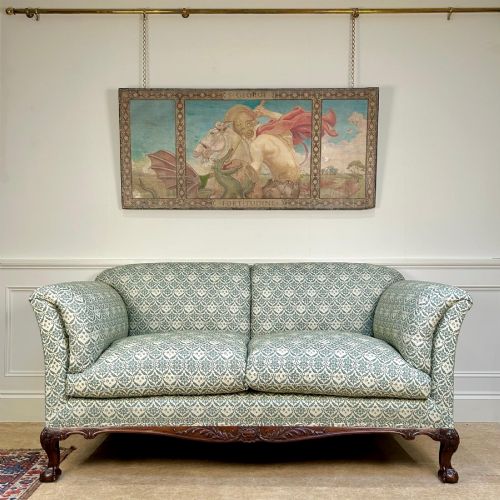
Quality rests in the integrity of the underlying timber frame and the precision of the cabinetwork, from crisp mahogany carvings to substantial ball and claw feet. Superior examples retain their original structural rigidity and proportions without excessive timber fatigue.
The standard of upholstery work dictates longevity and comfort, distinguishing standard production items from pieces produced by renowned workshops. Finer creations exhibit careful attention to spring tying, durable stuffing materials, and sympathetic re-upholstery that respects the historical form.
Miles and Edwards·Howard and Sons·Hampton and Sons·C Hindley and Sons·Thonet
The Antique Settee Couch Glossary
- Chesterfield
- A large upholstered sofa characterised by equal height arms and back, traditionally featuring deep button tufting. This form provides a formal yet comfortable seat.
- Drop-end
- A sofa design featuring a hinged arm that can be lowered to form a daybed or extended lounge surface. This mechanism adds versatility to nineteenth-century seating.
- Bergere
- An enclosed upholstered armchair or sofa featuring exposed wooden frames and woven cane panels along the sides and back. It originates from French furniture design traditions.
- Chaise longue
- An elongated upholstered chair designed for reclining, combining the backrest of a sofa with the seat length of a daybed. These pieces often feature a single scrolled arm.
Antique Settee Couch: Frequently Asked Questions
What is an antique settee couch?
An antique settee couch is a traditional multi-person seat produced during the nineteenth or early twentieth century. These pieces encompass varied regional and stylistic designs, from buttoned leather Chesterfields to carved mahogany frames.
They served as principal seating in formal drawing rooms, libraries, and country houses. Their construction reflects the prevailing craftsmanship and aesthetic standards of their specific decade.
How do I date an antique settee couch?
Dating relies on examining the timber species, joinery methods, upholstery foundations, and stylistic markers. Victorian pieces often display heavier carved mahogany or walnut, while Edwardian versions lean towards lighter woods and simplified profiles.
Maker stamps, castors, and underframe construction further clarify the manufacturing period. Comparing decorative motifs against established design timelines helps confirm the era of origin.
Are these couches comfortable for daily use?
Many antique settees offer deep seating and robust sprung bases designed for relaxation. Their comfort depends heavily on the internal webbing, springs, and traditional stuffing materials used during construction or subsequent restoration.
Pieces with sprung seats and supportive backrests accommodate regular daily sitting. Maintenance of the internal padding ensures they remain practical functional furniture.
How should I care for leather upholstery?
Leather-upholstered Chesterfields require regular dusting with a soft, dry cloth to prevent dirt accumulation. Conditioning treatments help maintain the suppleness of nineteenth-century leather and prevent cracking.
Direct sunlight and heat sources should be avoided to protect the hide from drying out. Gentle cleaning preserves the natural patina developed over decades of use.