
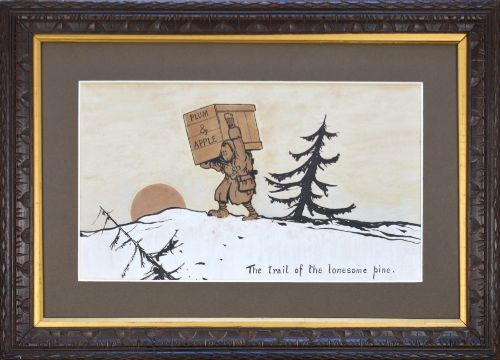
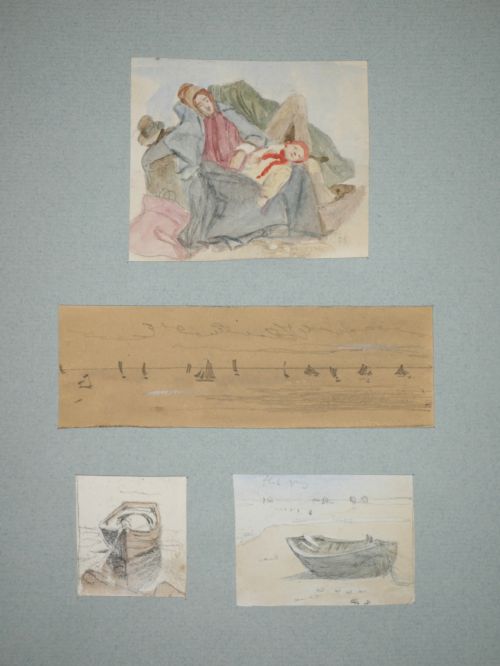
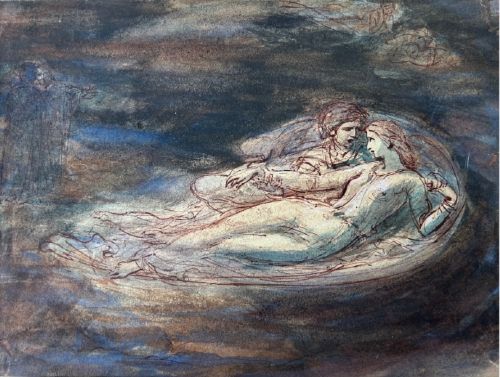
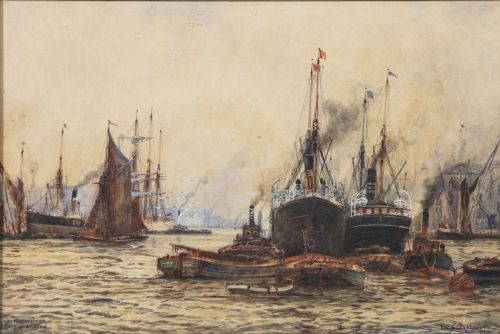


Antique Sepia Watercolour
An antique sepia watercolour offers a direct window into historical domestic and marine life, prized for tonal monochrome depth.
Antique Sepia Watercolour
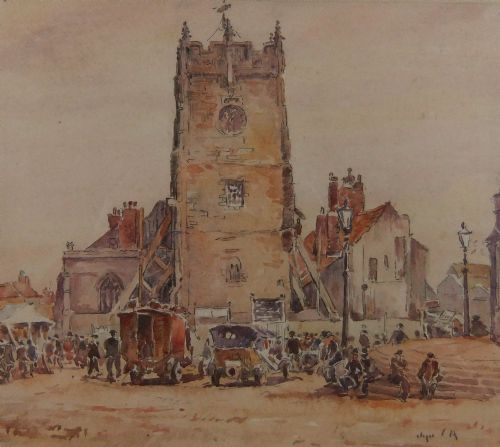
When you search for an antique sepia watercolour, you encounter original works on paper executed predominantly in monochrome brown pigments, ink washes, and pencil.
The pieces appearing on this page span from the Georgian and 18th century periods through the Victorian, Edwardian, and early 20th century eras.
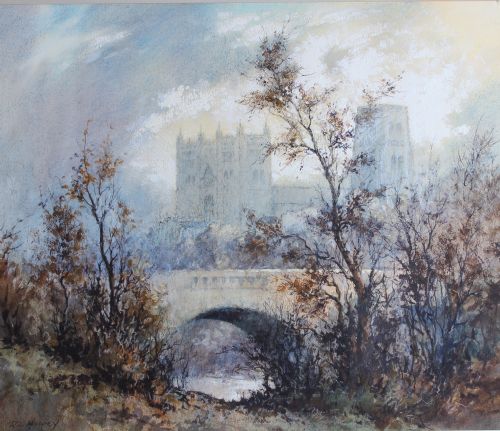
Subjects range from maritime scenes and coastal trawling luggers to architectural studies, military views, and topographical landscapes.
Materials and Techniques
Artists executed these works on paper using watercolour pigment, sepia ink, and pencil, frequently employing wash techniques to build tonal depth without full polychrome colour.
Framed behind glass in period wood frames, these works rely on precise ink line work combined with fluid watercolour paint to define shadows and perspective.
Several artists captured bustling Victorian ports with such precision you can almost smell the salt and damp wharf timber.
Assessing Quality
Quality rests upon the sensitivity of the brushwork, the stability of the paper support, and the clarity of the monochrome tonal gradations.
Works by documented artists with established exhibition histories demonstrate superior compositional command compared to anonymous sketches.
Bruce Bairnsfather·James Smetham·Frank William Scarbrough·John Smith Atherton·Robert Leslie Howey·Richard Harry Carter·William Frederick Settle·Charles James Lauder·J F Marie Huet Villiers·Francis Wheatley·J W Hogley·John Augustus Atkinson·George Arthur Fripp·Frederick William Booty·Leslie Rackham·William Wyld·Henry Barlow Carter·Thomas Rowlandson·Hercules Brabazon Brabazon·Samuel Palmer·Pio Panfili·W Tatton Winter·Amos Green·Snaffles·Lieutenant Harold E Frecker
The Antique Sepia Watercolour Glossary
- Sepia
- A brown pigment originally derived from the ink sac of the cuttlefish. It forms the primary monochrome tone in these watercolours.
- Wash
- A technique of diluting watercolour pigment or ink with water to apply a semi-transparent layer across paper. This method creates uniform skies and shadows.
- Ink and wash
- A hybrid drawing method combining precise pen and ink lines with fluid watercolour washes. Artists utilised this for architectural and topographical definition.
- Work on paper
- A broad category encompassing any artwork executed on a paper support, including watercolours, drawings, and sketches.
Antique Sepia Watercolour: Frequently Asked Questions
What is a sepia watercolour?
A sepia watercolour is a monochrome painting created using brown pigments or ink derived from cuttlefish, often combined with pencil on paper.
These works rely entirely on tone and shade rather than bright colours to define form, light, and atmosphere.
How do I date an antique watercolour?
Dating relies on paper characteristics, artist signatures, framing materials, and stylistic markers associated with periods like the Georgian or Victorian eras.
Inscriptional evidence on the reverse or contemporary documentation often confirms the exact year of execution.
How should I frame and display them?
Watercolours on paper require framing behind glass with acid-free mount boards to prevent direct contact with the glazing.
Keep them away from direct sunlight to protect the monochrome pigments from fading over time.
Are these works original?
The listings consist entirely of original hand-painted works rather than modern mass-produced reproductions or prints.
Close inspection under magnification reveals hand-applied brushstrokes and the direct impression of pen on paper.