


Original 18th Century Drawing
An original 18th century drawing brings the genuine hand of the Georgian period directly to your wall.
Original 18th Century Drawing
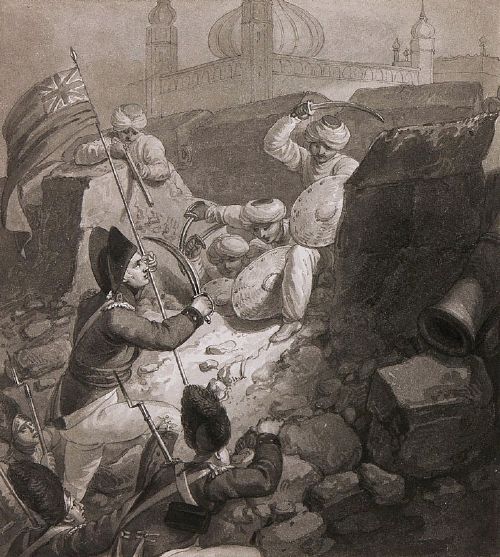
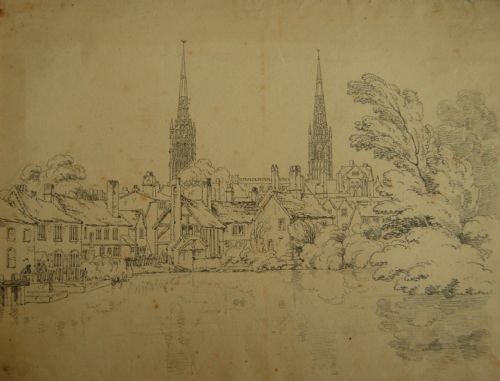
An original 18th century drawing represents works on paper created during the Georgian era, capturing landscapes, portraits, and narrative scenes through the direct touch of the artist's hand. These pieces take the form of framed drawings, sketches, and paintings on paper, recording the immediate vision of the period without modern reproduction.
The versions most commonly met on this page span the eighteenth century and the year 1800, frequently rendered in pen and ink, watercolour wash, or graphite. Subjects range from the English Lake District and Yorkshire views to equestrian master studies and portraits of notable figures.
Works of this classification hold value for their historical immediacy and the surviving evidence of period technique. Collectors encounter both attributed sheets by known artists and anonymous studies that reflect the wider artistic output of the Georgian age.
How they were made
Makers of the period worked primarily on paper supports using media such as graphite, pen and ink, and watercolour wash to build their compositions. These materials were applied directly to create tonal depth and fine linear detail, often beginning with an initial pencil framework before adding ink or wash.
The physical handling involves careful layering of translucent watercolours and precise pen work, utilising wood and glass for framing to protect the delicate works on paper. Each medium interacts with the paper differently, preserving the spontaneous marks of the sketch.
The styles recorded on this page include Georgian, Neoclassical, and 18th Century approaches to works on paper.
What varies in quality
Quality in these works rests upon the sureness of the line, the preservation of the paper, and the clarity of the composition. Stronger pieces display confident draftsmanship and well-maintained surfaces that retain the vitality of the original execution.
The presence of a secure attribution to a recorded hand or a detailed historical subject elevates a piece above anonymous domestic sketches. Condition also plays a role, as sheets that maintain their original contrast and lack heavy fading demonstrate superior preservation.
William Marshall Craig·Edward Dayes·Thomas Rowlandson·John Hoppner·Amos Green·Johan Noah Bemmel·Nathaniel Dance Holland·Henry Edridge
The Original 18th Century Drawing Glossary
- Wash
- A thin, transparent layer of diluted watercolour or ink applied to paper to create tone and shadow. This technique allows artists to establish atmospheric depth quickly behind linear work.
- Graphite
- A form of carbon used in pencils for drawing and sketching lines. It serves as the primary medium for foundational marks and detailed pencil drawings of the period.
- Neoclassical
- A style reflecting the revival of classical antiquity in art and architecture during the eighteenth century. It influences the composition and formal restraint seen in period works.
- Provenance
- The documented history of ownership of an artwork from its creation to the present day. This record supports the attribution and authenticity of older pieces.
Original 18th Century Drawing: Frequently Asked Questions
What is an original 18th century drawing?
An original 18th century drawing is a unique work on paper created during the Georgian period using media such as ink, wash, and graphite.
These pieces capture landscapes, portraits, and narrative scenes directly from the hand of the artist rather than through mechanical reproduction.
How should I care for works on paper?
Works on paper require protection from direct sunlight and high humidity to prevent fading and paper degradation.
Framing with glass and acid-free materials helps preserve the delicate ink and watercolour pigments over time.
How do I identify a Georgian drawing?
Identification relies on examining the paper stock, the framing materials, and the characteristic handling of pen, ink, or wash typical of the eighteenth century.
Subjects often reflect contemporary landscapes, portraiture, or historical events of the Georgian era.
Are these drawings signed by the artist?
Some drawings feature artist signatures or contemporary inscriptions, while others are attributed based on stylistic evidence, old labels, or provenance.
Both signed works and attributed sheets from the period appear within these listings.