





Countryside Landscape Drawing
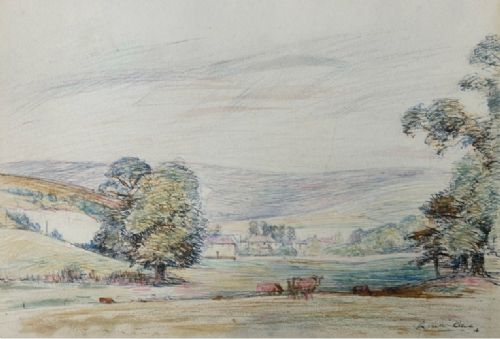
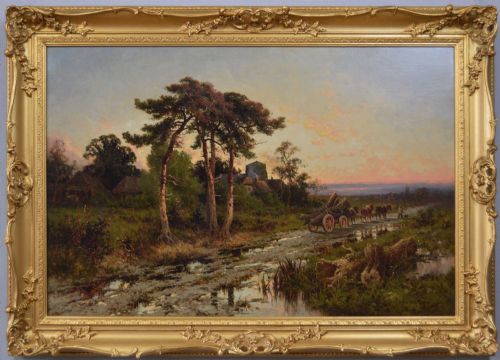
These countryside landscape drawing examples capture rural scenes on paper and panel, offering direct connection to historical pastoral views.
Countryside Landscape Drawing
A countryside landscape drawing centres on rural scenery, pastoral views, and natural settings rendered by hand. Buyers seeking this phrase encounter works executed in media spanning watercolour, ink, pencil, gouache, and pastel.
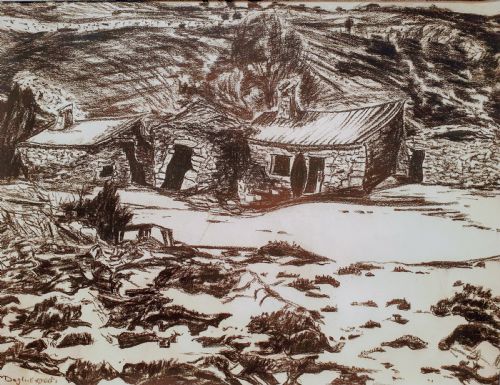
The selections on this page range from George III depictions on panel to early twentieth-century watercolours and mid-century French charcoal sketches. Pastoral vistas, village scenes, and agricultural settings dominate the subjects represented.
Examples vary from precise architectural and landscape studies to atmospheric evening glows and snowy winter tracks. Each piece preserves a distinct record of the countryside as observed by artists across several centuries.
How they were made
Artists utilised paper, wood panel, and canvas as the primary supports for these rural works. Pigments, graphite, ink, and watercolour were applied using brushes and pens to build up the composition.
Techniques range from delicate pen and ink line work with wash to vigorous charcoal strokes and layered gouache. Framing under glass frequently protects the fragile paper supports from environmental damage.
Represented periods include the eighteenth, nineteenth, and twentieth centuries, with British and French origins.
What varies in quality
The distinction between standard works and superior examples rests upon the sureness of the draftsmanship and the sensitivity of atmospheric rendering. A master hand conveys light, distance, and texture with economy and precision.
Condition of the paper or panel and the stability of the original pigments also dictate the standing of a piece. Works retaining their initial tonal depth and colour balance command greater regard among collectors.
Russell Sidney Reeves·Stanley Orchart·Richard Leech·Amos Green·John Richard Worsdale·Henry H Parker·Fred Lawson·Reginald Mills·John Joseph Cotman·Dr Thomas Monro
The Countryside Landscape Drawing Glossary
- Watercolour
- A painting method where fine pigment is suspended in a water-based, translucent solution applied to paper.
- Gouache
- An opaque water-based medium that includes white pigment to create solid, heavier areas of colour.
- Panel
- A flat wooden board utilised as a rigid support for drawings and paintings.
- Wash
- A thin, semi-transparent layer of diluted ink or watercolour brushed across paper to build tone.
- Pastel
- A dry drawing medium consisting of powdered pigment and a binder, shaped into sticks.
Countryside Landscape Drawing: Frequently Asked Questions
What periods do these drawings cover?
The listings span from the eighteenth century through the Victorian era into the mid-twentieth century.
Works range from George III period pieces to nineteen-fifties and sixties continental sketches.
How should I frame a drawing on paper?
Paper works require conservation mounting with acid-free materials to prevent discolouration over time.
Glazing with UV-filtering glass protects delicate watercolours and pastels from fading in light.
Are these works signed by the artists?
Several pieces bear signatures, studio inscriptions, or formal attribution documentation from the period.
Other drawings rely on stylistic evidence and recorded provenance to establish the hand of the maker.
What surfaces are used for these landscapes?
Artists utilised various paper sheets, heavy card, and prepared wooden panels for their compositions.
Support materials often reflect the specific medium chosen, such as heavy paper for watercolours or wood for early ink works.