
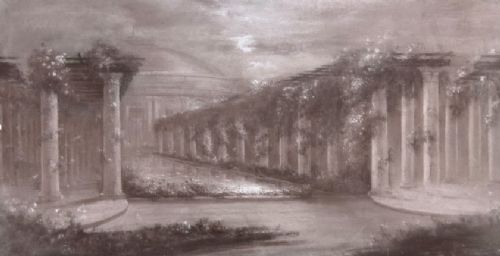

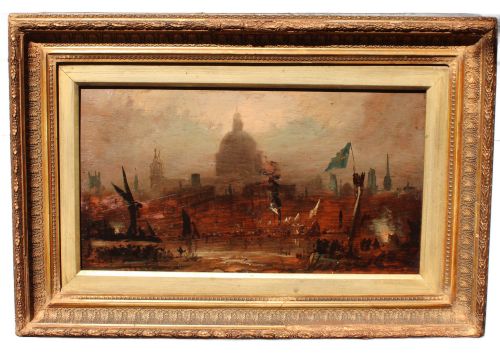
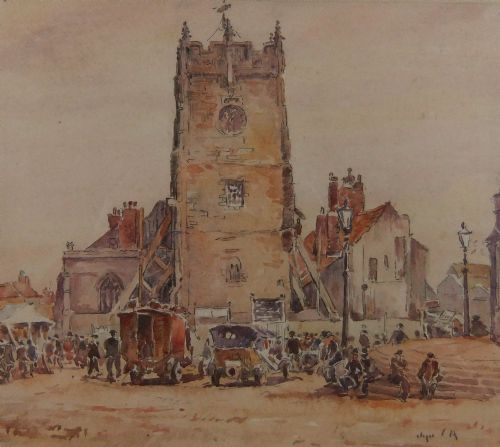
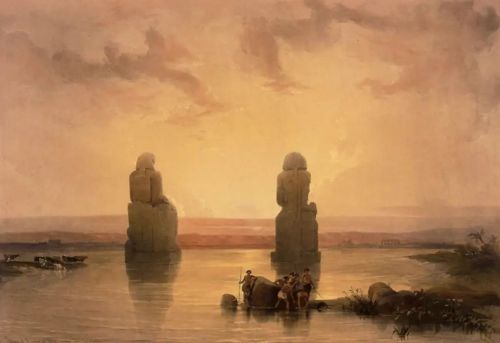
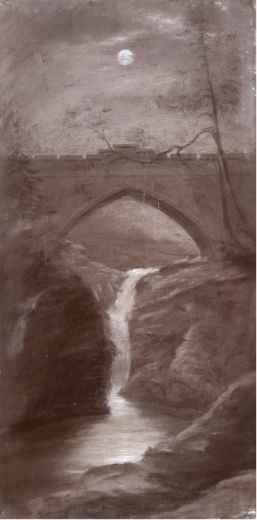

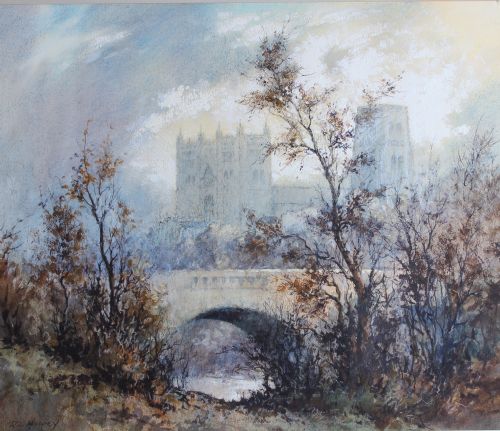


Antique Sepia Landscape
These antique sepia landscape works capture monochromatic views on paper through tonal ink, wash, and watercolour pigment.
Antique Sepia Landscape
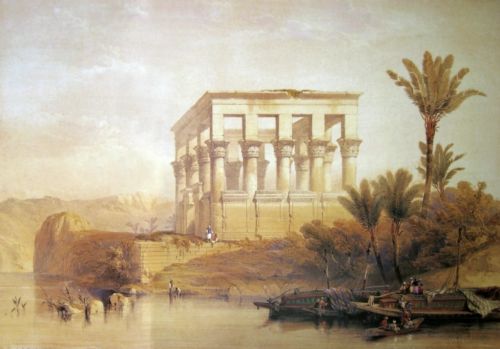
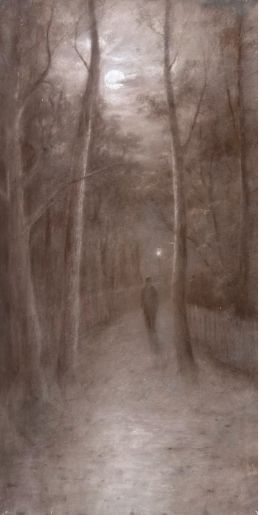
An antique sepia landscape presents topographical and architectural scenes rendered primarily in brown monochromatic tones. Collectors seek these pieces for their atmospheric rendering of light and shadow, particularly in architectural and rural views.
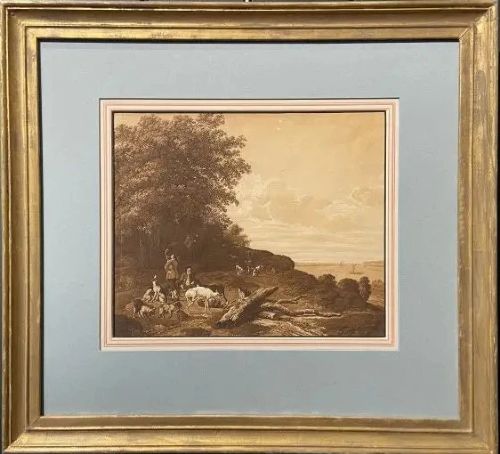
Paper supports dominate the category, often framed behind glass with wood or gilt surrounds. The tonal palette relies on the natural warmth of aged pigments rather than full polychrome hues.
Materials and Technique
Artists constructed these compositions using watercolour pigment, ink, and pencil on paper sheets. The sepia effect was achieved through iron gall or sepia inks combined with diluted watercolour washes to build depth.
Framing typically involves wood mouldings, occasionally accented with gold leaf or gilt. Protection from light and moisture remains essential for works executed on nineteenth-century paper substrates.
Listings span from the Georgian era through the 1940s, utilising paper, watercolour, ink, wood, and gold leaf.
Distinctions in Quality
Quality rests upon the sensitivity of the tonal gradation and the precision of the draughtsmanship beneath the wash. Works that retain deep contrast without muddying the paper ground command greater attention.
The distinction between a casual topographical record and a finished artistic study lies in the confidence of the brushwork and the management of negative space within the landscape.
David Roberts·Anton Ignaz Melling·Robert Leslie Howey·Charles James Lauder·George Arthur Fripp·Frederick William Booty·Leslie Rackham·William Wyld·Henry Barlow Carter·Claude Lorrain·John Boydell·Hercules Brabazon Brabazon·Samuel Palmer·W Tatton Winter·Sir Francis Leggatt Chantrey·Amos Green·Frank W Scarborough·Harry Wanless·Thomas Clavering Alder·George Graham·Sir Muirhead Bone
The Antique Sepia Landscape Glossary
- Sepia
- A brown pigment traditionally derived from the ink sac of the cuttlefish, widely used for monochromatic drawing and wash.
- Watercolour
- A painting method in which the pigments are suspended in a water-based solution, typically applied to paper.
- Wash
- A thin, transparent layer of diluted ink or watercolour spread evenly across paper to create smooth background tones.
- Gilt
- A thin layer of gold applied to wood framing to provide a decorative metallic finish.
Antique Sepia Landscape: Frequently Asked Questions
What is an antique sepia landscape?
These works are historical topographical and rural views created in monochromatic brown tones on paper supports.
They offer a concentrated study of light and shadow through ink, wash, or watercolour without the distraction of full colour.
How should I frame these watercolours?
Works on paper require conservation mounting behind glass to prevent atmospheric damage and fading.
Traditional wood frames, often with gilt slips, complement the historical nature of nineteenth-century pieces.
How do I date a sepia drawing?
Dating relies on the watermark of the paper, the framing style, and the handling of the wash medium.
Georgian and Victorian examples often exhibit distinct handwriting on the reverse alongside period framing materials.
Where were these landscapes made?
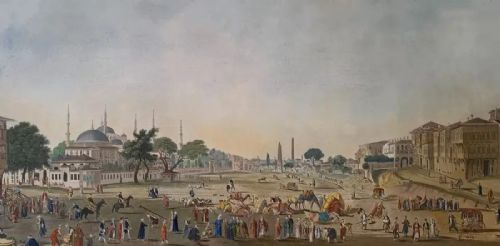
The inventory includes scenes from British locations alongside continental views from France, Germany, and the Middle East.
Artists frequently travelled to record architectural landmarks and coastal harbours during the nineteenth century.