


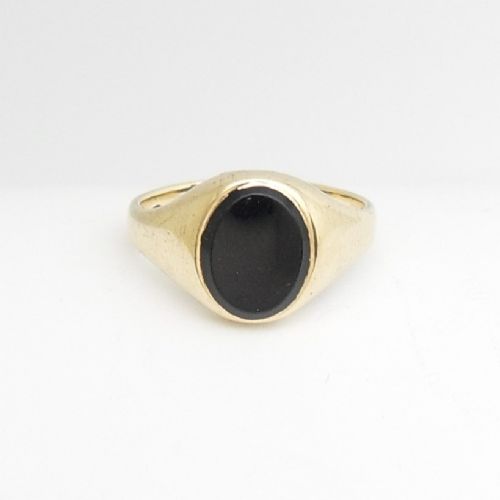


Antique Seal Ring
An antique seal ring is a personal signet used for centuries to mark documents, and collectors prize these tactile links to the past.
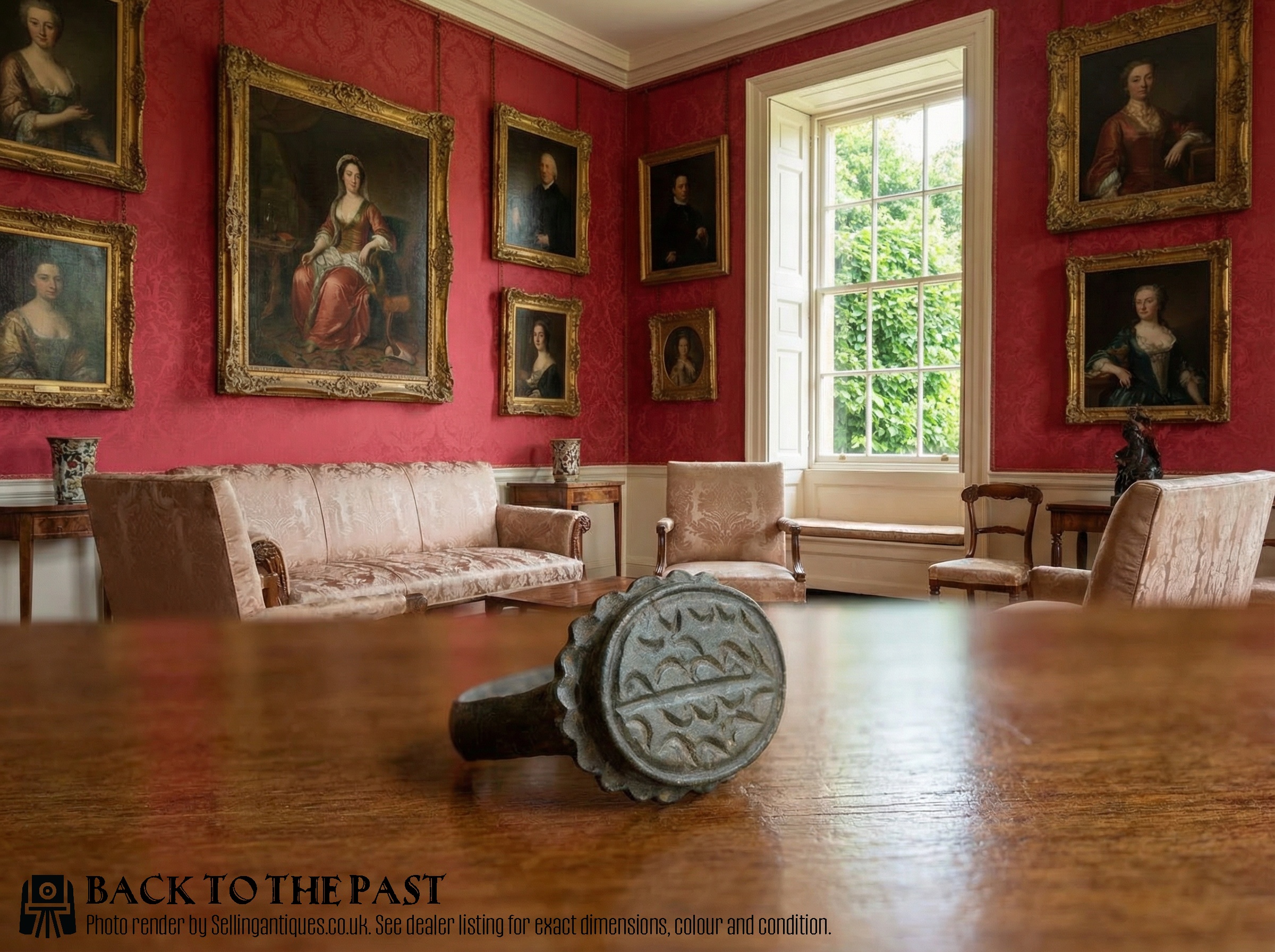
What an antique seal ring is
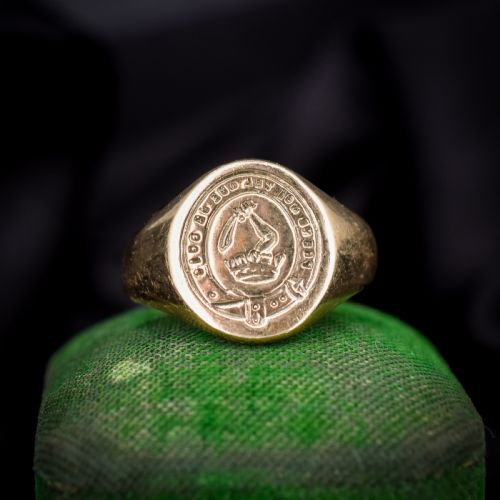
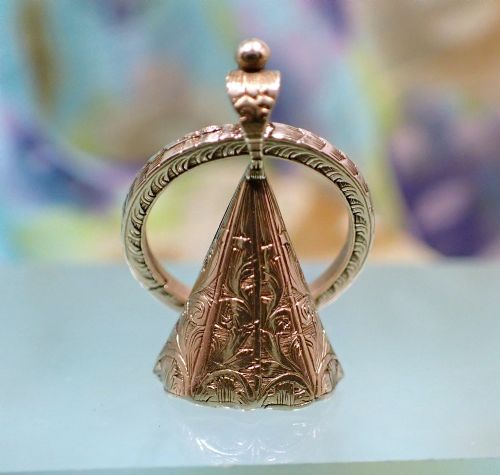
An antique seal ring is a wearable signet featuring a carved stone or metal face designed to press into hot wax. These rings served as practical tools for personal identification and correspondence across centuries of history. The selections here range from Georgian and Victorian gold pieces set with carnelian and hardstone to earlier bronze signets from the medieval period.
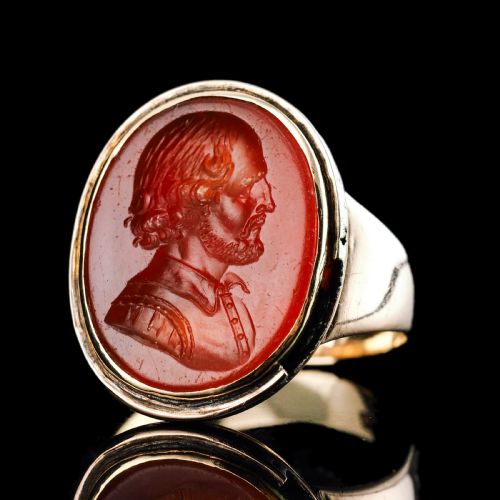
Buyers browsing this selection most frequently encounter 18th and 19th-century gold examples alongside bronze artefacts dating from before the sixteenth century. The forms span from classical intaglio depictions of gentlemen and allegorical figures to heraldic shields and geometric waves. Each piece records a distinct period of craftsmanship and individual ownership.
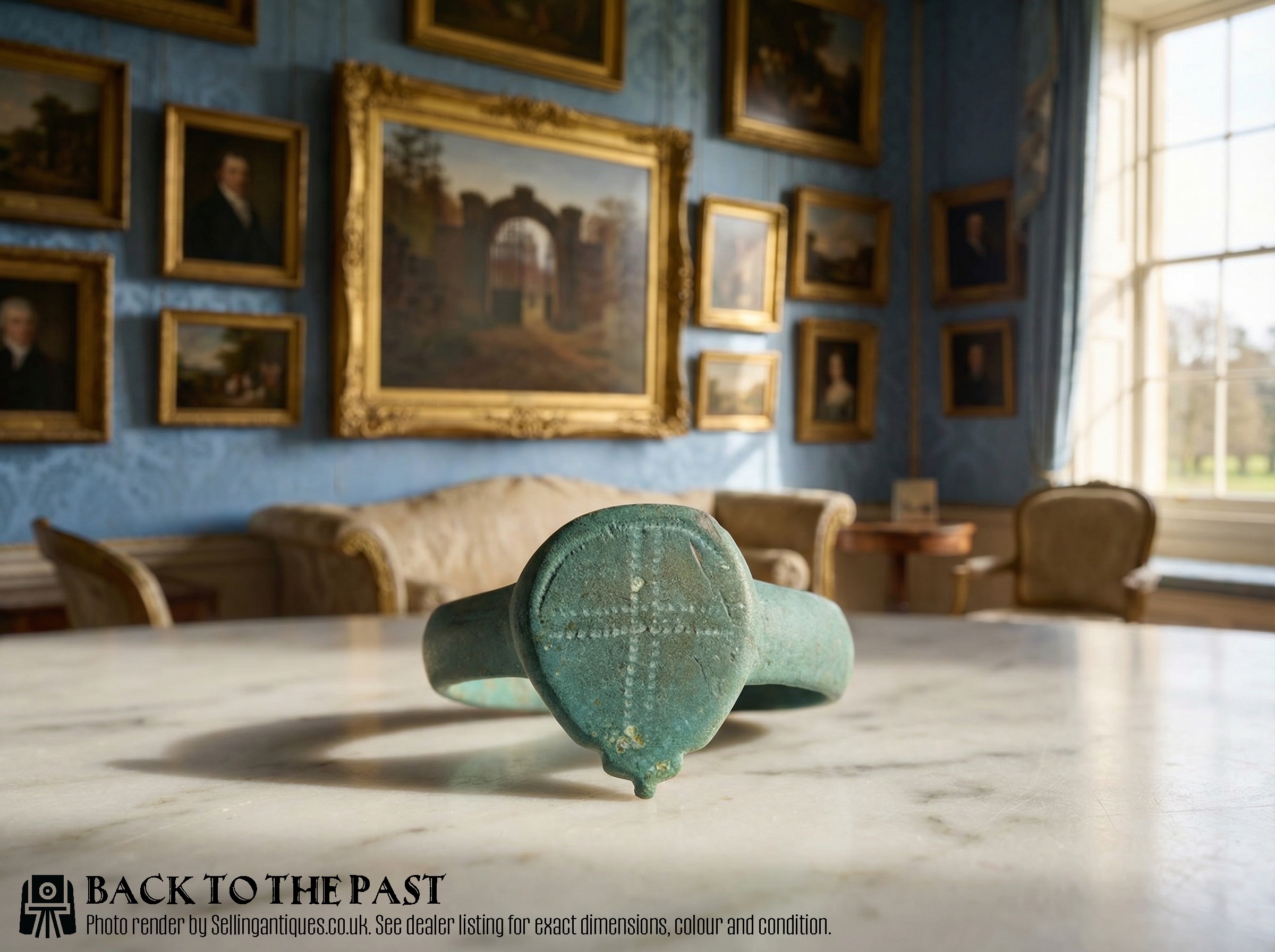
How they were made
The construction of these pieces relies on traditional metalworking techniques utilising gold, 18ct yellow gold, bronze and copper alloy. Goldsmiths shaped the precious and base metals into solid bands capable of bearing the pressure of daily use and impression making. Metal casting and hand-forging formed the foundational structures of both the heavy gold signets and the medieval bronze rings.
The engraved elements require meticulous hand-carving directly into durable materials such as carnelian, hardstone, bloodstone and the metal itself. Artisans cut intaglio designs in reverse so that the resulting wax impression appears in correct relief. This meticulous process demands immense skill to achieve fine detail on such a miniature scale.
Retail Price Guide 2026
Typical UK retail prices for seal ring, calculated from the Sellingantiques database of over a million retail prices indexed since 2003. This retail price guide relies exclusively on Sellingantiques data; no external sources or auction records are used, so the figures do not describe the wider market.
Listings span periods from pre-sixteenth century medieval pieces to nineteenth-century Victorian and Georgian examples.
What varies in quality
The standard of an antique seal ring rests upon the crispness and depth of the intaglio carving, whether executed in stone or metal. Superior examples display sharp lines and sophisticated anatomical or heraldic details that remain distinct after generations of use. Inferior pieces often exhibit worn surfaces where the original design has softened through handling or age.
The choice of materials also dictates the standing of a piece within the range, with substantial 18-carat gold and finely polished hardstones occupying the upper tiers. The harmony between the mounting and the engraved face determines the overall artistic achievement of the jewellery. Simpler bronze alloy artefacts from medieval periods derive their appeal from historical survival and untouched patination.
The Antique Seal Ring Glossary
- Intaglio
- A design carved into the surface of a gem or metal so that the impression produced in relief. This technique forms the functional face of every seal ring.
- Carnelian
- A reddish-orange variety of quartz chalcedony frequently utilised for antique signet stones. Its hardness makes it ideal for crisp engraving.
- Signet ring
- A finger ring bearing a crest, monogram or symbol used historically for sealing documents. It functions as both personal jewellery and an instrument of authority.
- Hardstone
- A semi-precious stone such as bloodstone or carnelian chosen for carving. These stones offer durability and a smooth surface for detailed imagery.
- Georgian
- Pertaining to the period of British history covering the reigns of the Hanoverian kings from 1714 to 1830. Jewellery from this era displays distinct regional handcraft methods.
Frequently Asked Questions
What is an antique seal ring used for?
An antique seal ring functioned historically as a portable stamp for authenticating letters and legal documents. The wearer pressed the engraved bezel into molten wax to leave a unique personal mark.
Today, collectors wear these pieces as statements of history and individual style. They continue to serve as personal talismans connecting the modern wearer to past traditions.
How can I tell the period of a seal ring?
Dating relies on examining the metallurgical composition, the style of the engraving, and the mounting techniques employed. Georgian and Victorian gold rings exhibit different characteristics compared to medieval bronze examples.
Comparing the specific motifs, such as allegorical figures or heraldic shields, against known historical periods helps establish an accurate timeline. Material choices like 18ct gold or copper alloy further assist in placing the object in its era.
What materials were used to make seal rings?
Craftsmen utilised precious metals like gold and 18ct yellow gold alongside durable base metals including bronze and copper alloy. The choice of metal often reflects the status of the original owner and the period of manufacture.
Gemstones such as carnelian, hardstone and bloodstone were mounted into the bezels to provide a smooth surface for intaglio carving. These materials survived centuries of handling while preserving the engraved details.
How do I care for an antique seal ring?
Care requires gentle handling to protect both the metal band and the delicate carved stone or metal face. Regular cleaning should involve soft cloths without harsh chemical immersion that might damage natural hardstones.
Storage in a dedicated ring box prevents abrasion from other jewellery items. Removing the ring during heavy physical activities ensures the intaglio engraving remains undamaged.