

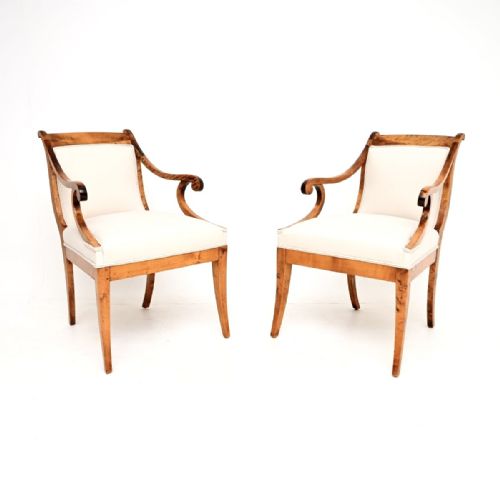


Antique Scandinavian Armchairs
Antique Scandinavian armchairs bring together clean northern lines, practical comfort, and distinctive woods from regional workshops.
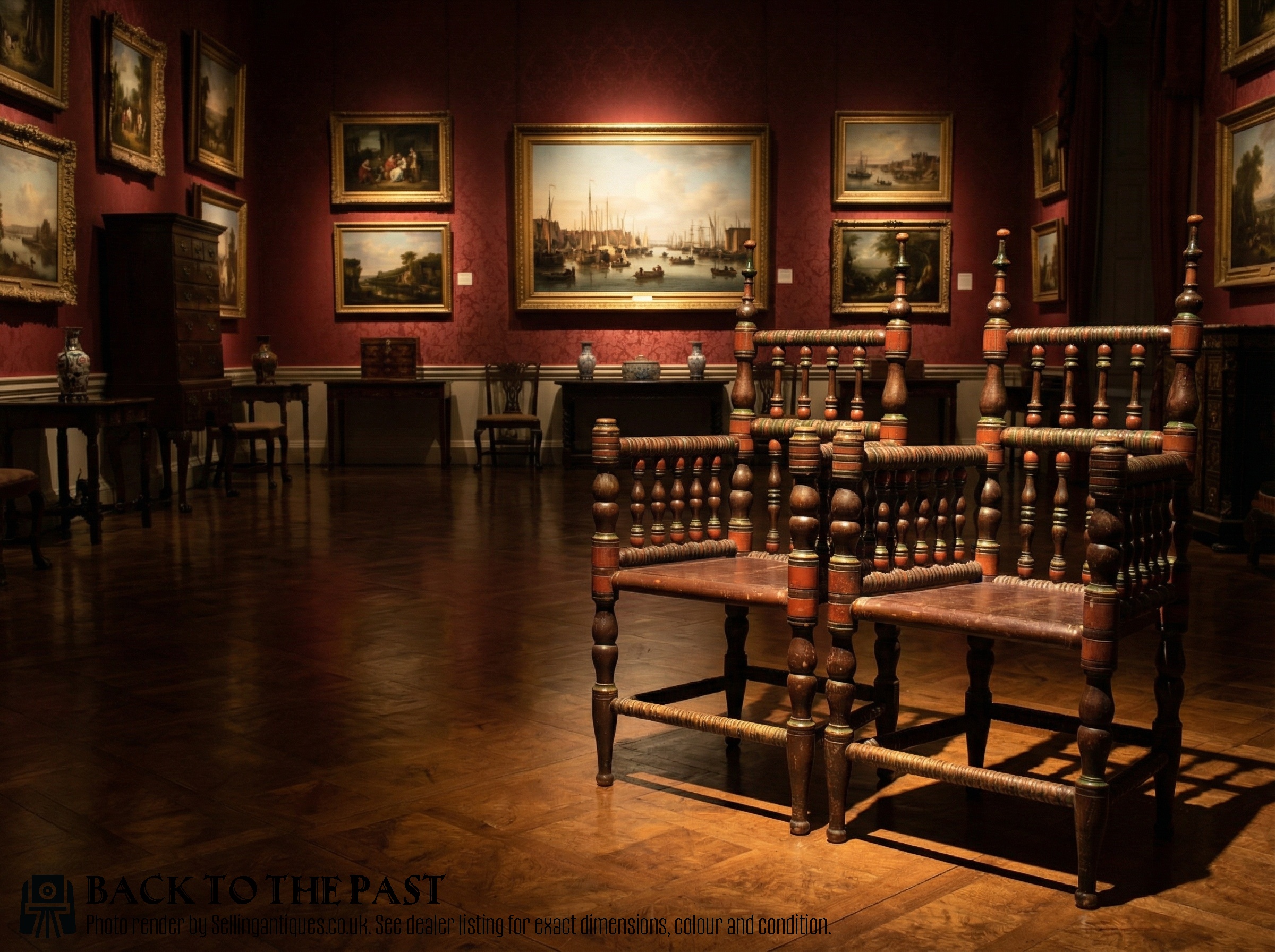
Antique Scandinavian Armchairs
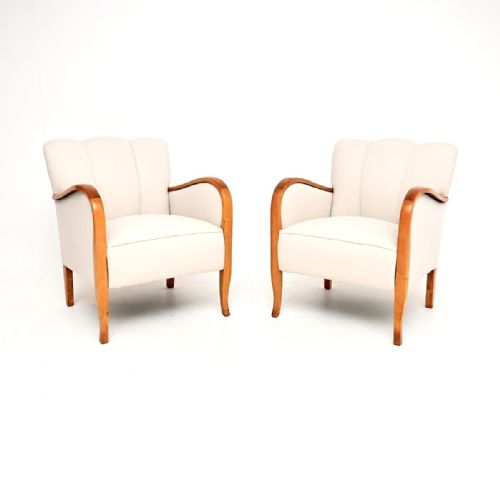
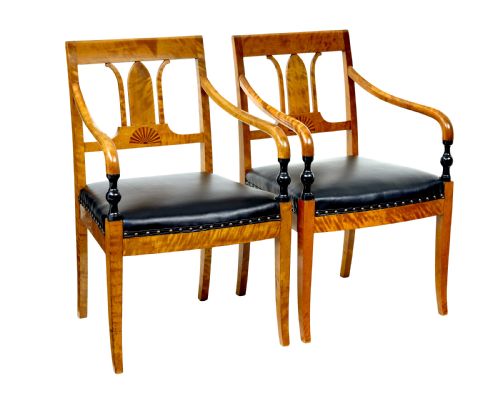
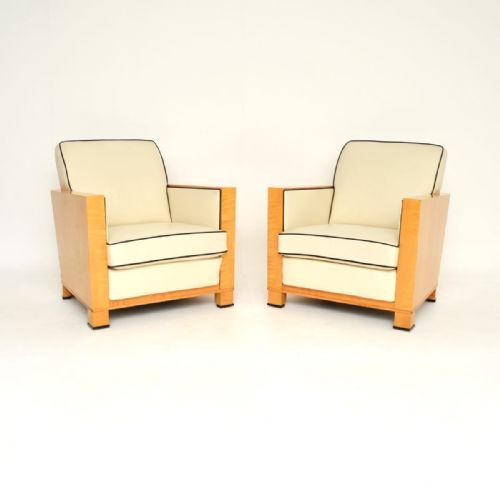
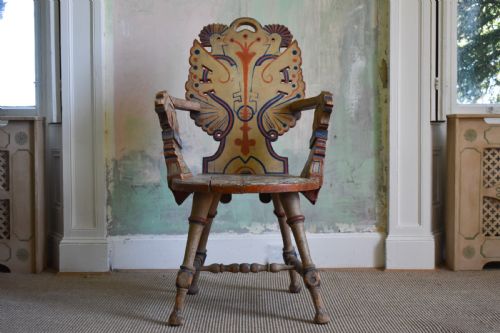
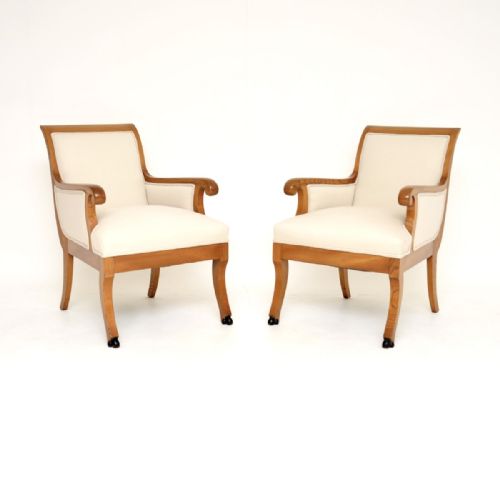
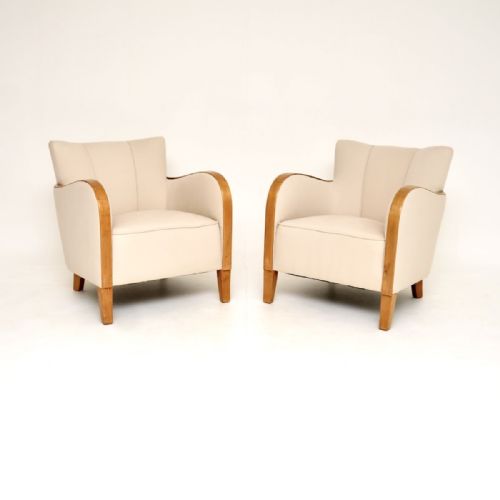
When searching for antique Scandinavian armchairs, buyers encounter seating that spans neoclassical elegance, folk art traditions, and art deco styling. The pieces available include solid birch club chairs, painted country armchairs, and formal Biedermeier seating.
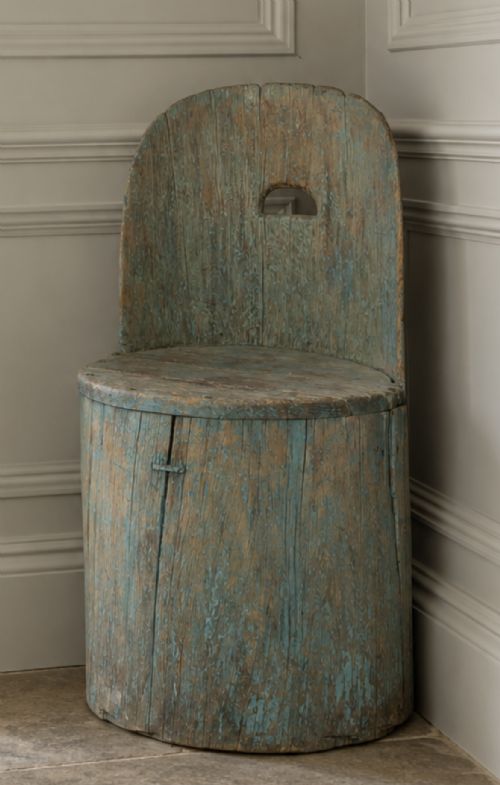
Most examples originate from Sweden, covering periods from around 1800 through the early twentieth century. Forms range from heavy dug-out wooden chairs to upholstered armchairs and turned rocking chairs.
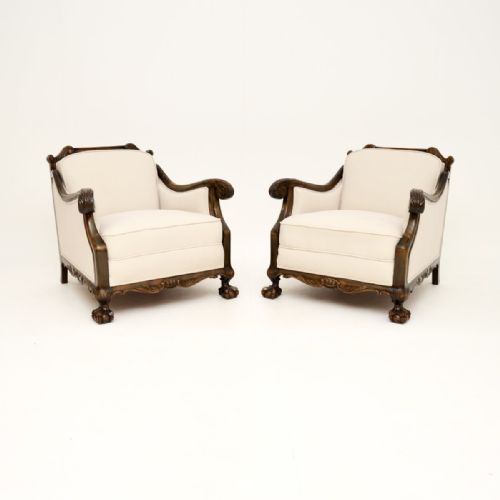
Buyers frequently find pairs among these listings, particularly within the art deco and nineteenth-century birch categories. Single rustic and folk art pieces also appear regularly, offering simpler forms shaped by country makers.
Materials and Construction
Makers utilised native northern timbers, predominantly birch, satin birch, pine, elm, and ebonised wood, often leaving the grain visible or applying layers of paint. Leather and various woven or patterned fabrics provide the upholstery for club and neoclassical chairs.
Construction techniques combine traditional joinery with turned spindles, carved details, and solid dugout timber forms. Surface finishes vary from original paint layers to polished veneers that highlight the figure of the birch.
Listings feature items spanning the nineteenth century up to nineteen-thirty, encompassing birch, pine, elm, and painted wood finishes.
Judging Quality and Execution
Quality in these armchairs rests upon the purity of the silhouette and the handling of the timber. Finer pieces display carefully selected satin birch veneers, crisp turning, or well-preserved original paint surfaces.
Proportion and structural integrity separate standard regional seating from exceptional examples. Chairs that retain their original upholstery context, stamped maker details, or balanced neoclassical and art deco proportions command greater attention.
Anton Rosen
The Antique Scandinavian Armchairs Glossary
- Biedermeier
- A central European and Scandinavian style spanning the nineteenth century characterised by clean lines and domestic comfort. It favours utilitarian elegance over heavy ornamentation.
- Satin Birch
- A pale northern timber with a shimmering, reflective grain. Makers utilised this wood extensively for smooth veneers on neoclassical and art deco seating.
- Dug Out Chair
- A rustic seating form hewn directly from a single solid log of pine or other timber. These heavy pieces represent early domestic utility.
- Ebonised Wood
- Timber treated to imitate ebony, producing a dark, glossy black surface finish. This technique appeared on nineteenth-century frames to create sharp contrast.
- Folk Art
- Objects created within regional traditions by local craftspeople rather than urban workshops. These pieces often feature hand-painted surfaces and simple structural forms.
Antique Scandinavian Armchairs: Frequently Asked Questions
What defines a Biedermeier armchair?
Biedermeier armchairs date primarily from the nineteenth century and focus on domestic utility paired with graceful proportions. They often feature birch or satin birch veneers with minimal carved distraction.
The style prioritises the natural grain of the wood and comfortable arm supports, bridging neoclassical formality with simpler regional tastes.
How do I care for painted wooden chairs?
Painted Scandinavian chairs require protection from direct sunlight and stable indoor humidity levels. Dusting with a dry microfibre cloth keeps the surface clean without risking moisture damage.
Avoid commercial polishes on original painted surfaces, as harsh chemicals can dissolve historical layers and dull the patina.
Are these chairs suitable for daily use?
Many of these armchairs are structurally sound for regular seating, particularly solid wood dug-out chairs and sturdy birch frames. Upholstered club and neoclassical chairs may need professional assessment of internal webbing and padding depending on their age.
Checking the joints and frame stability helps determine whether a piece functions best for daily sitting or light decorative use.
How do I distinguish folk art from formal styles?
Folk art armchairs display hand-carved or turned elements created within local traditions, often finished with original painted decoration or exposed pine. They prioritise rustic utility and regional character.
Formal styles like Swedish neoclassical or art deco utilise imported or carefully selected veneers, balanced geometric symmetry, and refined upholstery appropriate for urban drawing rooms.