





Antique Sapphire Boat Ring
An antique sapphire boat ring gathers clustered stones along a curved gold mount, offering a distinctively low-profile profile built for daily wear.
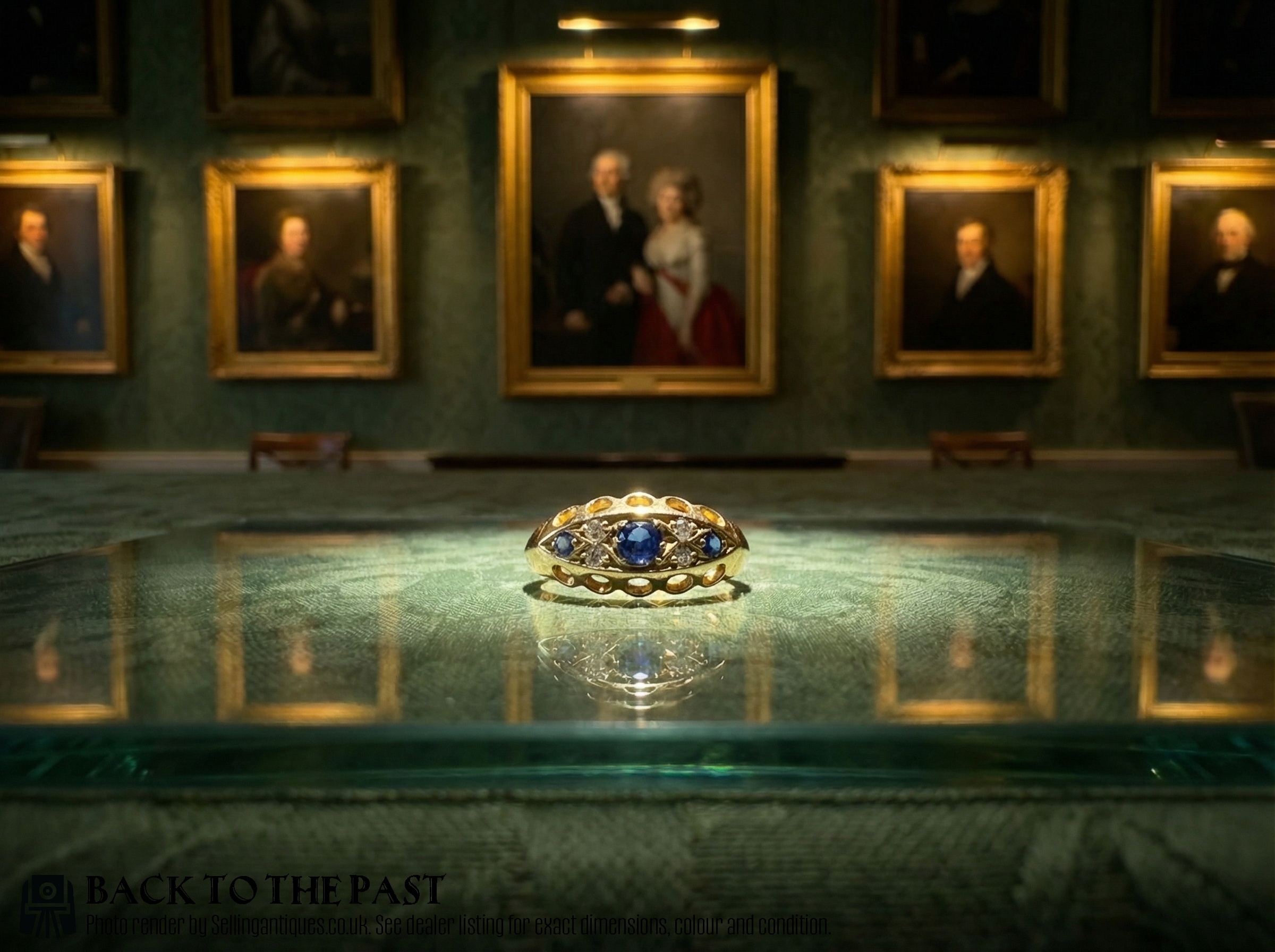
Antique Sapphire Boat Ring
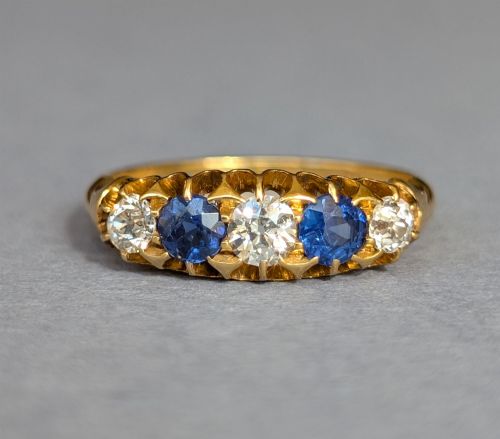
An antique sapphire boat ring is defined by its curving, boat-shaped setting that tapers gracefully towards the shoulders of the band. When searching for an antique sapphire boat ring, buyers encounter pieces predominantly shaped during the Victorian, Edwardian, and George V eras, spanning from the late nineteenth century into the early twentieth century alongside mid-century examples.
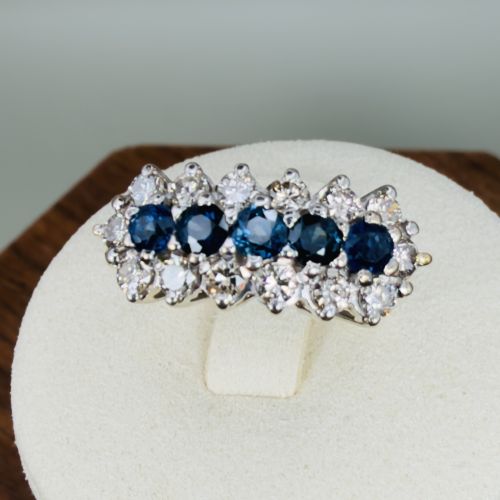
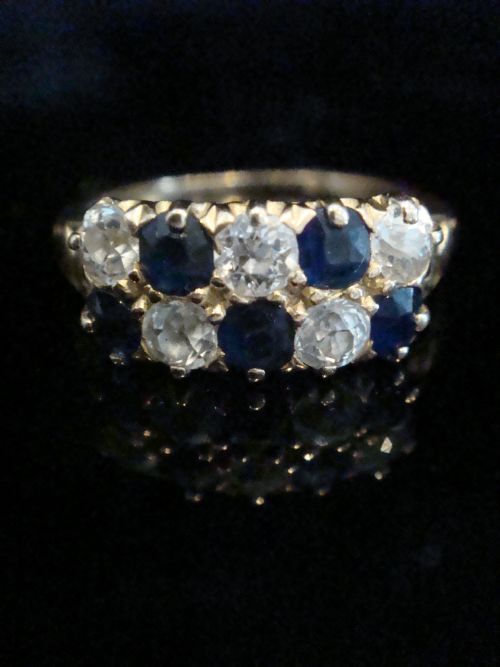
These rings combine natural sapphires with old cut diamonds set primarily in 18ct gold or 18ct yellow gold. The form positions the sapphires centrally, flanked or punctuated by diamonds, creating a horizontal display across the finger that sits lower than a traditional vertical cluster.
Most examples originate from English workshops, with several bearing hallmarks from assay offices such as Birmingham. The mounting style uses the natural curve to elongate the hand, remaining a practical yet decorative choice for collectors of antique jewellery.
How they were made
Maker's workshops built these rings using 18ct gold and 18ct yellow gold to form the substantial curved galleries required to support multiple stones. Goldsmiths secured natural sapphires and old cut diamonds into these metal mountings by hand, often utilising claw or flush settings tailored to the curved outline.
The integration of old cut diamonds introduces distinctive facet patterns shaped by hand before modern machinery standardised cutting angles. Sapphires were selected to fit the tapering contours of the boat shape, ensuring the central gems harmonised with the diminishing side stones.
The listings span the Victorian, Edwardian, and George V periods, featuring 18ct gold and 18ct yellow gold set with sapphire and diamond.
What varies in quality
Quality in these rings rests upon the depth of colour in the natural sapphires and the precision of the hand-cut old cut diamonds. Superior examples maintain crisp proportions across the curved gallery without thinning of the 18ct gold band from decades of resizing and wear.
The integrity of the setting work separates standard pieces from finer ones, specifically how cleanly the metal holds each stone along the boat-shaped curve. Original hallmarks and clear maker's marks preserved inside the shank further elevate a piece for the discerning buyer.
The Antique Sapphire Boat Ring Glossary
- Boat ring
- A ring featuring a curved, horizontally aligned setting reminiscent of a hull, designed to sit flat along the finger. This silhouette was particularly popular during the Victorian and Edwardian periods.
- Old cut diamond
- A diamond cut by hand before the standardisation of the modern brilliant cut, typically featuring a smaller table, higher crown, and open culet. These stones catch candlelight and lower light sources with a softer, warmer gleam.
- 18ct gold
- An alloy containing seventy-five percent pure gold, providing the necessary durability and rich colour for fine antique gemstone settings. It appears frequently in yellow gold variations across the listed eras.
- Natural sapphire
- A corundum gemstone formed in the earth without artificial treatment or synthetic creation. These stones supply the deep blue focal points characteristic of the category.
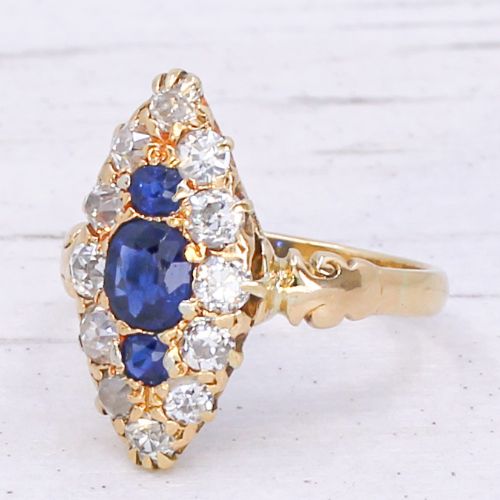
- Marquise cluster
- A pointed, oval gemstone arrangement sharing stylistic similarities with boat-shaped settings through its elongated horizontal axis. It often frames central sapphires with surrounding diamond borders.
Antique Sapphire Boat Ring: Frequently Asked Questions
How do I date an antique sapphire boat ring?
Dating relies heavily on hallmarks stamped inside the 18ct gold shank, alongside the cutting style of the diamonds and the specific mounting construction. Old cut diamonds and specific gold alloy colours point towards the late nineteenth and early twentieth centuries.
Assay office marks, such as those from Birmingham, help pinpoint the exact year of manufacture when letters and symbols remain legible. Stylistic shifts between Victorian bulbous mounts and Edwardian lacy frameworks also guide the timeline.
Are the sapphires treated?
Sapphires found in these nineteenth and early twentieth-century pieces are natural stones originating from the earth. Gemstones from this era predate modern diffusion and extensive commercial treatment methods.
Evaluating the internal silk and colour zoning under magnification helps confirm their natural formation. Each stone possesses unique inclusions that distinguish it from synthetic alternatives.
Can I wear a boat ring daily?
These rings were built for everyday wear using durable 18ct gold and hard gemstones like sapphire and diamond. The low profile of the boat setting reduces the risk of catching on clothing during daily tasks.
Regular checks by a jeweller ensure the claws holding the sapphires and diamonds remain secure. Gentle cleaning in warm soapy water maintains the sparkle of the old cut stones.