


Antique Saint Icon
These antique saint icon pieces unite centuries of devotion, bringing carved wood, tempera paint and gold leaf into domestic spaces.
Antique Saint Icon
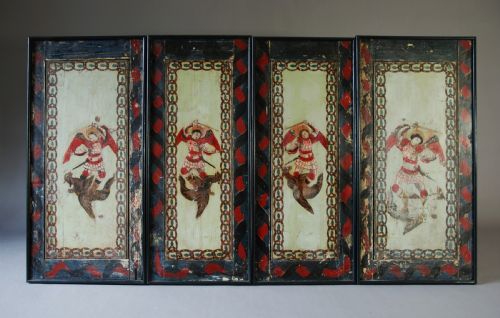
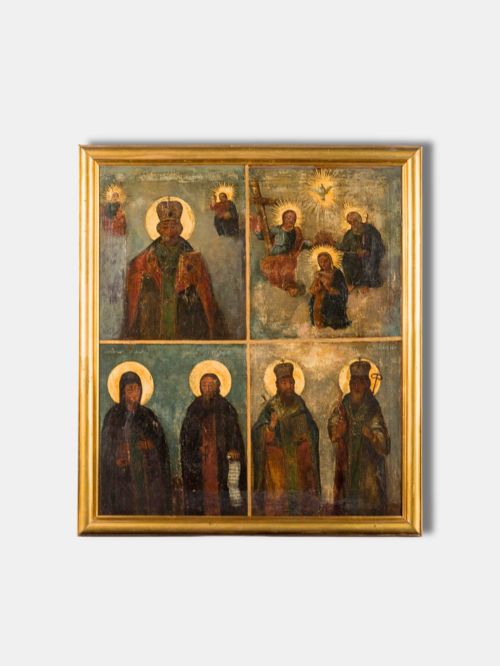
An antique saint icon serves as a focal point for personal prayer, taking the form of framed wall art, painted panels, or carved wooden sculptures. These devotional objects draw from Russian Orthodox, French, German, and Spanish traditions, spanning the seventeenth through to the early twentieth century.
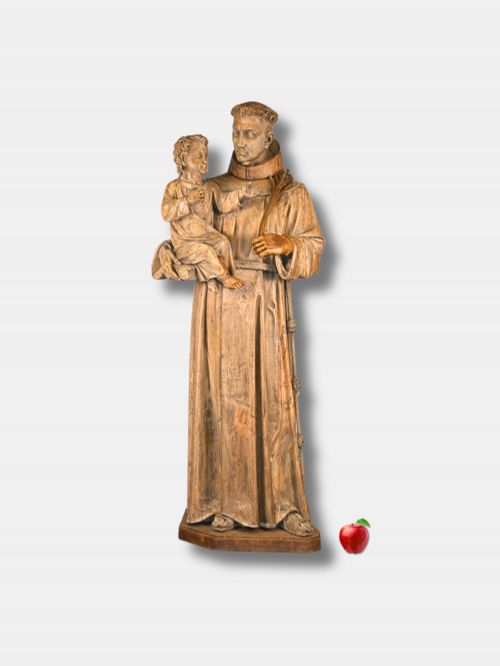
The pieces encountered most frequently on this page include hand-painted wooden panels, carved figures of specific saints such as Saint George or Saint Barbara, and smaller framed works. Materials range from carved pine and applewood to canvas and plaster, reflecting both formal ecclesiastical commissions and folk art expressions.
What varies in quality
The standard of an antique saint icon rests upon the finesse of the brushwork, the depth and precision of the wood carving, and the preservation of original surfaces. Master painters achieved subtlety in facial expressions and drapery folds, whereas provincial pieces display a simpler, folk art character.
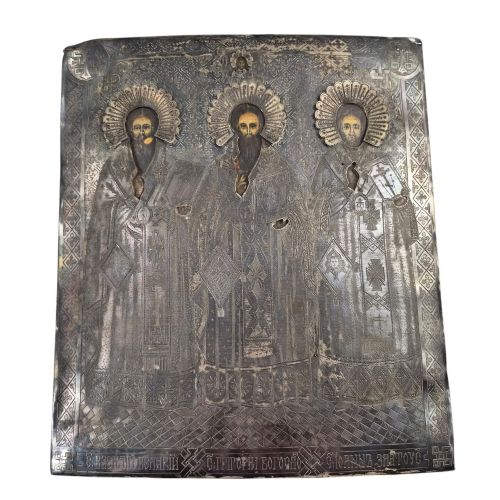
Material richness also determines quality, distinguishing works enhanced with genuine gold leaf and chased silver rizas from simpler painted wood or plaster alternatives. The integrity of the original gesso and pigment layers dictates the visual power remaining in the piece.
Listings feature wood, carved wood, gold leaf, tempera, gesso, polychrome paint, pigment, and canvas.
Heinrich Grünbaum
The Antique Saint Icon Glossary
- Riza
- A metal cover protecting or embellishing an icon, often stamped or chased in silver.
- Tempera
- A permanent, fast-drying painting medium consisting of coloured pigment mixed with a water-binder such as egg yolk.
- Gesso
- A paint mixture consisting of a neutral binder mixed with chalk, gypsum, or pigment, used to prepare a surface for painting or gilding.
- Polychrome
- The practice of decorating architectural elements, sculpture, or pottery in a variety of colours.
- Icon
- A religious work of art, most commonly a painting, from Eastern Christianity and certain other traditions.
Antique Saint Icon: Frequently Asked Questions
How do I date an antique saint icon?
Dating relies on examining the support materials, such as the preparation of the wood panel or canvas, alongside stylistic indicators of the period. Pigment analysis and the wear of gesso and gold leaf also help establish age.
Changes in carving techniques and the specific framing methods provide further clues to whether a piece originates from the seventeenth, eighteenth, or nineteenth century.
What wood was used for carved saint figures?
Carvers utilised local timber species available in their regions, frequently selecting oak, pine, and applewood for their stability and texture. Hardwoods allowed for fine facial detail in sculptures.
Softwoods like pine served well for larger panels and folk art constructions, which were then sealed with gesso and painted.
Where were these religious icons displayed?
Devotional icons and figures were created for domestic prayer corners, home altars, and small chapels rather than large cathedrals. Portable panels and pendant medals allowed owners to carry their faith while travelling.
Larger ecclesiastical figures and framed artworks occupied focal points within monastic or parish settings before entering collections.