


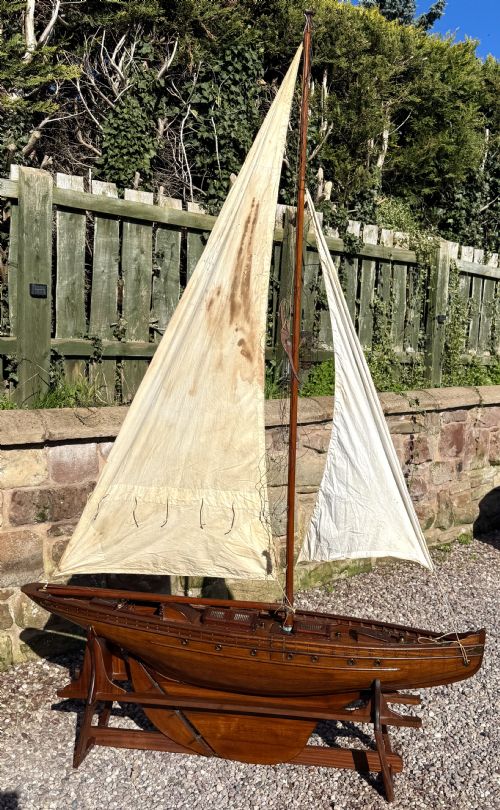


Antique Sailing Ship Model
An antique sailing ship model brings the tactile weight of maritime history into a room, capturing the vanished era of canvas and timber.
Antique Sailing Ship Model
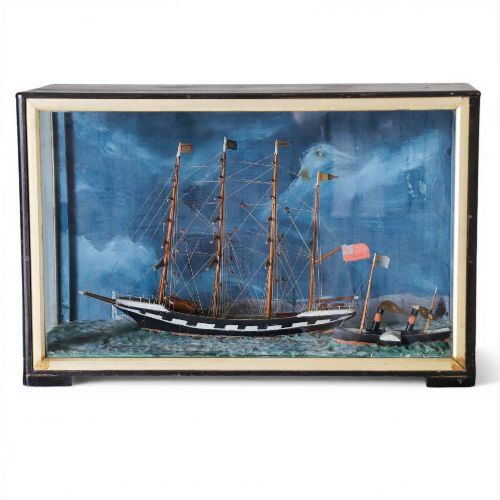
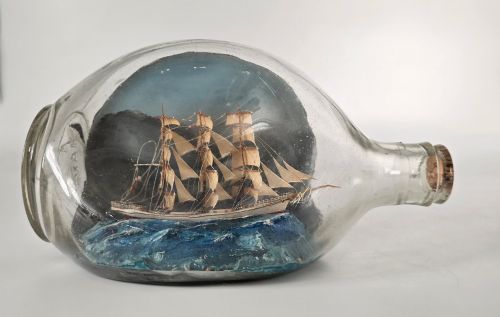
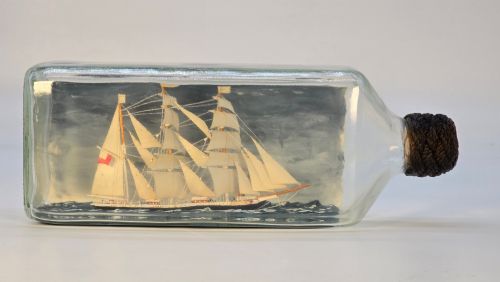
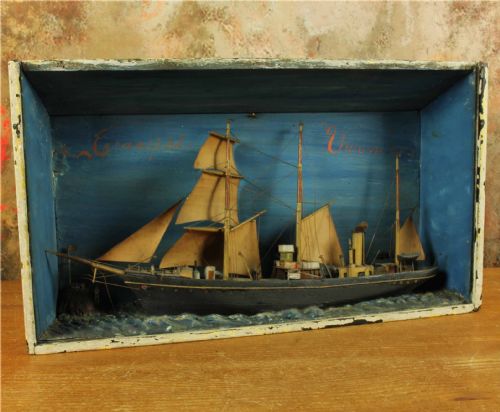
An antique sailing ship model encompasses scratch-built watercraft, pond yachts, and intricate multi-masted vessels captured in various scales. Buyers seeking an antique sailing ship model will most frequently encounter nineteenth-century framed dioramas, shadow boxes, and glass bottles housing tiny hulls.
The selection ranges from naive folk art creations and training models to precise scale representations of schooners, barques, and clippers. These objects originate from British, English, Welsh, and French workshops, reflecting local maritime traditions and coastal craftsmanship.
Makers often drew inspiration from specific vessels like the Glynllifon or HMS Daedalus, immortalising famous ships in wood, paint, and canvas. Whether presented on stands or enclosed in glazed cases, these pieces serve as enduring testaments to naval architecture.
How they were made
Craftsmen utilised seasoned wood for hulls and decks, shaping them by hand or carving them from solid blocks before rigging the tiny masts with thread and canvas. Paint and plaster added texture and colour to the surrounding seascape within shadow box dioramas.
Bottled examples required ingenious collapsible masts that could be manoeuvred through narrow glass necks and pulled upright using internal threads. Metal and brass components frequently reinforced structural elements, while straw work provided decorative detail on select nineteenth-century frames.
Listings feature wood, glass, paint, canvas, metal, thread, brass, and plaster across the nineteenth and early twentieth centuries.
What varies in quality
The refinement of the rigging and the anatomical correctness of the hull separate standard decorative items from superior examples of marine folk art. Scale models demonstrate precision through exact proportions, whereas naive pieces rely on charm and inventive use of available materials.
The quality of the housing heavily influences the character of a piece, with sealed glazed cases and well-proportioned shadow boxes preserving the delicate interior components. The integration of painted seascapes, whether flat backdrops or Turneresque oils, adds depth and artistic merit to framed dioramas.
The Antique Sailing Ship Model Glossary
- Diorama
- A three-dimensional scene enclosed in a box or case, often featuring a model ship set against a painted maritime backdrop. These shadow boxes protect fragile rigging from dust and damage.
- Barque
- A sailing vessel with three or more masts, having the fore- and mainmasts square-rigged and the mizzenmast fore-and-aft rigged. This rig was common on merchant vessels of the nineteenth century.
- Scratch-built
- A model constructed from raw materials by the maker rather than assembled from a commercial kit. Such pieces often exhibit unique folk art characteristics.
- Pond yacht
- A large model sailing boat designed for recreational sailing on open water rather than static display. These hulls are frequently substantial in size and fitted with wooden stands.
Antique Sailing Ship Model: Frequently Asked Questions
Were these models made by sailors?
Many pieces originate from folk artists and coastal makers who spent their lives observing maritime traffic rather than serving at sea.
Some detailed training models and scale replicas were produced by specialists in maritime workshops or naval establishments.
How are ships placed inside glass bottles?
Makers constructed the hulls and fitted them with hinged masts that lay flat along the deck during insertion.
Once inside the bottle, strings attached to the rigging were pulled taut from the outside to raise the masts into position.
What is the difference between a clipper and a ketch?
A clipper is a very fast, multiple-masted sailing ship designed for speed, typically featuring full square rigging on all masts.
A ketch is a smaller two-masted vessel where the smaller rear mast sits forward of the rudder post, offering easier handling.