





Antique Rural Figure Painting
When you examine an antique rural figure painting, you encounter Victorian and Edwardian scenes of country life, cottages, and agricultural workers set within pastoral landscapes.
Antique Rural Figure Painting
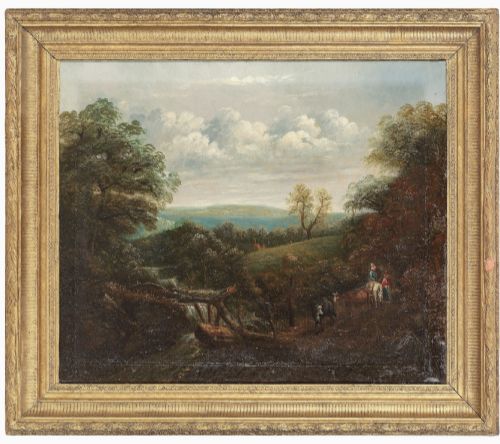
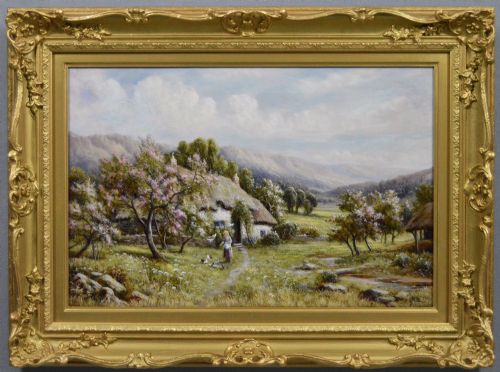
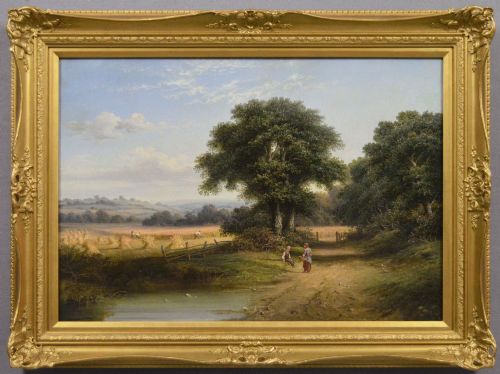
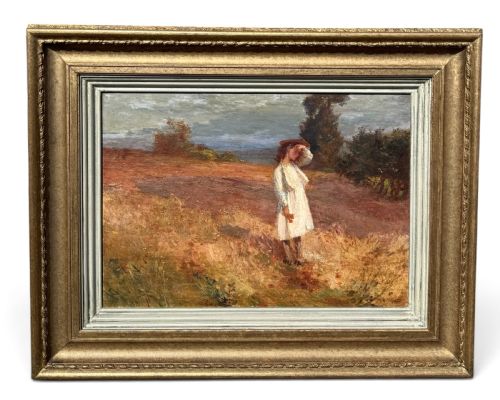
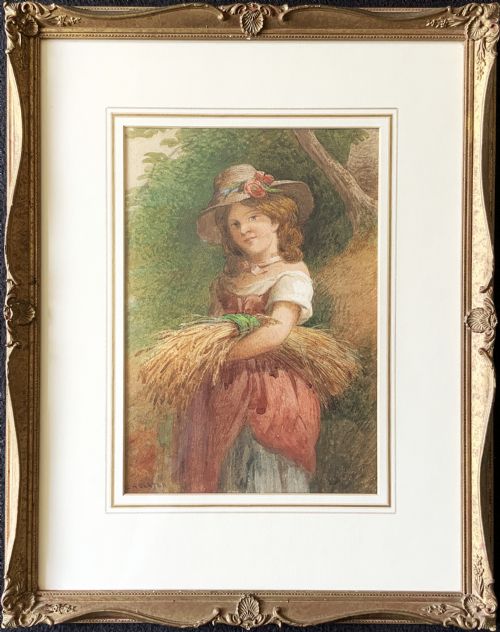
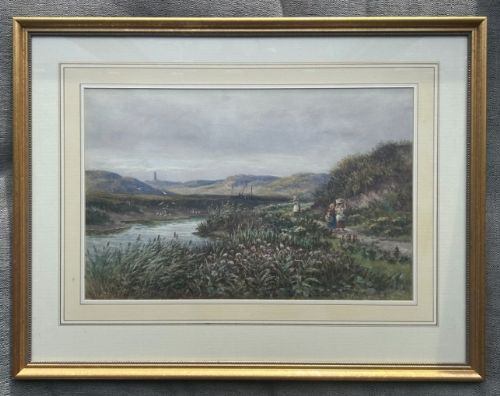
An antique rural figure painting depicts everyday country life, typically showing agricultural labourers, travellers, or cottagers integrated into natural scenery. These works capture pastoral moments such as harvesting, gathering firewood, or crossing streams, reflecting the nineteenth-century fascination with the countryside. You will frequently find pieces originating from the middle of the nineteenth century through to the early decades of the twentieth century.
The compositions span several distinct artistic approaches, including the Norwich School, British Impressionism, and Victorian Realism. Canvas sizes and board dimensions vary considerably, accommodating both intimate watercolours and expansive framed oil paintings. The figures themselves often serve to establish scale and narrative context within broad landscape views of rivers, lanes, and farmyards.
English and French regional schools dominate the available selection, ranging from detailed depictions of Derbyshire brooks to Barbizon-influenced woodland views. Artists utilise traditional settings such as thatched cottages, harvest fields, and rural tracks to anchor the human subjects within their environment. These pictures document a vanished agrarian routine through the specific lens of Victorian and Edwardian painting traditions.
Materials and methods
Painters working on these rural subjects relied primarily on oil paint applied to stretched canvas or wooden boards, alongside watercolour pigment on paper. Canvas supports permitted rich layering and textured brushwork, particularly evident in works capturing atmospheric effects like evening light or river mist. Wooden panels and paper supports offered smoother surfaces suited to finer watercolour detail and portable sketching.
Framing forms an integral component of how these works survive, with gilt wood and ornate gilded frames providing structural support and visual definition. Artists mixed their own pigments or utilised nineteenth-century tube paints to achieve the muted earth tones characteristic of pastoral scenes. Watercolours were frequently protected behind glass within card mounts, while oil paintings retained unglazed varnish layers to shield the pigment from atmospheric dirt.
Listings span the nineteenth and early twentieth centuries, featuring oil on canvas, watercolour pigment, and gilt wood frames across British and French schools.
Evaluating craftsmanship and execution
The distinction between standard works and exceptional examples lies in the artist's handling of light, anatomical proportion, and narrative integration. Superior pieces render human figures with natural posture and convincing interaction with the surrounding landscape, avoiding stiff or formulaic placement. Brushwork in higher quality works demonstrates deliberate variation between the rendered textures of foliage, fabric, and water.
Compositional balance also dictates quality, as accomplished painters guide the viewer's eye purposefully through the rural scene using pathways, rivers, or architectural elements. The preservation of the original support, whether canvas or panel, combined with the integrity of the period frame, contributes significantly to the overall standard of the surviving piece.
Robert John Hammond·Walter Heath Williams·Henry John Yeend King·Henry H Parker·George Turner·Henry Brittan Willis
The Antique Rural Figure Painting Glossary
- Norwich School
- A regional collective of artists influenced by Dutch landscape traditions who painted local scenery and rural life. Their works emphasise atmospheric skies and accurate observation of natural light.
- Genre Painting
- The depiction of everyday subjects and ordinary people engaged in common activities. In these rural examples, domestic chores and agricultural labour form the primary narrative.
- Barbizon School
- A French artistic movement dedicated to realism in landscape painting, emphasising direct observation of nature. Works in this style often feature subdued palettes and soft, atmospheric brushwork.
- Victorian Realism
- An artistic approach focusing on the unidealized representation of contemporary life and labour. Painters within this category recorded agricultural workers with particular attention to social context.
- Giltwood
- Timber carved and coated with a thin layer of gold leaf or metallic powder. Antique frames utilise this material to enhance the warmth and presence of the painting.
Antique Rural Figure Painting: Frequently Asked Questions
What subjects appear in these paintings?
The subjects encompass agricultural workers, figures near cottages, travellers on rural tracks, and domestic labourers. Scenes often record seasonal activities like harvesting, fishing, and doing laundry by a stream.
Animals frequently accompany the human figures, including horses and carts, donkeys, cattle, and sheep. These elements establish a narrative connection to nineteenth-century rural existence.
How do I identify the period?
Dating relies upon costume details, painting techniques, and framing styles characteristic of the nineteenth and early twentieth centuries. Victorian dress, specific pigment formulas, and nineteenth-century canvas stretchers provide reliable chronological markers.
Signatures, exhibition labels on the reverse, and artist biographies further narrow the date of creation. Comparing stylistic traits to known works by British and French regional painters confirms the era.
How should I display them?
These paintings require placement away from direct sunlight and excessive humidity to protect canvas, paper, and watercolour pigments. Maintaining stable indoor temperatures prevents warping in wooden panels and cracking in oil paint layers.
Displaying them in period-appropriate gilt wood frames preserves the historical context of the artwork. Adequate wall space allows the composition and scale of the landscape to read clearly.
Are watercolours different from oils?
Watercolour paintings utilise pigment suspended in water-soluble binders on paper, requiring protective glass framing to prevent moisture damage. Oil paintings use pigment bound in drying oils on canvas or panel, presenting a heavier textured surface.
Oils generally offer deeper colour saturation and allow for heavier impasto brushwork. Watercolours achieve a lighter, more translucent quality well suited to atmospheric landscape views.