







Antique Rug Fragment Bag
When searching for an antique rug fragment bag, collectors find woven remnants of nomadic life produced across Persia and Central Asia during the nineteenth century.
Antique Rug Fragment Bag
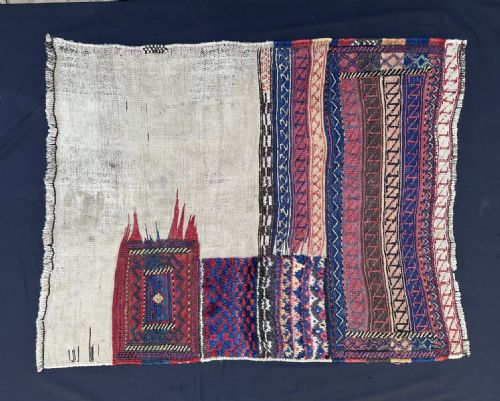
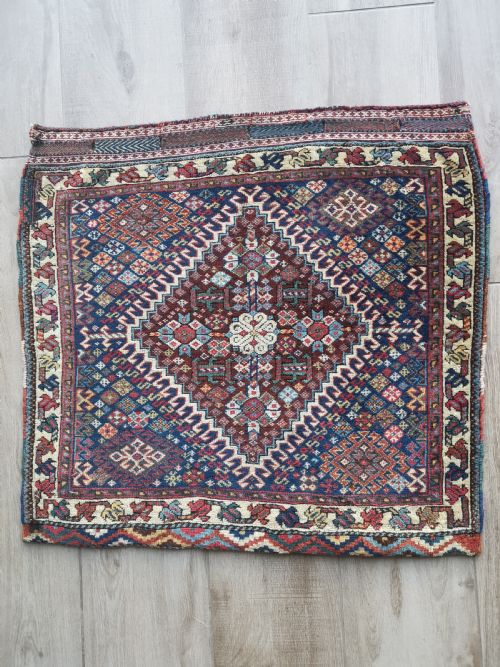
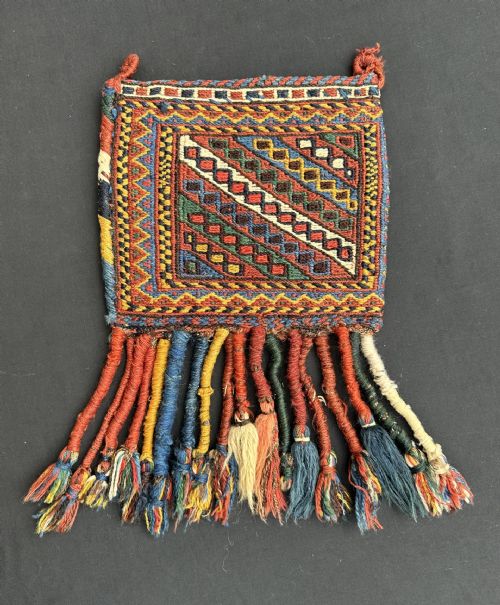
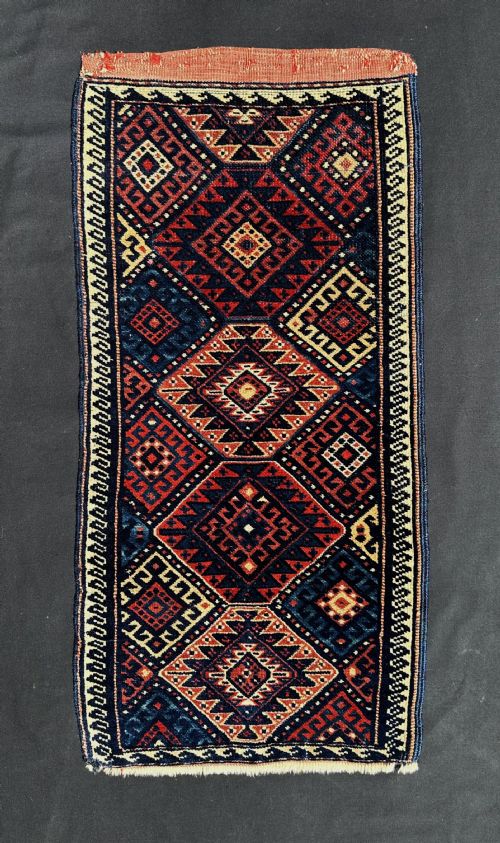
An antique rug fragment bag comprises surviving sections of utilitarian tribal containers, such as torbas, chuvals, and saddle bags, woven by nomadic groups like the Turkmen, Afshar, Qashqai, and Baluch. These items served practical storage functions within tribal camps before being divided or worn down over generations.
Most examples encountered on this page date from the middle of the nineteenth century up to the early twentieth century. They display traditional tribal motifs, including primary guls, boteh patterns, and geometric field designs associated with specific regional weaving traditions.
How they were made
Weavers constructed these pieces using hand-spun wool foundations and pile, frequently supplemented by cotton and silk details for contrast. Natural and vegetable dyes provided the saturated palette characteristic of nineteenth-century tribal textiles.
The structure relies on tight knotting and flatwoven backings or side panels designed to withstand heavy daily use in nomadic environments. Fragments preserve sections of these dense pile surfaces and structural selvedges.
Some fragments preserve the exact spot where a nomad's camel rubbed against the saddle bag during a dusty desert crossing.
What varies in quality
The density of the knotting and the precision of the tribal drawing distinguish finer examples from standard work. Pieces with exceptionally high knot counts and meticulous execution display greater refinement in intricate gul motifs and border systems.
The depth and clarity of the natural dyes influence visual appeal, with vibrant madder reds and ivory grounds maintaining superior visual impact. The survival of original structural elements, even within a fragment, contributes significantly to the integrity of the piece.
The Antique Rug Fragment Bag Glossary
- Gul
- A primary medallion motif used repeatedly across Turkmen and other Central Asian tribal carpets and bag faces. These octagonal or polygonal guls often identify the specific tribe or clan responsible for the weaving.
- Torba
- A small storage bag produced by Turkmen and other nomadic tribes for domestic use inside a yurt or tent. They were frequently hung against lattice walls to hold personal possessions.
- Chuval
- A large tent bag utilised by nomadic groups for storing bedding, clothing, or household goods. Surviving faces of these bags often display multiple rows of primary guls.
- Khorjin
- A double-sided saddle bag designed for transport over pack animals during seasonal migrations. The connecting web is frequently lost, leaving individual bag faces as fragments.
- Mafrash
- A rectangular storage bale or box-bag used by tribes such as the Shahsavan and Turkmen for transit and storage. Fragments typically preserve the elaborately patterned side panels.
Antique Rug Fragment Bag: Frequently Asked Questions
What is an antique rug fragment bag?
An antique rug fragment bag is a surviving portion of a nomadic storage container, such as a saddle bag, tent bag, or grain sack. These items were woven by tribal groups in Persia and Central Asia during the nineteenth century.
Over time, complete bags often wore out or were cut down into smaller sections. The remaining fragments preserve the intricate tribal designs, knotting techniques, and natural dye colours of the original textiles.
How were these bags used originally?
Nomadic and tribal peoples used these containers for practical storage and transport during seasonal migrations. They held personal belongings, bedding, wheat, salt, or household utensils inside tents and on pack animals.
Because they were subjected to heavy daily use, many examples eventually deteriorated. Surviving sections represent the decorative faces or panels of bags that served central functions in daily nomadic life.
How do I identify different tribal styles?
Tribal attribution relies heavily on specific geometric motifs, repeating patterns, and colour palettes unique to particular groups. Turkmen weavers utilised distinct octagonal guls, while southern Persian groups such as the Qashqai and Afshar favoured pictorial elements like boteh patterns and medallion layouts.
Examining the structural materials, such as hand-spun wool and natural dye variations, also helps narrow down the regional origin. Different confederations maintained strict visual traditions passed down through generations of weavers.
How should I display a fragment bag?
Fragment bags can be mounted and framed behind conservation-grade glass or stitched onto supportive linen backings for wall hanging. This protects the wool pile and exposed edges from physical wear while displaying the geometric artistry.
Placement should avoid direct, intense sunlight to protect natural vegetable and insect-derived dyes from fading. Gentle vacuuming through a mesh screen helps remove dust without disturbing the fragile structure.