

Antique Round Gueridon
An antique round gueridon brings neoclassical French elegance to a room, functioning as a centre or occasional table.
Antique Round Gueridon
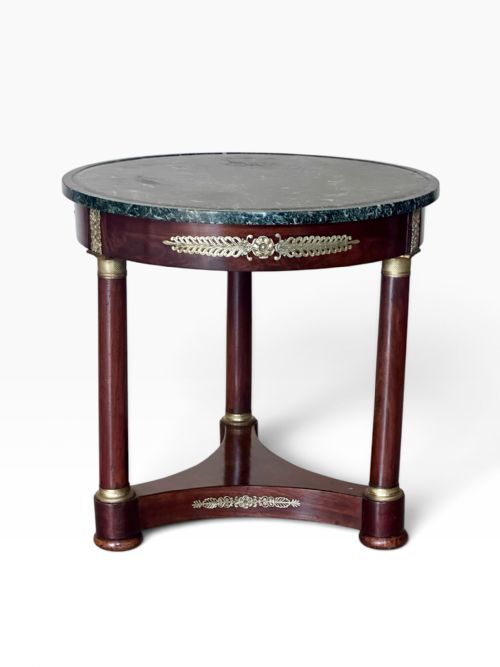
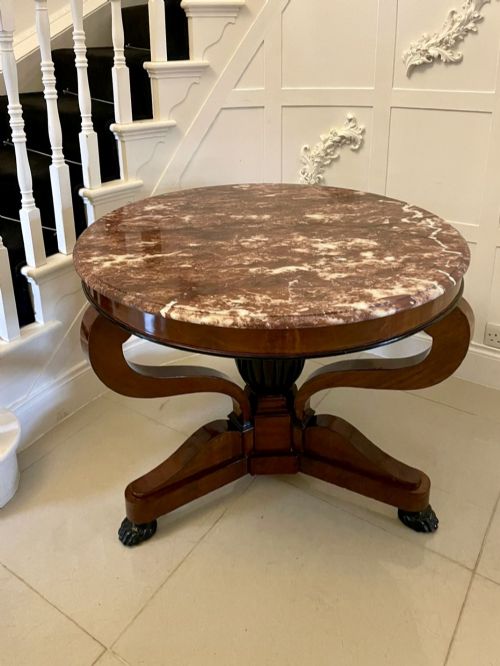
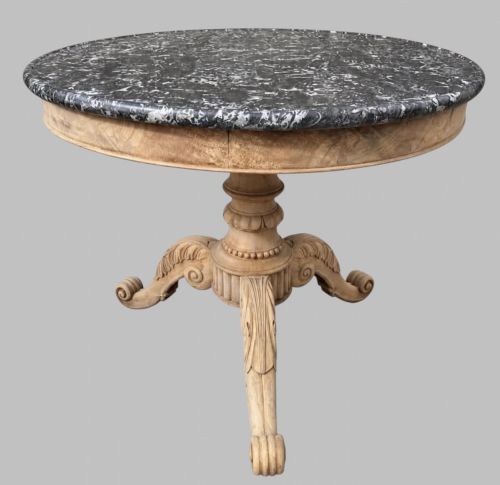
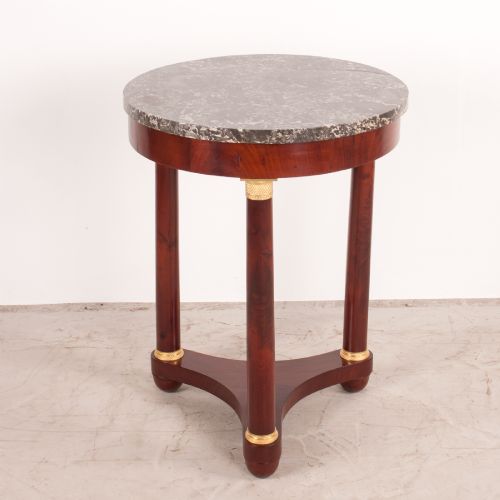
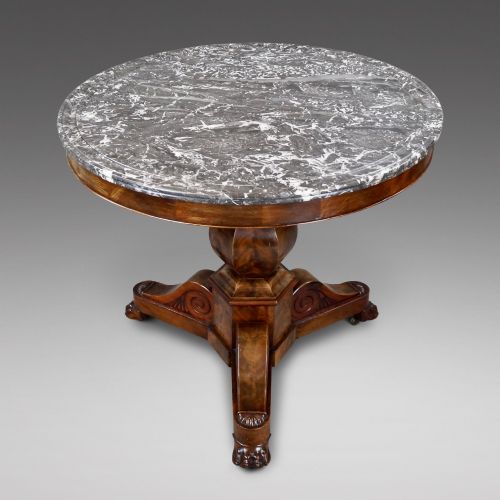
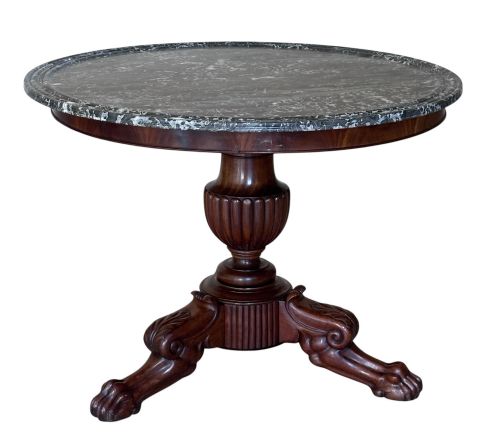
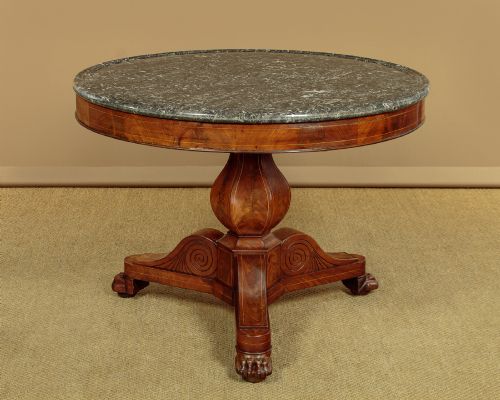
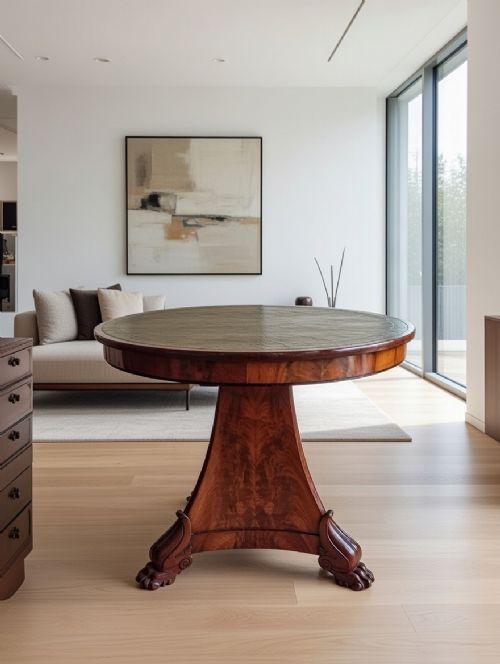
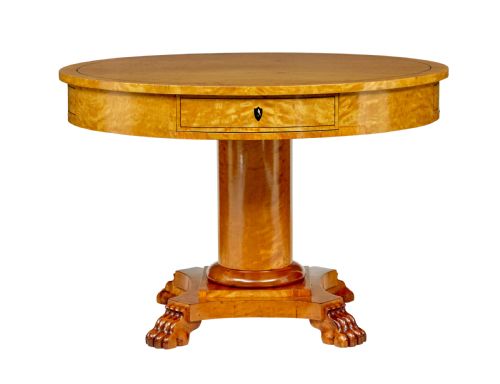
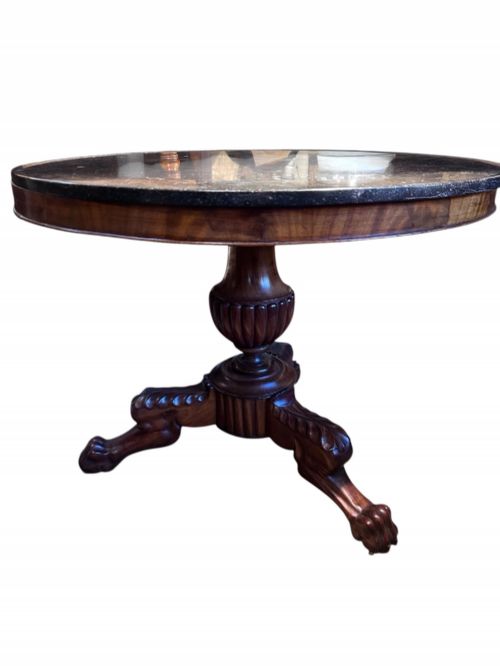
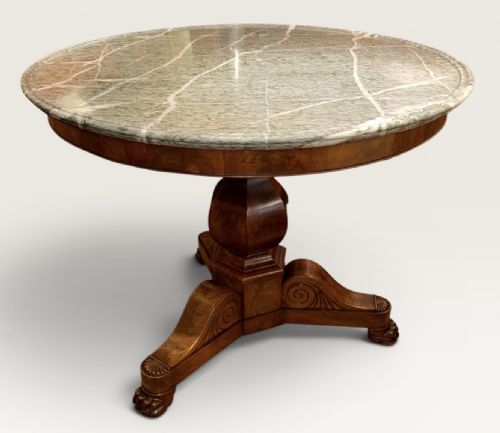
An antique round gueridon functions primarily as a centre table or occasional table, typically supported by a central pillar or column. These circular tables appear frequently in nineteenth-century French designs, spanning periods from the Empire and Restoration eras through to Louis Philippe and Louis XVI styles.
Makers often fashioned these pieces to stand freely in the middle of a room rather than against a wall. The form serves practical needs for display or gathering while maintaining a compact circular footprint.
Materials and construction
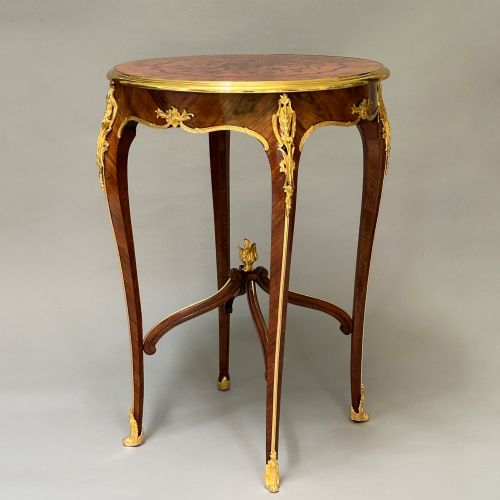
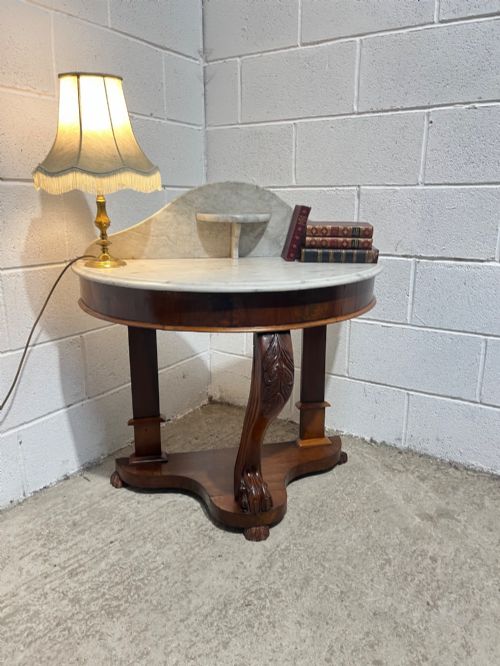
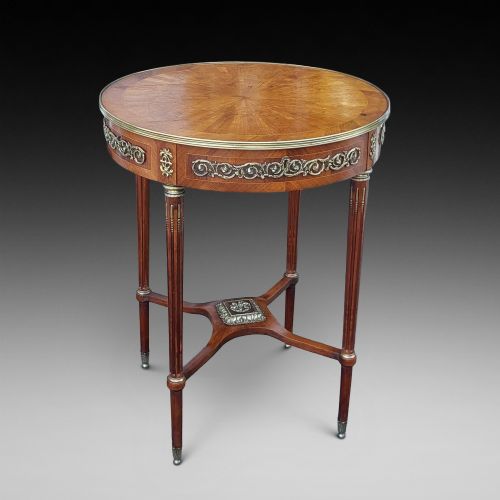
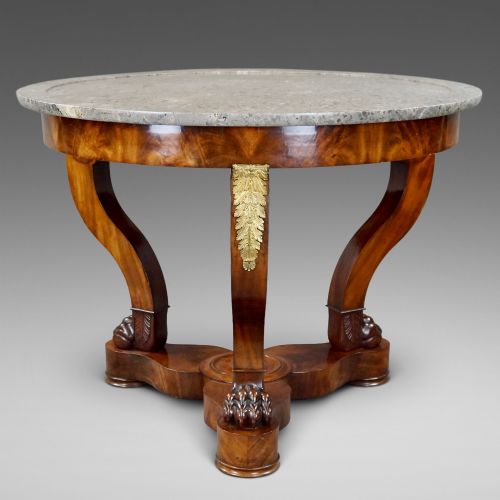
Cabinet makers utilised dense timbers such as mahogany, flame mahogany, walnut, burr elm, and kingwood for the structural frames andveneered surfaces. Many examples incorporate polished marble slabs inset into the circular tops, often accompanied by brass or ormolu mounts.
Joinery methods rely on solid timber framing beneath decorative veneers and marquetry work. Cast iron and painted finishes appear on specific bistro or utilitarian variations from the later nineteenth century.
Certain nineteenth-century empire gueridons feature carved wooden swans gazing downward from the pedestal.
Distinctions in quality
The sophistication of the cast ormolu mounts and the precision of the marquetry inlay distinguish superior examples from standard workshop production. Carved details such as swans or rams' heads reflect the skill of the original carver.
The selection of figured timber veneers, choice of marble thickness, and stability of the central pedestal construction separate finer pieces from simpler utilitarian tables.
Adam Weisweiler
The Antique Round Gueridon Glossary
- Gueridon
- A small circular table on a central pillar, originating in seventeenth-century France and evolving through various nineteenth-century revival styles. These tables often served as lamp tables or centre tables.
- Ormolu
- Gilt bronze ornamentation applied to furniture mounts and decorative details. This technique was widely utilised during the French Empire period.
- Marquetry
- The art of applying pieces of veneer to a structure to form decorative patterns and pictures. Craftsmen employed various exotic woods to create these geometric or floral designs.
- Centre table
- A freestanding table designed to be viewed from all sides rather than placed against a wall. These pieces occupy prominent positions in larger reception rooms.
- Kingwood
- A dense, richly figured timber utilised in fine cabinet making during the eighteenth and nineteenth centuries. Its contrasting grain patterns made it popular for decorative veneers.
Antique Round Gueridon: Frequently Asked Questions
How were antique round gueridons used?
These tables served primarily as freestanding centre pieces in French salons, holding lamps, decorative objects, or serving drinks.
Their compact circular shape allowed people to walk around them easily in the middle of a room.
What periods do these tables represent?
Most examples date from the nineteenth century, encompassing French Empire, Louis Philippe, and Restoration styles.
Craftsmen continued producing revival pieces into the early twentieth century using traditional forms.
Are marble tops original to the tables?
Many nineteenth-century gueridons were manufactured specifically to receive inset marble slabs, often surrounded by wooden galleries or ormolu mounts.
Matching the weight of the stone to the central pillar was essential for stability.
How do I care for a wood and marble table?
Protect wooden surfaces with wax polishes suitable for historic furniture and avoid placing hot items directly on polished veneers.
Clean inset marble tops with mild soapy water and dry them thoroughly to prevent staining.