




Antique Rose Medallion Pair
An antique rose medallion pair delivers symmetrical colour and narrative scenes, bringing vibrant nineteenth-century Cantonese porcelain directly into modern interiors.
Antique Rose Medallion Pair
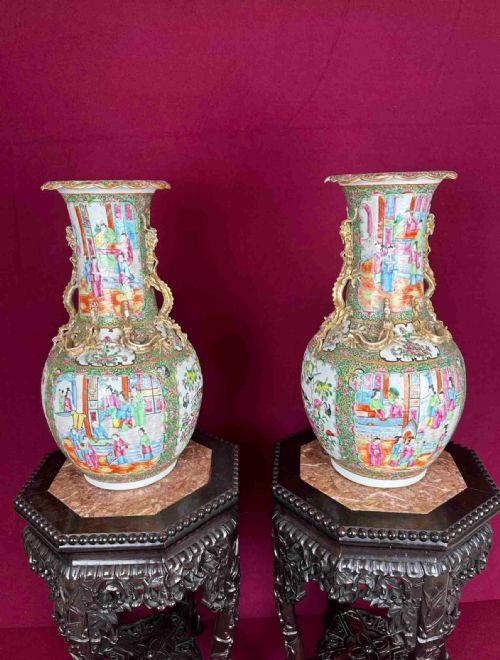
An antique rose medallion pair consists of matched Chinese export porcelain vessels decorated with distinct panelled scenes of figures, birds, and flowers framed by intricate enamel borders. These matching sets predominantly originate from the nineteenth century, spanning periods from early Victorian decades through to nineteen-ten.
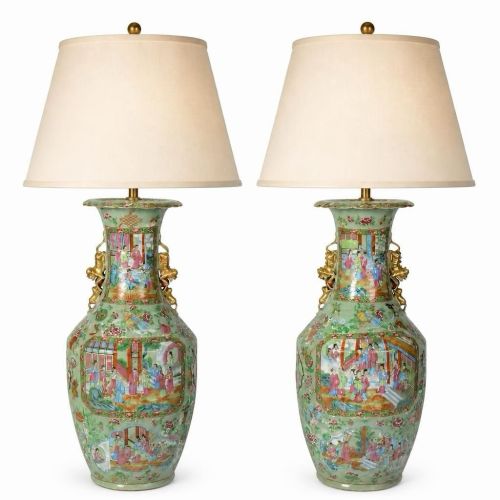
Buyers seeking this search phrase encounter various practical forms adapted for display, including large decorative vases, garden seats, and table lamps fitted with shades. The inventory showcases pieces mounted in ormolu, placed on hardwood stands, or wired for lighting alongside traditional lidded vessels.
Materials and construction methods
These items rely on white porcelain bodies painted with polychrome enamel pigments, often featuring characteristic pink rose motifs and gilded highlights applied in Chinese workshops. Artisans utilised durable ceramic techniques during the Qing dynasty to create both functional garden furnishings and decorative display pieces.
Later adaptations incorporate metalwork mounts, brass components, and wood elements such as stands or lamp bases, combining original nineteenth-century porcelain with structural additions from subsequent decades.
Materials recorded across the inventory include porcelain, enamel, brass, fabric, gold leaf, gilt bronze, wood, and hardwood.
Assessing quality in rose medallion pieces
Superior examples display crisp brushwork in the enamel painting, with finely detailed facial expressions on figures and precise geometric borders that maintain sharp definition across both objects in the pair. The depth of the porcelain glaze and the complexity of the narrative panels distinguish standard production wares from more meticulously hand-painted items.
The degree of preservation in the gilding and enamel colours contributes significantly to the visual impact, as does the integration of period mounts such as ormolu or carved hardwood stands that complement the porcelain body.
The Antique Rose Medallion Pair Glossary
- Rose Medallion
- A style of nineteenth-century Chinese export porcelain featuring distinct central medallions surrounded by alternating panels of figures, birds, and flowers.
- Canton
- A major port in China from where vast quantities of decorated porcelain were exported to Western markets during the Qing dynasty.
- Famille Rose
- A major palette of Chinese ceramic glazes introduced in the eighteenth century, dominated by opaque pink or rose enamel colours.
- Ormolu
- Gilded bronze mounts applied to decorative objects and furniture, frequently found enhancing nineteenth-century porcelain vases and lamps.
- Garden Seat
- A barrel-shaped ceramic or porcelain piece designed for indoor or outdoor seating, often pierced with coin motifs.
- Chinese Export
- Porcelain manufactured in China specifically for trade and sale to European and American markets.
Antique Rose Medallion Pair: Frequently Asked Questions
Are these lamps original?
Many nineteenth-century vases were converted into table lamps during later periods to suit domestic lighting needs. The wiring and fittings are generally modern additions placed onto antique porcelain bodies.
Some items retain their original vase configuration alongside separate lamp conversions, allowing buyers to choose between display vessels and functional lighting.
How do I date a pair?
Dating relies on stylistic indicators within the enamel painting, the characteristics of the porcelain body, and associated mounts like brass or ormolu. Nineteenth-century examples often reflect Qing dynasty export conventions.
Victorian era production dates can sometimes be narrowed down using specific decorative motifs and the presence of nineteenth-century hardware or stands.
Why do they come in pairs?
Symmetrical display traditions in both Chinese and Western interiors favoured balanced arrangements of matching decorative objects. Pairs of vases or lamps were placed on mantelpieces, sideboards, or tables to create visual harmony.
Matching pieces manufactured together share identical panel designs and colour palettes, maintaining exact equilibrium in room decor.