
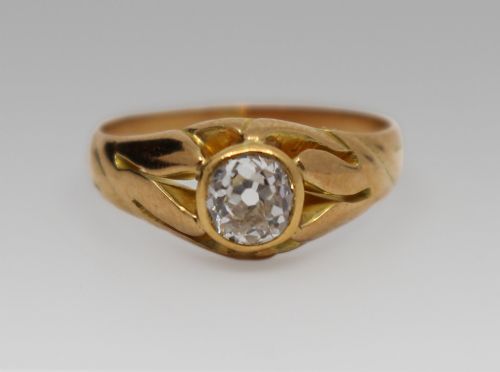
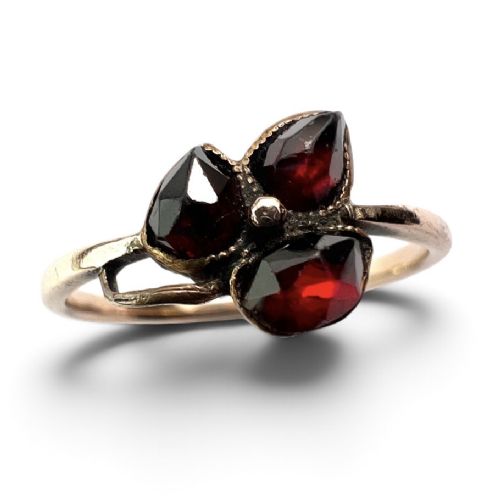
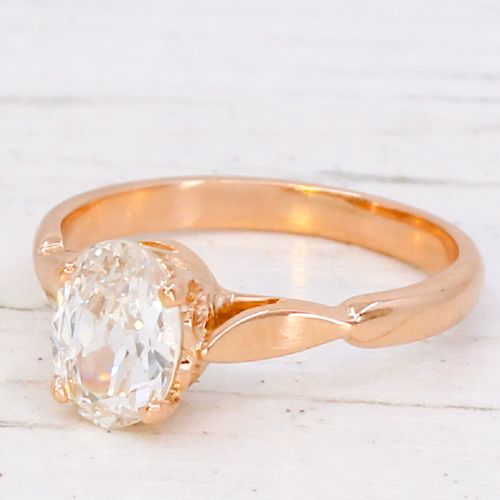
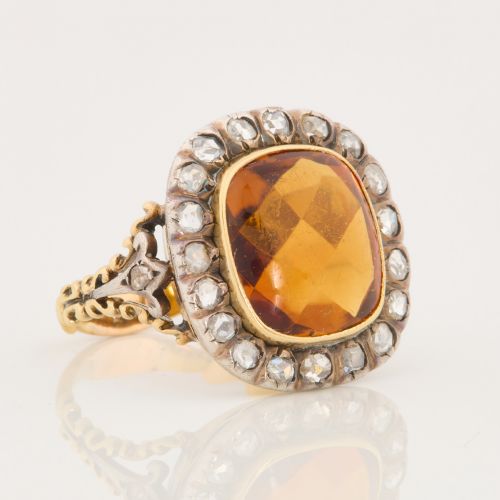
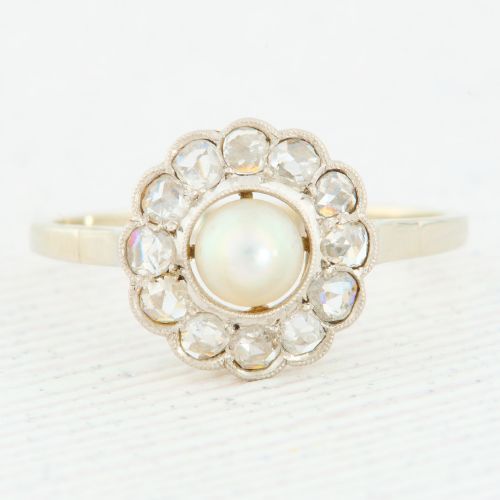
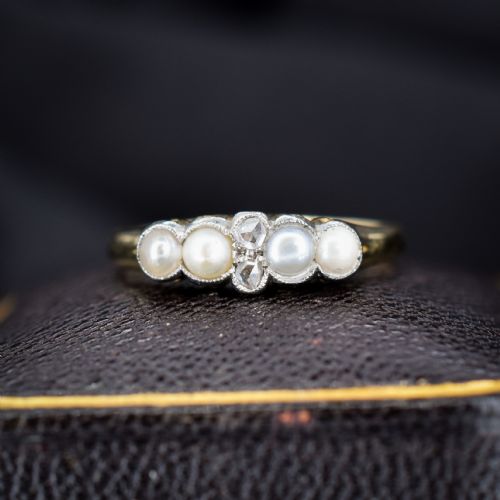
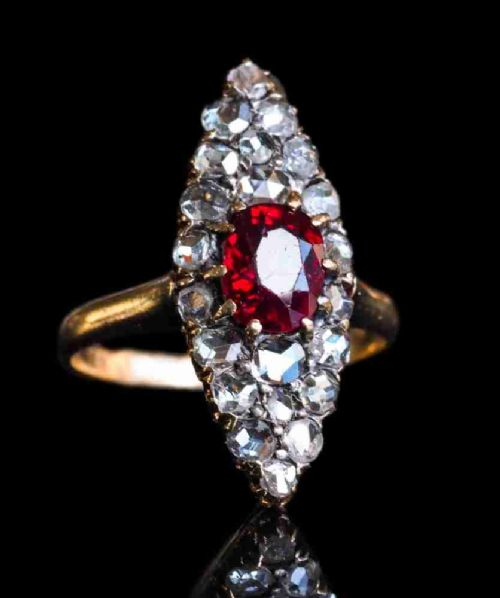


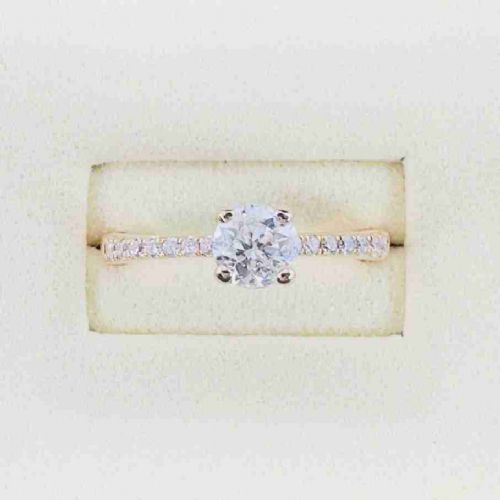


Antique Rose Cut Ring
An antique rose cut ring brings flat-faceted historical diamonds and coloured gems together in gold and silver settings.
Antique Rose Cut Ring
The selections span from early nineteenth-century turquoise and pearl designs to mid-century platinum cluster arrangements. Many examples combine rose cut diamonds with sapphires, rubies, or garnets set into yellow gold, white gold, or silver-topped gold.
Makers utilised traditional hand-fabrication methods, producing navette silhouettes, floral motifs, and intertwined bands. The stones sit low to the finger, offering flat profiles distinct from modern brilliant-cut engagement rings.
How they were made
Goldsmiths worked with yellow gold, rose gold, white gold, platinum, and sterling silver, often combining silver with gold in Georgian and Victorian pieces to keep diamond settings bright. Stones were hand-cut with triangular facets rising to a central apex, lacking the pavilion of modern brilliant cuts.
Cluster and navette formats relied on close-set configurations where small foils or reflective backings were occasionally placed behind stones to enhance luminosity. Shanks were hand-carved or cast, incorporating engraved shoulders, snake motifs, and pierced galleries.
Listings feature yellow gold, rose gold, white gold, platinum, and silver-topped gold across Victorian, Edwardian, Georgian, and mid-century periods.
What varies in quality
The overall harmony of stone arrangement and the symmetry of the hand-cut rose facets determine the visual impact of each piece. Intact original settings, clear hallmarks, and well-preserved gemstone surfaces distinguish finer examples from altered items.
The depth of the metalwork, the weight of the gold or platinum shank, and the security of the claw or collet settings separate standard production from master craftsmanship.
The Antique Rose Cut Ring Glossary
- Rose cut
- A historic diamond cut featuring a flat base and a domed crown covered in triangular facets. This style predates modern brilliant cuts and produces a gentle, glassy reflection.
- Cluster ring
- A ring design featuring a central gemstone surrounded by a border of smaller stones. These formations frequently use diamonds around sapphires, rubies, opals, or pearls.
- Navette
- A boat-shaped ring setting that extends along the finger. This elongated silhouette is common in Georgian and Victorian gemstone clusters.
- Silver-topped gold
- A construction technique where silver is applied to the front of a gold piece to keep diamond settings white and bright. The reverse remains yellow gold to prevent tarnishing against the skin.
- Collet setting
- A low-profile metal collar that encircles the edge of a gemstone. This secure mounting method holds flat-backed stones close to the band.
Antique Rose Cut Ring: Frequently Asked Questions
How do I care for an antique rose cut ring?
Clean these rings gently using soft cloths and warm soapy water, avoiding harsh ultrasonic cleaners that can dislodge foil-backed stones or damage pearls. Remove the ring during manual tasks to protect delicate antique settings and softer gem materials like turquoise or opal.
Store each piece individually in a lined box or pouch to prevent metal scratching and gemstone abrasion. Regular checks by a specialist jeweler ensure the prongs and collets remain secure.
Can I wear an antique rose cut ring every day?
Daily wear is possible with robust Victorian and Edwardian gold or platinum mountings, provided the settings are structurally sound. Lighter Georgian silver-topped pieces require greater care due to their age and delicate construction.
Consider removing the ring during heavy lifting, gardening, or sports to safeguard the antique goldwork and delicate rose cut facets. Routine inspection of the claws helps maintain long-term durability.
How do I tell a Georgian ring from a Victorian one?
Georgian rings often feature closed-back foil settings under rose cut diamonds, alongside silver-topped gold construction and hand-carved shoulders. Motifs frequently include mourning themes, paste accents, and asymmetrical floral arrangements.
Victorian pieces transition towards open-backed settings and incorporate varied gemstone combinations like garnets, opals, and turquoise. Hallmarks became more standardised during the Victorian period, aiding precise dating through assay office stamps.