

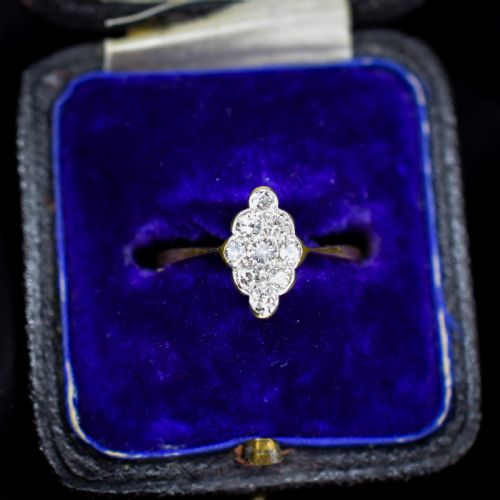
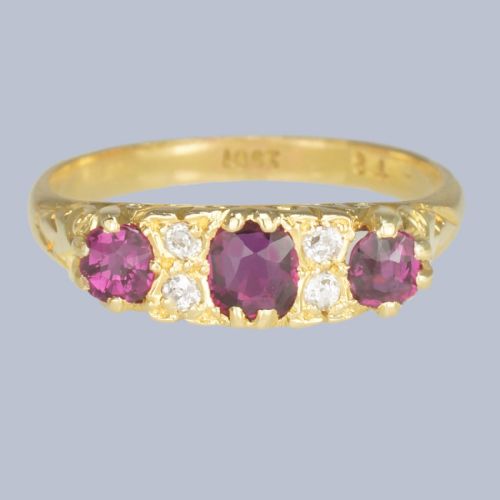
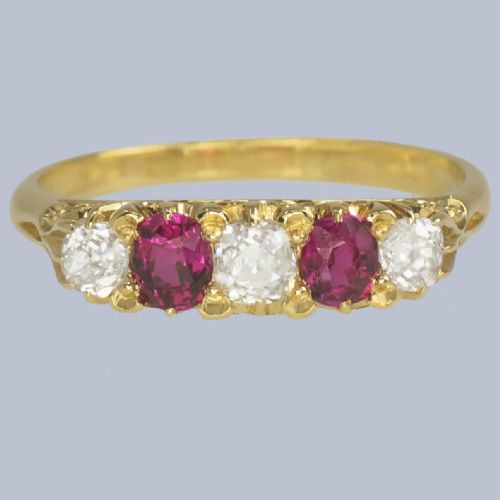

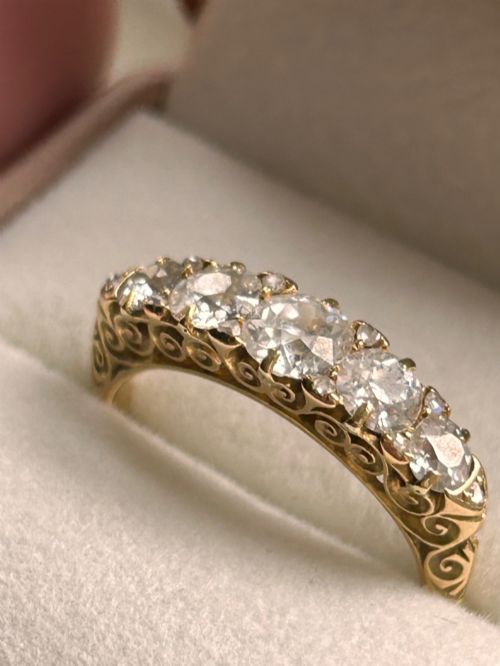



Victorian Diamond Boat Ring
A victorian diamond boat ring brings curved elegance to the hand, pairing old cut stones with warm gold.
Victorian Diamond Boat Ring
A victorian diamond boat ring presents an elongated, curved profile that sits low upon the finger, mimicking the hull of a vessel. These pieces emerge primarily from the Victorian and Edwardian eras, spanning into the early twentieth century.
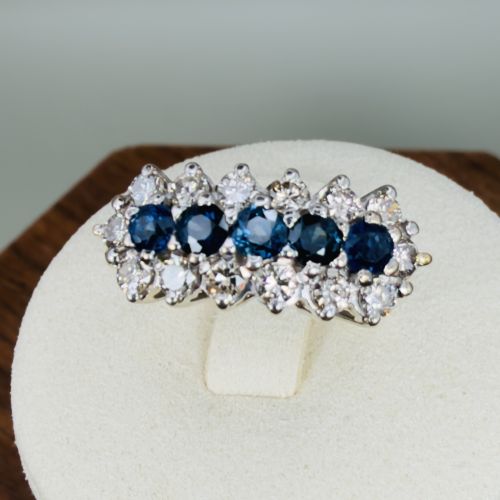
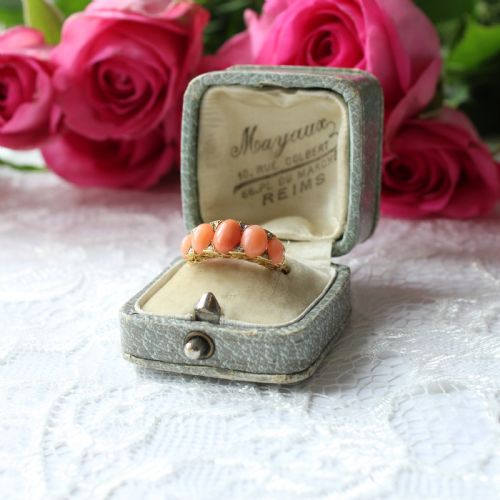
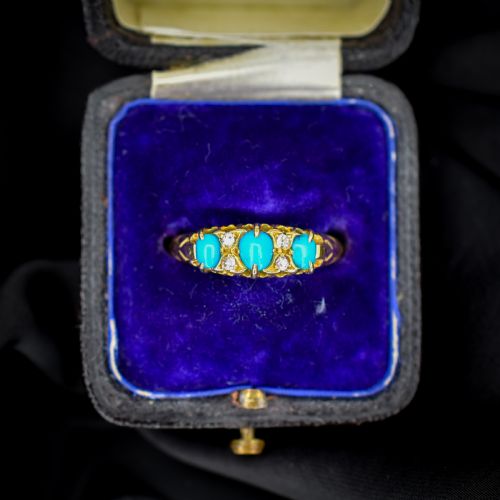
Makers often combined diamonds with coloured gems such as sapphires, rubies, turquoise or opals within the curved mounting. The most common format on this page is the classic boat shape or navette cluster rendered in eighteen-carat gold.
Materials and construction
Goldsmiths worked chiefly in eighteen-carat gold, occasionally incorporating platinum or silver to mount the stones and alter the play of light. Stones were shaped by hand as old cuts, old mine cuts or rose cuts, displaying distinct facets unique to the period.
Workshops utilised sturdy bezel or prong settings to secure each gem along the curving gallery. Hallmarks struck in offices such as Birmingham and Chester verify the metal standards and assay years.
Jewellers centuries ago carved tiny wooden hulls before shaping gold boats, ensuring every tiny diamond sailed straight.
Variations in quality
Quality rests upon the symmetry of the curved mounting and the crispness of the hand-carved details along the shoulders. A superior piece displays balanced proportions where the central stones integrate harmoniously with the gold silhouette.
The choice and matching of secondary gems, whether deep blue sapphires or vibrant rubies, dictate the distinction of the work. Weight and presence of old cut diamonds further elevate certain examples above standard production.
The Victorian Diamond Boat Ring Glossary
- Boat ring
- A ring featuring a curved, boat-shaped gallery that tapers towards the ends. This silhouette became especially popular during the late nineteenth century.
- Navette
- A boat-shaped or eye-shaped cluster design pointing horizontally across the finger. The term derives from the French word for a little ship.
- Old cut
- A hand-faceted diamond cut characteristic of the nineteenth century, featuring a smaller table and a higher crown. These stones scatter candlelight with a distinctive, softer charm.
- Old mine cut
- A precursor to the modern brilliant cut with a cushion outline and deep pavilion. Goldsmiths set these chunky diamonds into late nineteenth-century gold mountings.
- Hallmark
- Official stamps pressed into the metal indicating purity, origin and assay office. British pieces frequently bear marks from Birmingham or Chester.
Victorian Diamond Boat Ring: Frequently Asked Questions
How do I wear a boat ring?
A boat ring sits comfortably alongside plain wedding bands due to its low profile on the hand. The curved gallery follows the natural line of the finger.
Many collectors prefer wearing these pieces singly to let the elongated shape draw full attention. Daily care requires removing the ring during heavy manual tasks to protect the gold settings.
What is the difference between boat and navette shapes?
Boat rings generally feature a curved, hull-like contour that sits across the finger with gentle tapering. Navette designs present a sharper, more pointed eye-shaped silhouette.
Both forms share an elongated profile designed to maximise finger coverage. Jewelers often used similar cluster settings for both styles.
Can I resize an antique gold ring?
Most eighteen-carat gold rings can be adjusted by a skilled jeweller experienced in handling antique pieces. The process requires care to preserve original hallmarks and shoulders.
Consulting a specialist ensures the structural integrity of the curved boat gallery remains undisturbed. Alterations depend on the specific placement of side stones and engraving.
What gems accompany the diamonds?
Natural sapphires and rubies frequently appear alongside diamonds in these curved gold settings. Turquoise, opals and pearls also feature in specific regional designs.
These coloured stones are typically arranged in rows or cluster patterns following the hull shape. Each combination creates a distinct contrast against the yellow gold.