




Antique Room Carpet
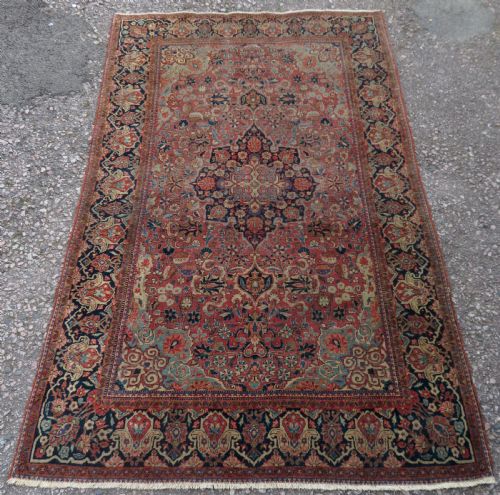
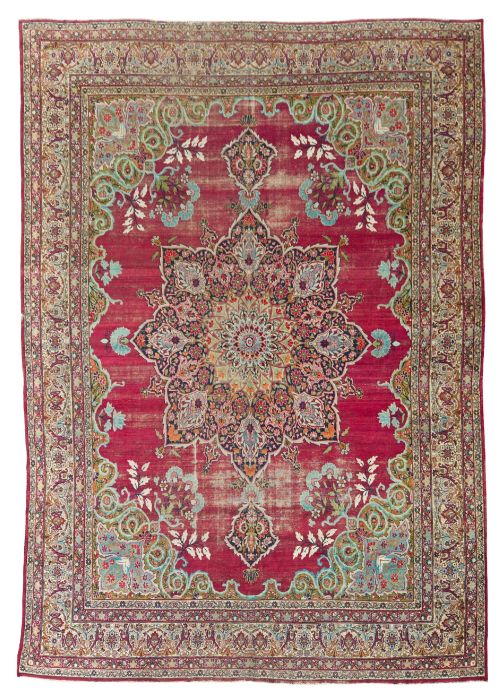
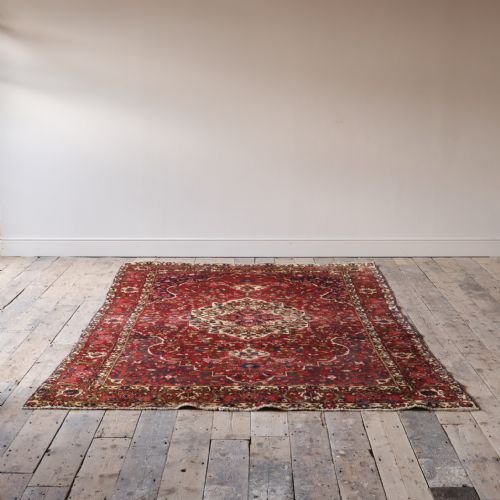
An antique room carpet anchors a large interior with woven wool, cotton, and silk from Persian, Turkish, and Indian workshops.
Antique Room Carpet
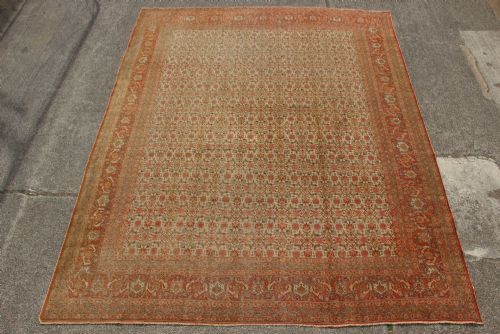
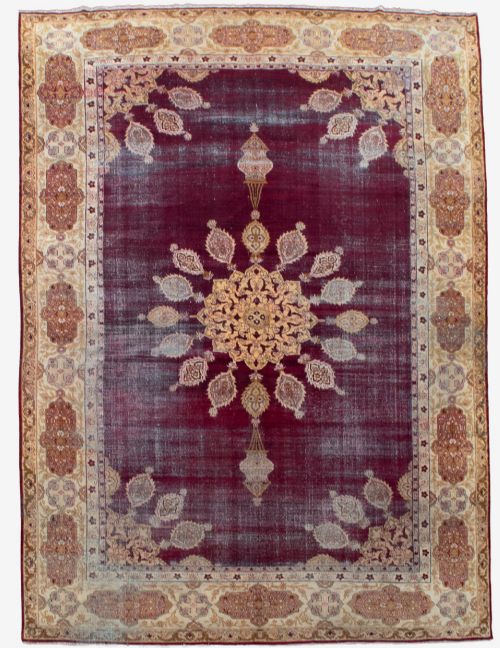
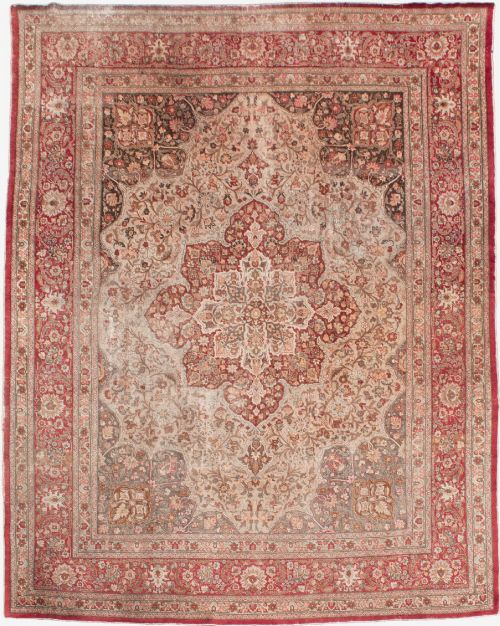
An antique room carpet provides generous floor coverage for expansive interiors, spanning periods from the late nineteenth century through to the mid-twentieth century. These large-scale textile pieces originate primarily from Persian centres such as Heriz, Tabriz, Kirman, and Ferahan, alongside Turkish Oushak and northern Indian Amritsar weaves.
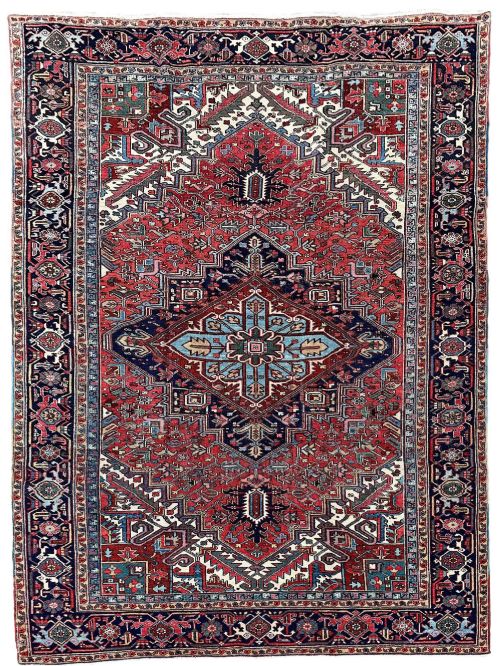
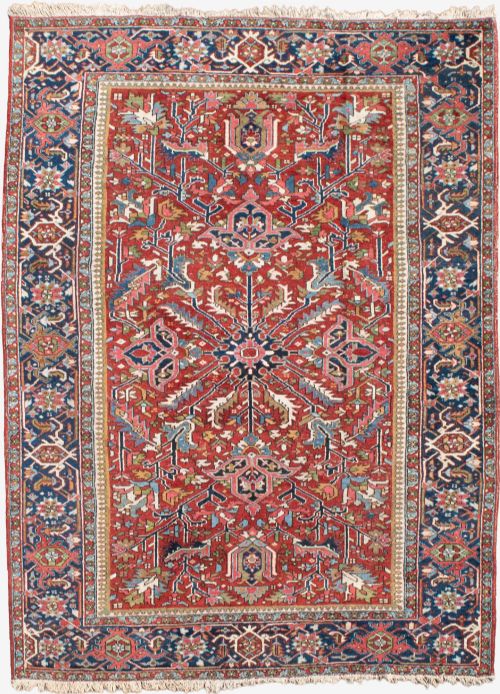
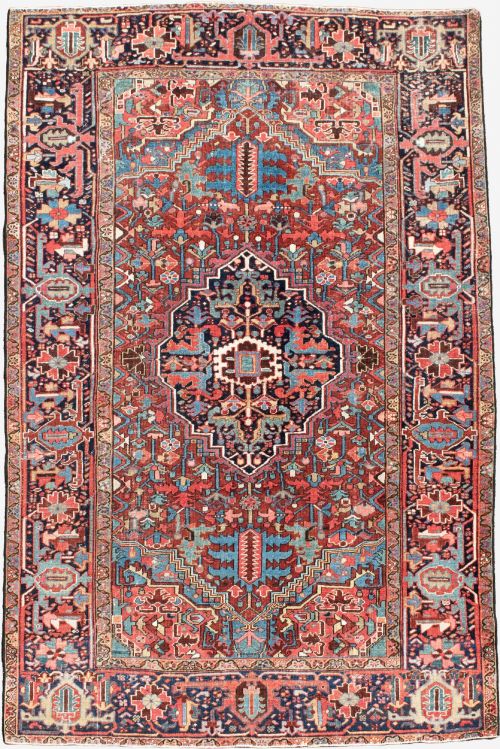
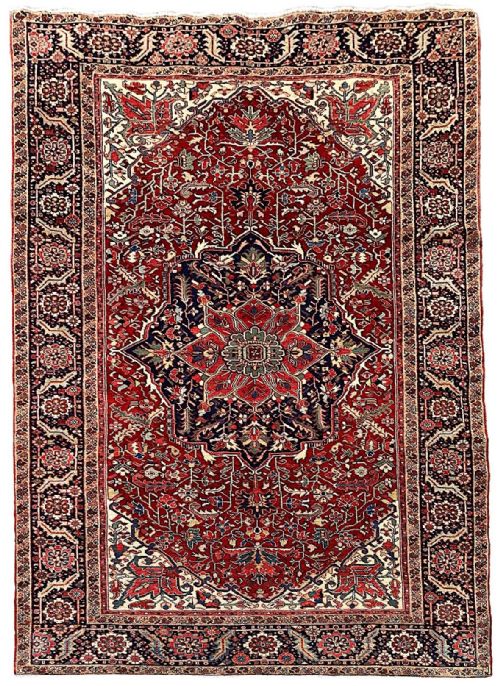
The version most commonly met on this page is the room-size Persian Heriz carpet, often dating from the nineteen-twenties or nineteen-hundreds. Such pieces typically display bold geometric medallions, robust corner spandrels, and substantial dimensions suited to substantial drawing rooms and dining halls.
Materials and construction methods
Weavers constructed these large floor coverings using durable wool pile knotted onto cotton foundations, occasionally incorporating silk details in specific regional traditions. Natural dyes provided the deep indigos, terracotta reds, and soft pastel grounds seen across Persian and Anatolian workshops.
Larger country house formats required significant labour by multiple artisans working on upright looms to achieve dense knot counts and structural stability. The resulting textiles combined resilience with pliable wool piles designed to withstand heavy foot traffic in domestic spaces.
Listings feature room-size carpets spanning from eighteen-seventy to nineteen-forty, predominantly utilising wool pile on cotton foundations.
Distinctions in quality and execution
The upper tier of these textiles displays exceptional harmony in natural dye palettes, precise knot density, and balanced compositional geometry from master workshops. Finer examples maintain crisp drawing within medallions and floral motifs, whereas lesser pieces show compressed proportions or inconsistent dye saturation.
Structural integrity and wool quality dictate longevity, with tightly packed foundations preventing distortion across room-size formats. The handling of secondary borders and the clarity of field details separate standard commercial output from distinguished regional carpets.
Benlian
The Antique Room Carpet Glossary
- Medallion
- The central ornamental motif dominating the field of the carpet, frequently geometric in Heriz weaves or curvilinear in Tabriz and Kirman designs.
- Spandrel
- The triangular corner area situated between the central medallion field and the outer borders, often filled with contrasting floral or geometric vine work.
- Warp
- The vertical foundation threads running lengthwise through the carpet, onto which the wool knots are tied and secured.
- Weft
- The horizontal threads passed back and forth between rows of knots to bind the structure firmly together.
- Pile
- The upright cut ends of the knotted yarn that form the usable surface of the carpet, traditionally spun from sheep wool.
Antique Room Carpet: Frequently Asked Questions
How do I choose the right size room carpet?
Measure the floor area of the room while leaving a uniform margin of exposed floorboards or surround between the edges of the carpet and the skirting boards. Large formats such as those from Heriz or Oushak suit principal reception rooms where furniture sits comfortably atop the central field.
Consider the placement of heavy dining tables or seating groups to ensure the textile proportions match the room layout without crowding doorways.
What is the difference between Heriz and Tabriz carpets?
Heriz carpets typically feature robust geometric medallions, sturdy architectural lines, and bold terracotta or rust tones designed for heavy domestic use. Tabriz weaves tend to exhibit finer curvilinear floral patterns, intricate vase designs, and softer pastel or ivory palettes.
Both Persian traditions originate from distinct regional aesthetic preferences established during the nineteenth and early twentieth centuries.
How should an antique carpet be cleaned?
Vacuum the surface regularly using low suction without a rotating brush roll to prevent pulling the wool pile or damaging the cotton foundation threads. Professional specialist cleaning is recommended for deep washing to protect natural dyes and restore the lanolin in the wool.
Avoid chemical spot treatments or excessive moisture which can weaken nineteenth-century textile fibres.
Where were Oushak carpets made?
Oushak carpets were woven in the historic town of Usak in western Anatolia, Turkey, utilising distinctive large-scale floral patterns and restrained colour palettes. These pieces gained popularity in European and American country houses for their decorative versatility and warm terracotta or pink grounds.
Anatolian workshops maintained distinct weaving traditions that set them apart from contemporary Persian production.