

Antique Rococo Commode
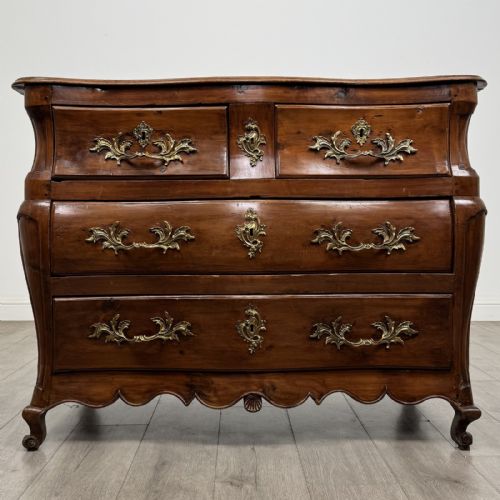
An antique rococo commode brings curved French elegance, rich marquetry and polished marble into a room.
Antique Rococo Commode
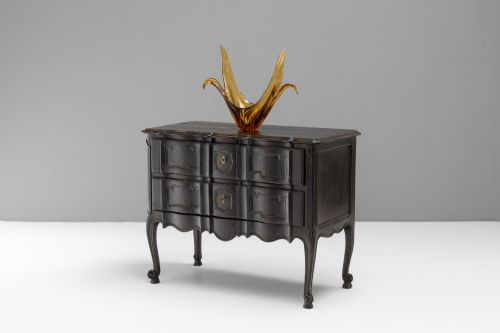
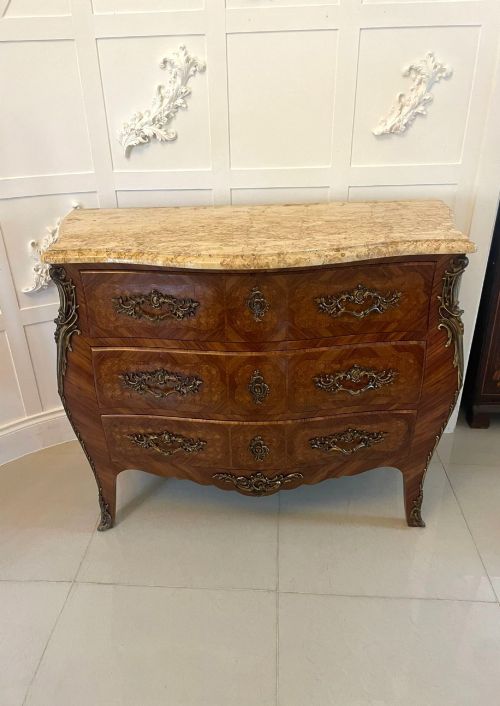
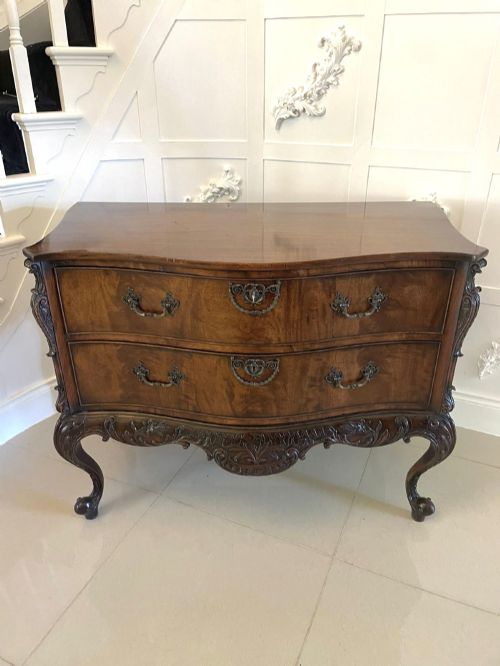
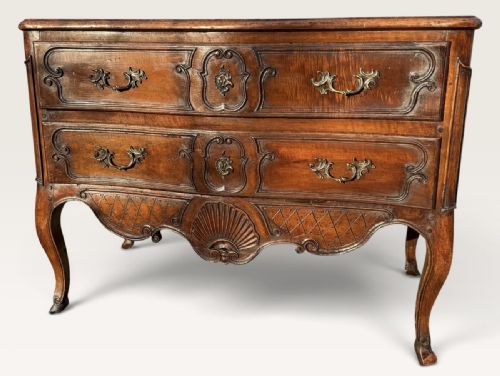
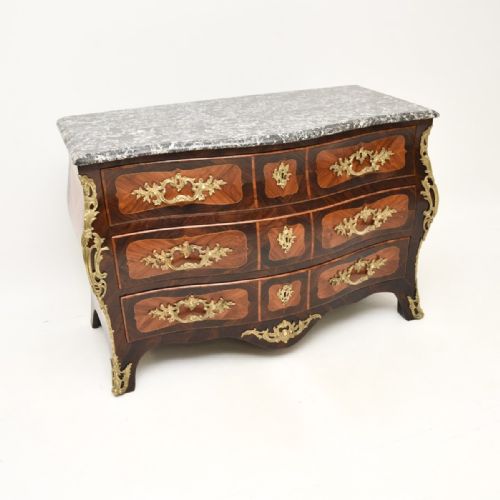
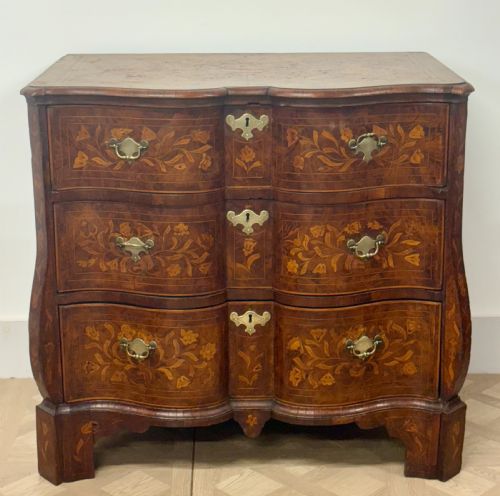
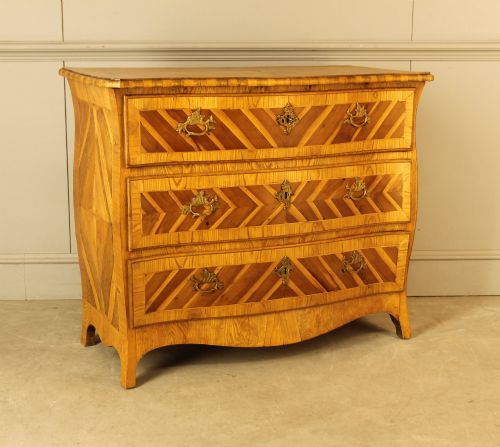
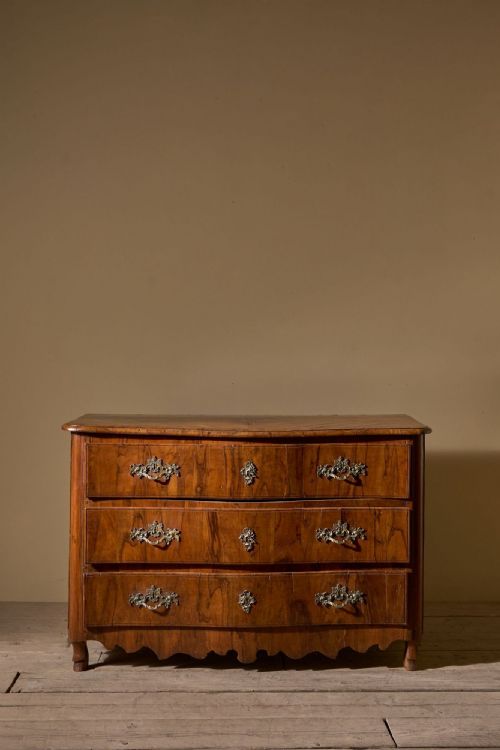
The antique rococo commode is a low chest of drawers defined by flowing serpentine lines, bombé profiles and asymmetrical ornamental mounts. When searching for this phrase, buyers encounter examples ranging from authentic eighteenth-century continental pieces to later nineteenth-century revival interpretations.
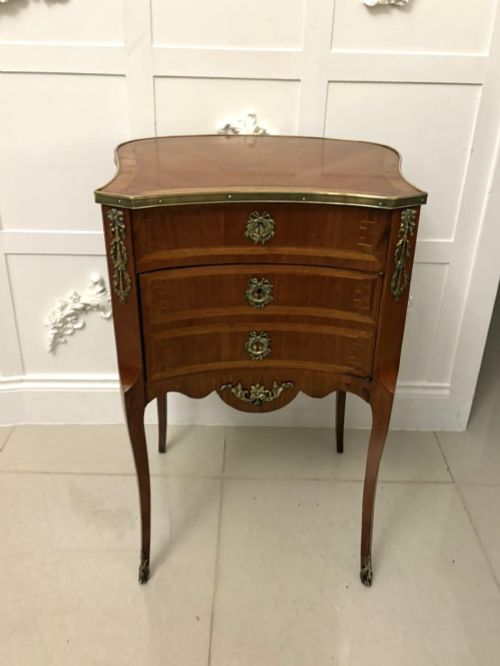
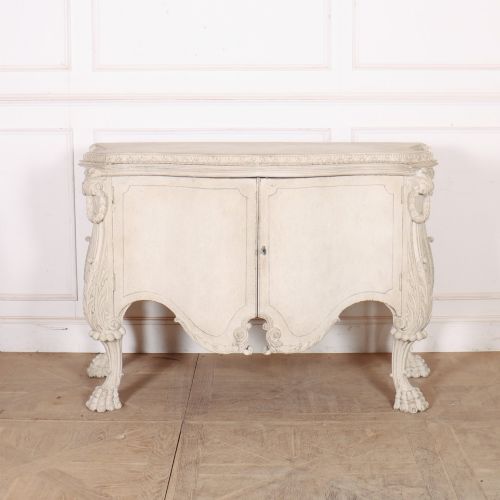
Most pieces seen on this page date from the eighteenth and nineteenth centuries, spanning French, German, Dutch, Swedish and Italian origins. Forms include standard drawer chests, compact bedside tables and larger side cabinets topped with marble.
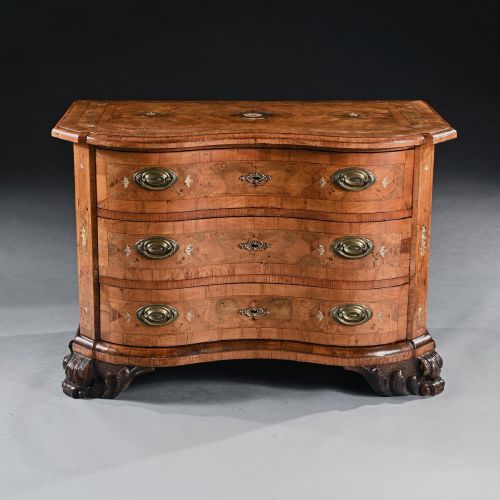
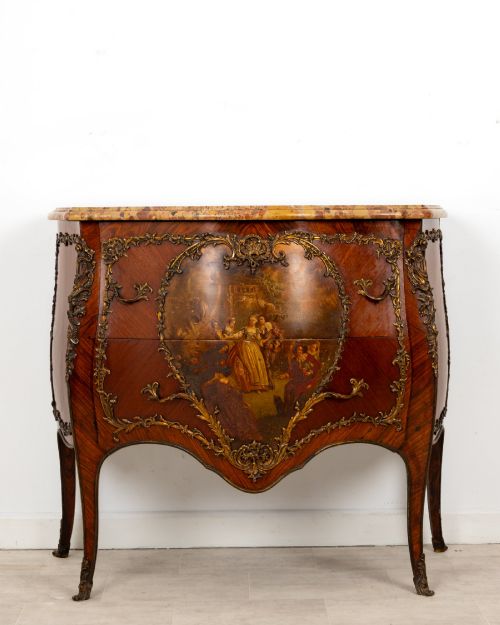
Makers utilised walnut, kingwood and mahogany as foundational timbers, often enriching the carcase with intricate marquetry, parquetry or painted finishes. These low storage items served primarily in formal bedchambers and receiving rooms.
Materials and construction
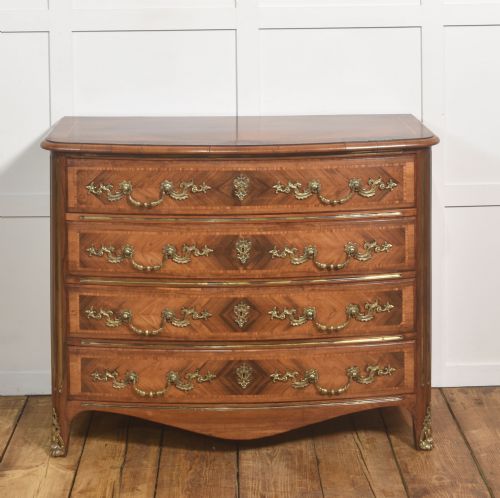
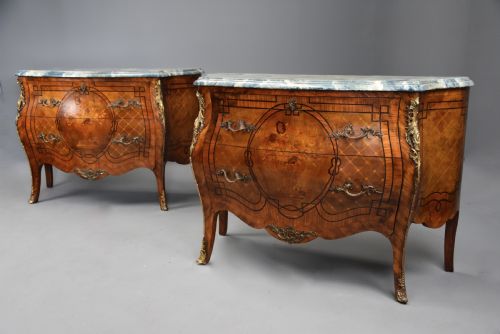
Cabinet makers built these carcases from native and exotic timbers including walnut, oak and kingwood, frequently applying veneers in geometric parquetry or elaborate floral marquetry patterns. Surviving examples demonstrate precise joinery designed to accommodate the swelling curves of the bombé shape.
Mounts in ormolu and gilt bronze accent the corners, handles and aprons, cast and chased to complement the woodwork. Heavy slabs of marble, shaped to match the serpentine contours, form the upper surfaces on many continental pieces.
Swedish makers carved bombastic curves with such enthusiasm that even drawers had to learn geometry.
Evaluating quality and execution
Quality rests in the precision of the timber matching and the crispness of the bronze or ormolu mounts rather than surface shine alone. Finer pieces display continuous grain alignment across drawer fronts and hand-chased metalwork that fits the wooden carcase precisely.
The integrity of the structural frame and the original integration of marble tops distinguish superior examples from later copies. Subtle details, such as hand-cut dovetails in the drawer construction and refined marquetry depth, separate workshop tiers.
Jacques Bircklé·E. Kahn
The Antique Rococo Commode Glossary
- Bombe
- A swelling, outward-curved commode profile. This bulging shape requires skilled veneer work over curved wooden framing.
- Ormolu
- Gilt-bronze decorative mounts applied to corners and handles. The technique involves mercury gilding on cast bronze.
- Marquetry
- Fitted wood veneers forming pictorial designs. Artisans cut contrasting timbers together to create floral or geometric patterns.
- Serpentine
- A wave-like front contour curving inward at the centre and outward at the ends. This shape defines many eighteenth-century commodes.
- Parquetry
- Geometric wood veneer patterns arranged in repetitive arrays. Squares, triangles and cubes create structured surface textures.
Antique Rococo Commode: Frequently Asked Questions
What rooms suit an antique rococo commode?
These decorative chests function well as living room side tables or striking bedroom storage units. Their finished marble tops and shaped profiles provide a display surface for lamps and objects.
Placement should account for the outward-sweeping bombé shape, which requires slightly more floor clearance than a standard straight-fronted chest of drawers.
How do I identify an eighteenth-century piece?
Authentic eighteenth-century examples display hand-cut joinery, old timber shrinkage and period-appropriate wood species like walnut and olive wood. Construction methods visible inside the drawers reveal traditional handmade techniques.
Revival pieces from the nineteenth century often utilise machine-sawn elements and different secondary woods, even when employing historical styles.
Are marble tops original to these commodes?
Many continental commodes, particularly French and Italian models, were designed specifically to carry fitted marble slabs. These stone tops protected the wooden carcase and added weight and stability.
When examining a piece, check that the marble edge follows the exact serpentine curves of the wooden moulding beneath it.
What is the difference between Louis XV and revival styles?
Original Louis XV pieces date from the mid-eighteenth century and reflect the organic asymmetry and lighter construction of that reign. Revival pieces emerged later, notably around the late nineteenth century during periods of historical reinvigoration.
Revival commodes often use denser core timbers and heavier cast bronze mounts while closely imitating earlier French aesthetics.