

Antique Rococo Commode Chest
An antique rococo commode chest brings sinuous curves and rich marquetry into a room, offering both sculptural presence and deep storage.
Antique Rococo Commode Chest
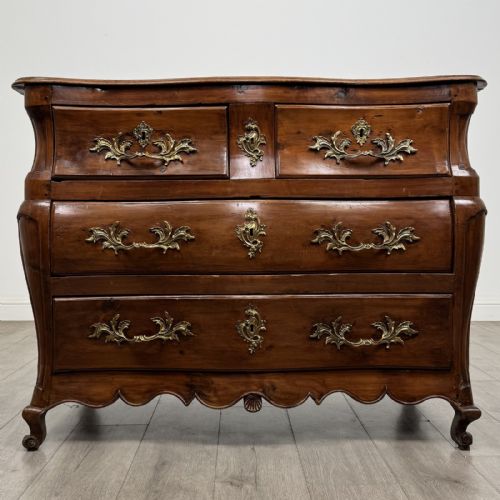
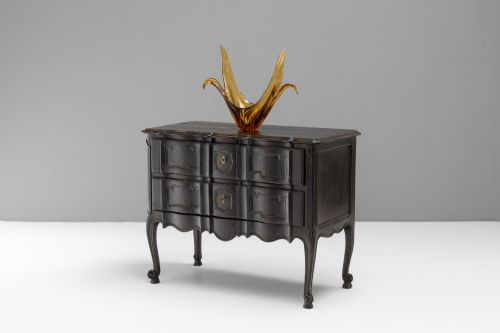
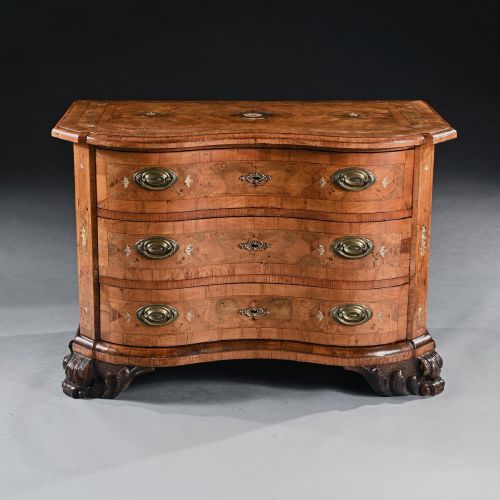
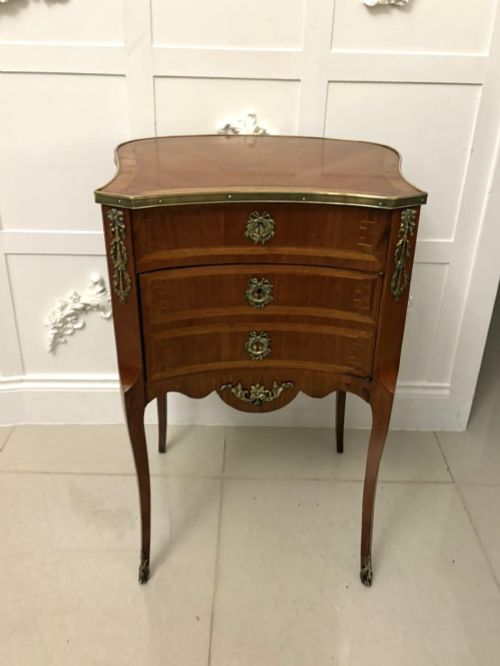
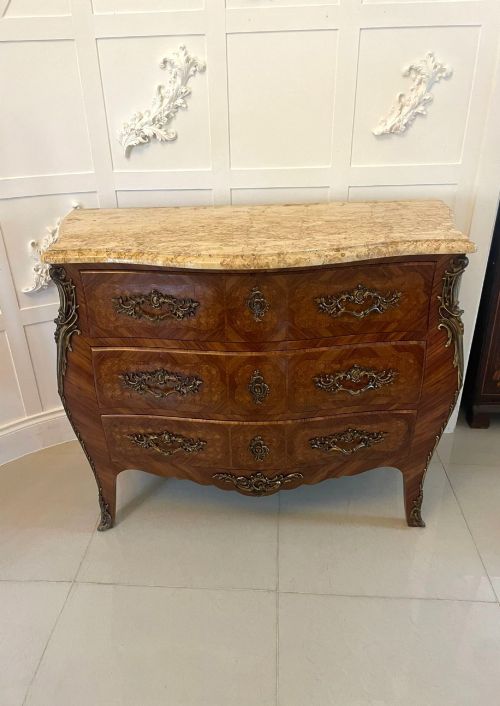
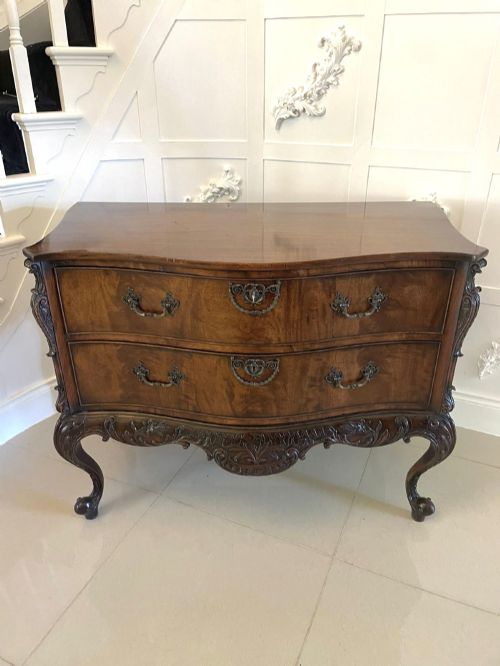
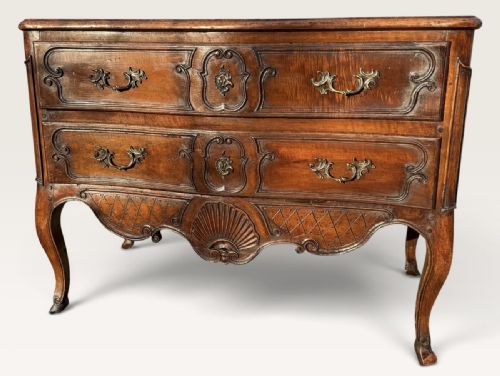
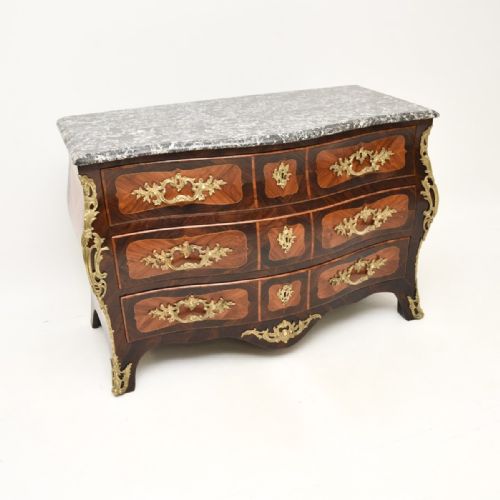
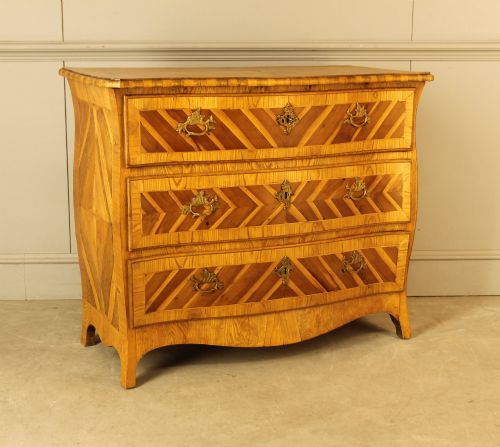
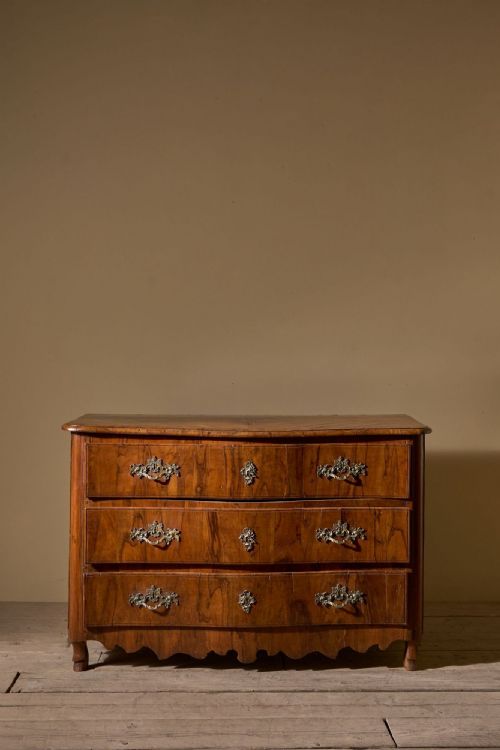
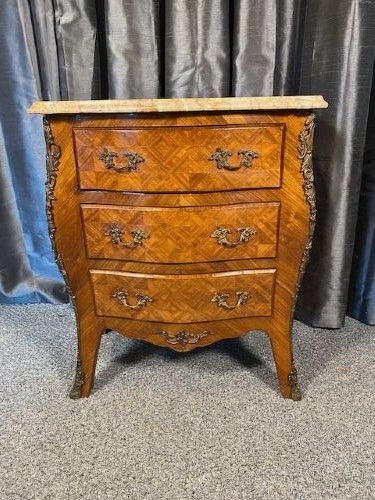
An antique rococo commode chest serves primarily as a decorative storage cabinet or drawer unit, appearing in forms such as serpentine fronts, bombé profiles, and petite bedside tables. These pieces emerge from origins spanning eighteenth-century workshops in France, Germany, Sweden, and the Netherlands, alongside later nineteenth-century revivals.
Buyers encounter eighteenth-century originals alongside nineteenth-century revival interpretations created in similar continental styles. The physical shape relies heavily on sweeping lines, asymmetric decoration, and substantial marble tops placed above banks of drawers.
Materials and construction methods
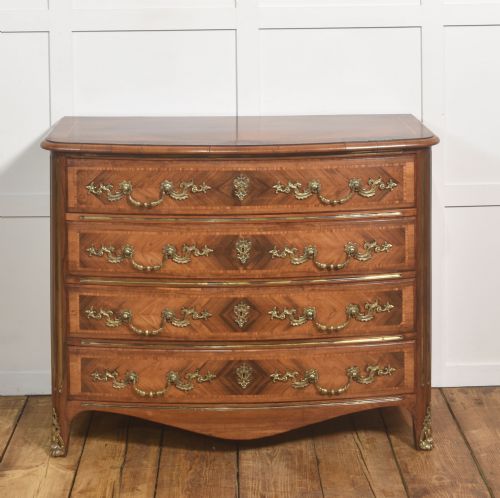
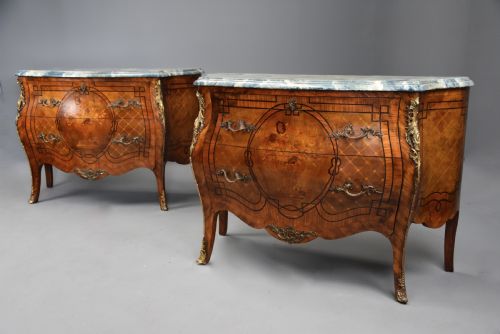
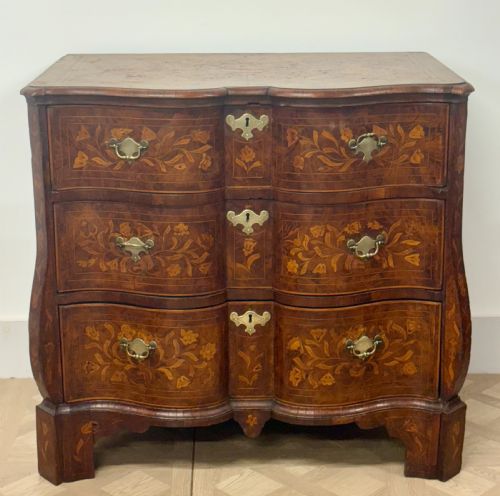
Cabinet makers built these frames using dense hardwoods like walnut, kingwood, mahogany, and oak, often applying intricate marquetry and parquetry veneers across the exterior surfaces. Panels of walnut, olive wood, and satinwood create contrasting geometric or floral patterns.
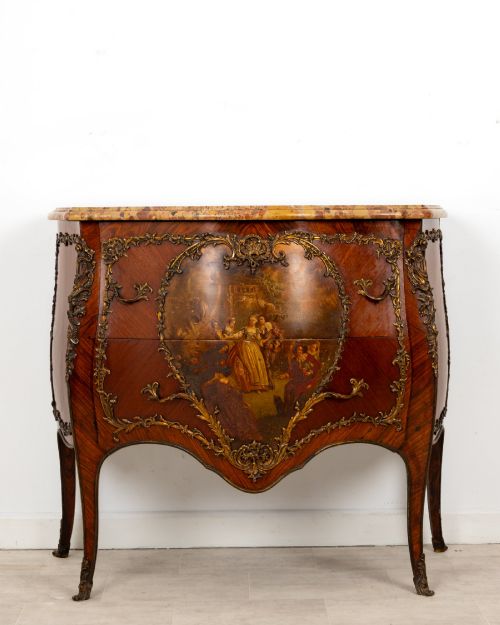
Mounts cast in ormolu and gilt-bronze frame the corners and handles, while decorative painted finishes such as Vernis Martin and japanned lacquer adorn specific revival pieces. Heavy marble slabs sit directly upon the shaped timber carcases.
The listings span multiple centuries, ranging from eighteenth-century walnut originals to twentieth-century French kingwood and japanned lacquer cabinets.
Distinguishing quality in construction and design
The sophistication of the timber inlay and the crispness of the gilt-bronze or ormolu mounts dictate the visual standard of the piece. Hand-cut marquetry that integrates contrasting woods with precision stands apart from simpler surface decoration.
The fluidity of the serpentine or bombé timber shaping reveals the joiner's skill in handling difficult curved carcases. Heavy, finely chased metal mounts secured cleanly to the wood indicate superior atelier output.
Jacques Bircklé·E. Kahn
The Antique Rococo Commode Chest Glossary
- Bombe
- A swelling, bulging outward profile characteristic of continental furniture. This curved silhouette requires advanced veneer shaping techniques.
- Marquetry
- Decorative patterns formed by fitting small pieces of wood veneer into a timber backing. Craftsmen use varied grain directions to create pictorial designs.
- Ormolu
- Gilded bronze mounts applied to furniture edges and handles. This decorative metalwork highlights the sweeping contours of the design.
- Serpentine
- A shaped furniture front curving outward in the centre and inward at the sides. This contour defines many seventeenth and eighteenth-century drawer chests.
- Vernis Martin
- A type of simulated Japanese lacquer developed in France during the eighteenth century. It employs multi-layered varnish to achieve glossy painted scenes.
Antique Rococo Commode Chest: Frequently Asked Questions
What is a bombe commode?
A bombe commode is a drawer chest featuring outward-bulging curved sides and fronts. This expansive shape creates a robust silhouette typical of mid-eighteenth-century European cabinet work.
Such pieces rely on expert timber bending and veneer matching to follow the exaggerated contours smoothly without buckling.
How do I spot an 18th-century original?
Eighteenth-century originals display hand-cut joinery marks inside the drawers and natural ageing across the timber surfaces. The construction methods reflect period workshop practices rather than industrial production.
Examining the internal drawer linings and secondary woods helps verify the age of the carcase against later revival pieces.
Where were these commodes made?
These pieces originated primarily across continental Europe, with notable centres of production in France, Germany, Sweden, and the Netherlands. Each region developed distinct variations in timber choice and outline.
French workshops favoured elaborate ormolu mounts and marquetry, while Swedish and Dutch makers often emphasised striking walnut or painted finishes.
How do I care for a marble top?
Marble top commodes require gentle cleaning with a damp cloth and mild soap to protect the polished stone surface. Avoid acidic liquids that can etch the mineral structure over time.
The heavy stone simply rests or fixes onto the timber carcase, allowing for careful lifting during relocation.