
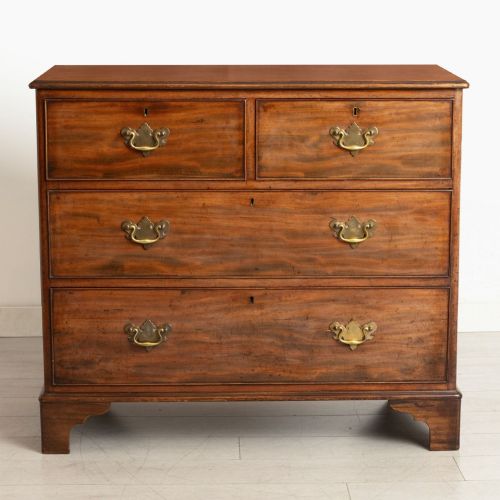
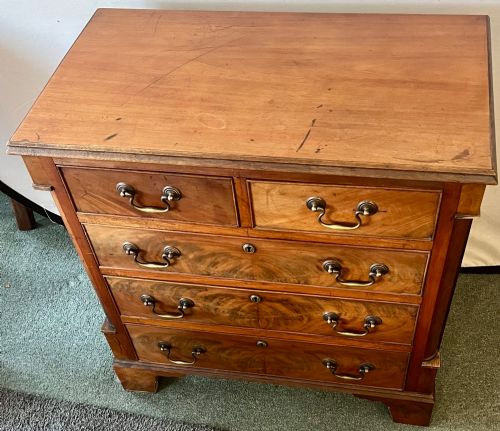
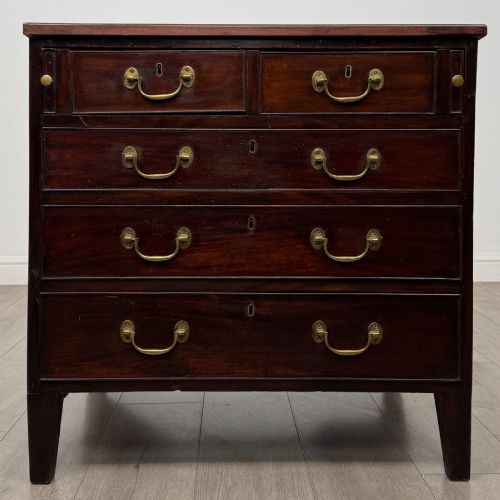
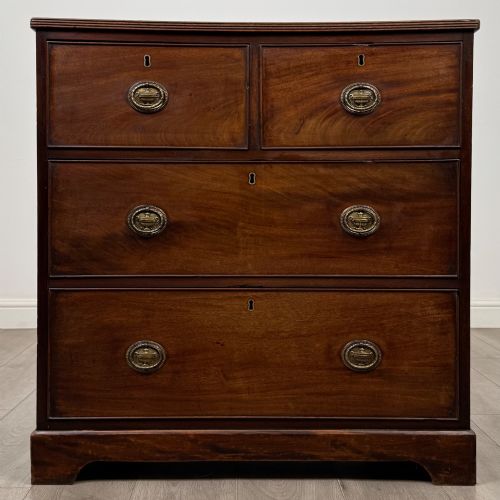
Two Drawer Mahogany Commode
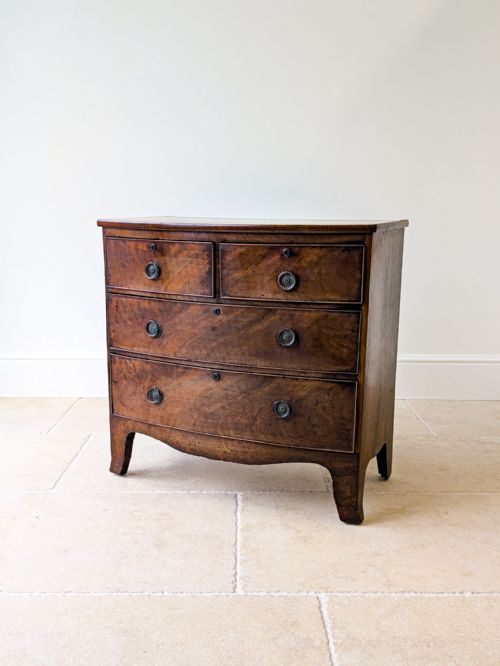
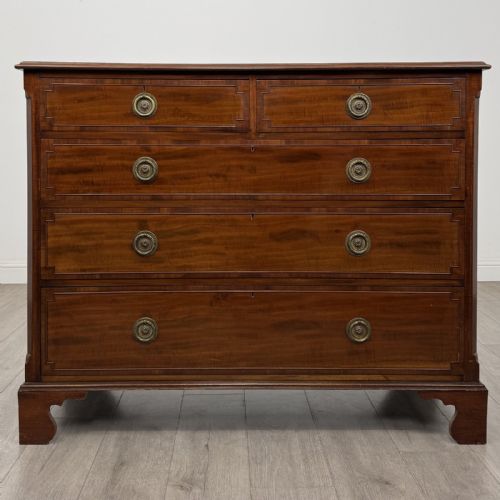
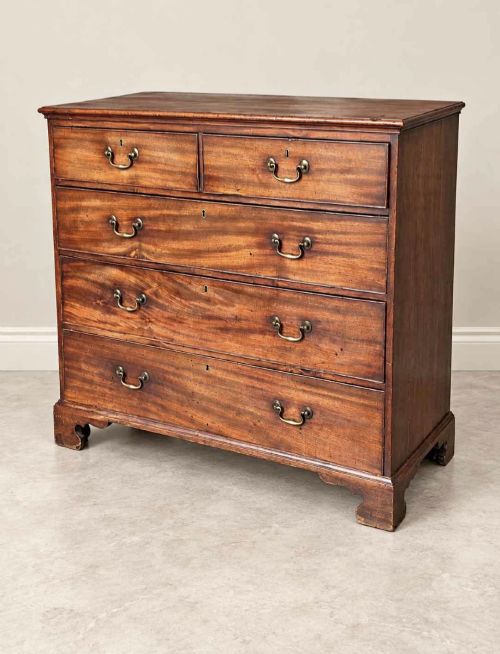
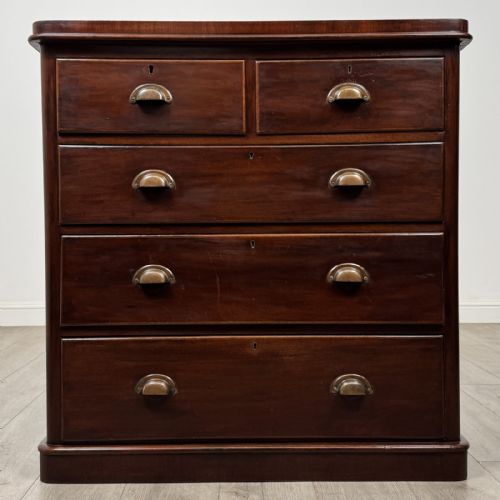
A two drawer mahogany commode offers clean proportions and rich timber grain, serving as a versatile storage piece for any traditional interior.
Two Drawer Mahogany Commode
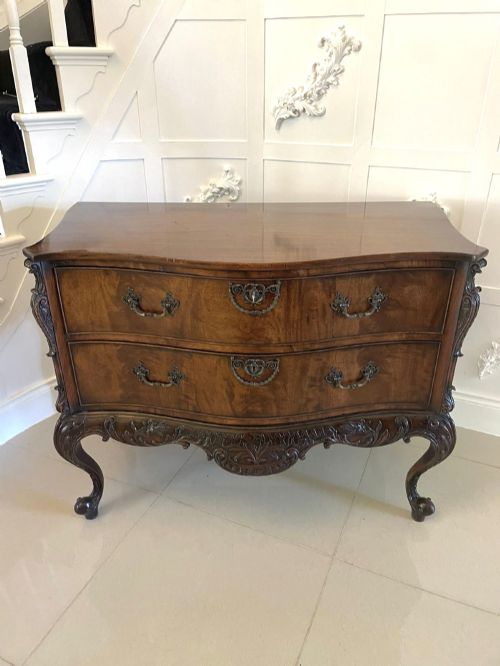
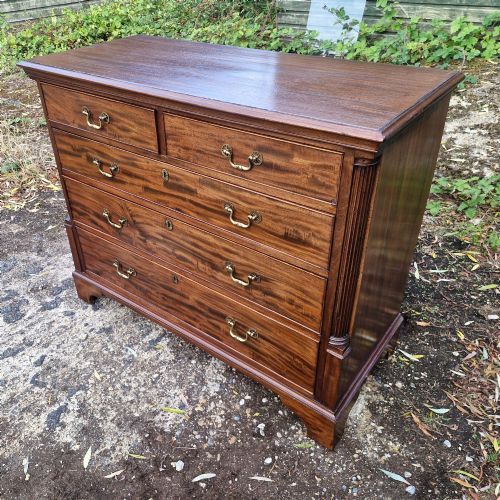
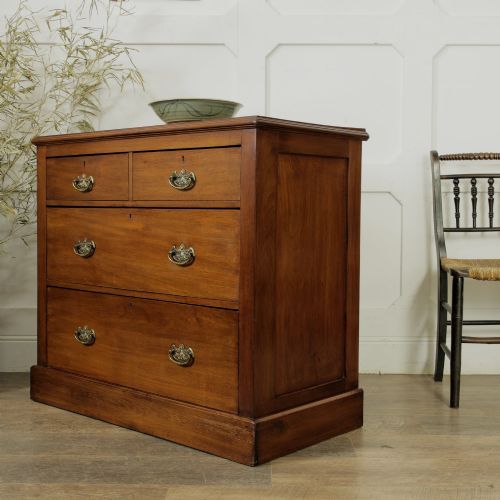
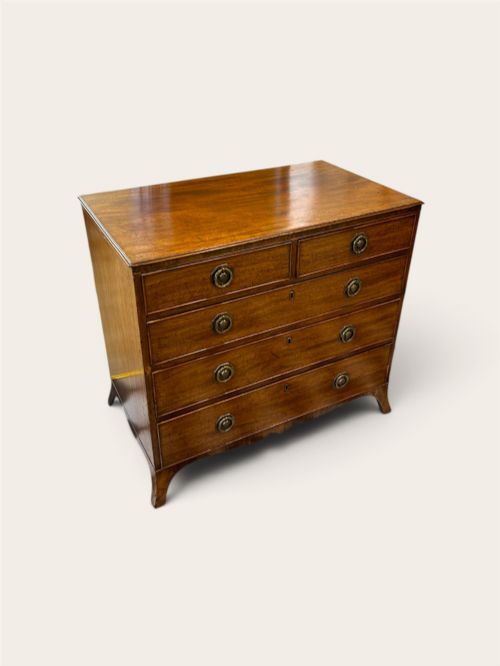
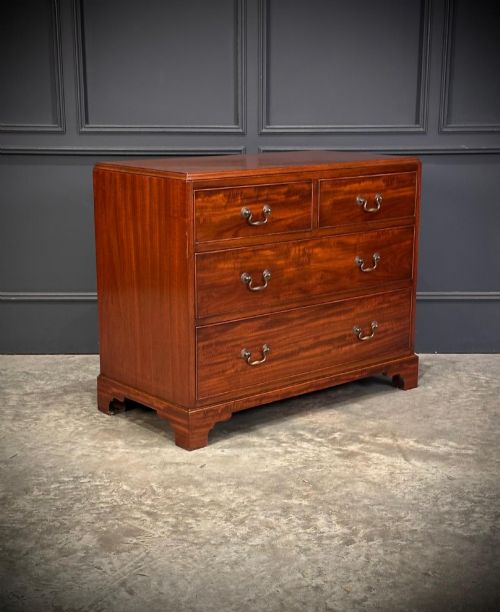
A two drawer mahogany commode combines compact proportions with deep storage, representing a specific form within the broader tradition of antique chests of drawers. These pieces emerge primarily from Georgian, Regency, and Victorian periods, alongside later Edwardian interpretations.
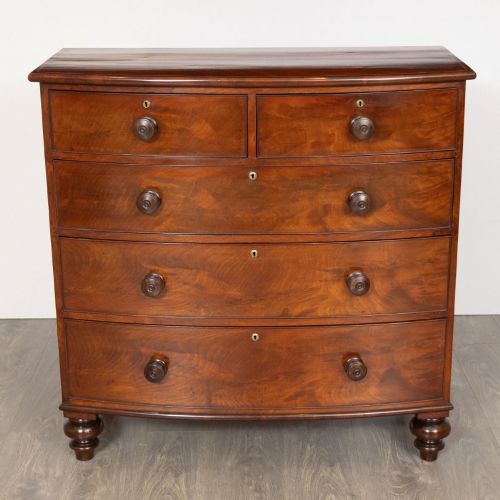
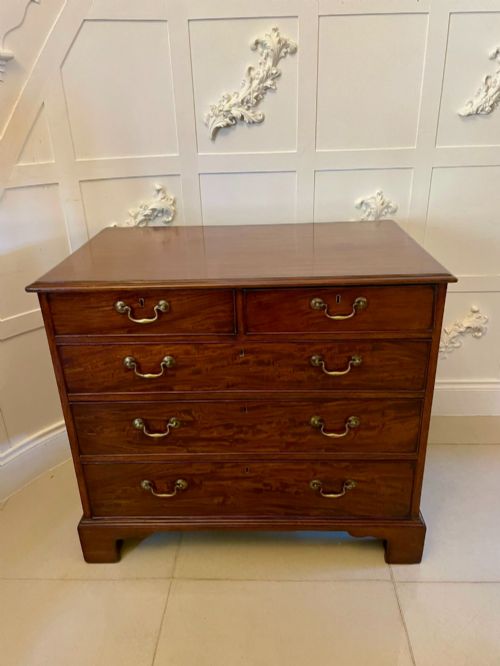
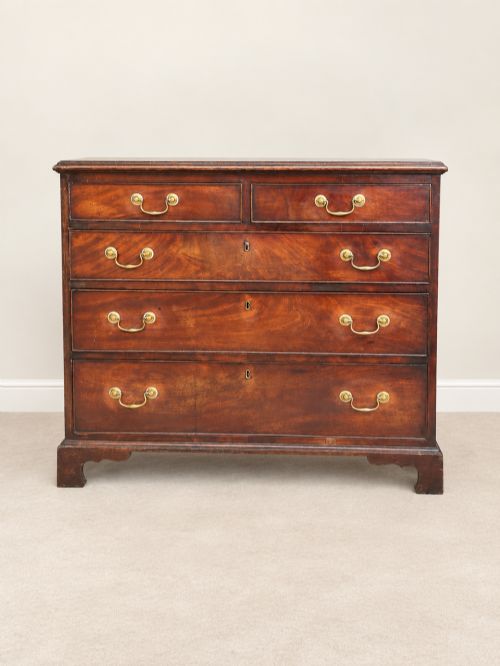
The most common formats on this page include bowfront and straight-front variations built from solid timber or figured veneers. Makers often shaped these smaller proportions for bedroom or parlour use, utilising the characteristic rich red-brown tones of the wood.
How they were made
Cabinet makers constructed carcass frames predominantly from mahogany, frequently pairing primary show woods with secondary structural timbers like pine or oak. Selected pieces display flame mahogany veneer applied to drawer fronts to create striking visual patterns.
Detailing often involved boxwood stringing, brass handles, and crossbanding in contrasting timbers such as oak. Construction techniques rely on traditional dovetailed drawer joints and solid timber panels designed to accommodate seasonal wood movement.
Current listings span the Georgian, Regency, Victorian, and Edwardian eras, showcasing mahogany, oak, pine, brass, and boxwood.
What varies in quality
The refinement of timber selection separates standard examples from exceptional ones, particularly where highly figured flame veneers or precise crossbanding appear. Grain matching across drawer tiers demonstrates the skill of the original maker.
Proportion and cabinetwork integrity dictate the standing of a piece within the period. Clean lines, crisp edge moulding, and untouched original brass hardware elevate the overall presence of the commode.
The Two Drawer Mahogany Commode Glossary
- Commode
- A low chest of drawers or cabinet originating in French furniture design. The term applies broadly here to compact drawer units.
- Flame mahogany
- A veneer cut from the fork of the mahogany tree where the branch meets the trunk. This produces a fiery, undulating grain pattern.
- Crossbanding
- A narrow strip of veneer laid perpendicular to the surrounding grain along the edges of a drawer or top. It provides a neat, decorative border.
- Bowfront
- A convex, curved front profile popular in Georgian and Regency cabinetmaking. This shape softens the corners of case furniture.
- Caddy top
- A tabletop style with a moulded edge that sits slightly above the main carcass. It derives its name from resemblance to tea caddy lids.
Two Drawer Mahogany Commode: Frequently Asked Questions
How do I style a mahogany commode?
Place the piece in a hallway or bedroom where its rich timber tones anchor the room. Pair it with a simple mirror or table lamp to complement the polished surface.
Keep surrounding decor restrained to let the grain and period proportions remain the focal point. The compact footprint suits smaller spaces effortlessly.
Are these commodes suitable for daily use?
Solid construction and sturdy dovetailed drawers make these pieces practical for storing everyday items. The durable mahogany timber withstands normal handling when treated with care.
Ensure drawers are pulled evenly to maintain smooth operation over time. Periodic waxing protects the antique finish from moisture.
How do I tell Georgian from Victorian pieces?
Georgian examples generally display restrained lines, bracket feet, and understated brass hardware. Timbers tend to have a warm, natural patina developed over centuries.
Victorian pieces often feature bolder proportions, turnip feet, or heavier mouldings. Flame mahogany veneers became particularly widespread during the nineteenth century.
What is flame mahogany?
Flame mahogany is a decorative veneer sliced from timber near the branch junctions of the tree. The resulting grain catches the light with a distinctive ripple effect.
Cabinet makers reserved this striking material for primary focal points like drawer fronts. It represents a marker of superior craftsmanship on period case pieces.