



Antique River Watercolour
An antique river watercolour captures the changing light of nineteenth and early twentieth century waterways across English and Welsh landscapes.
Identifying these watercolours
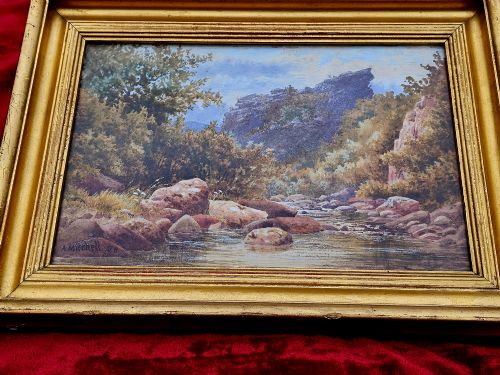
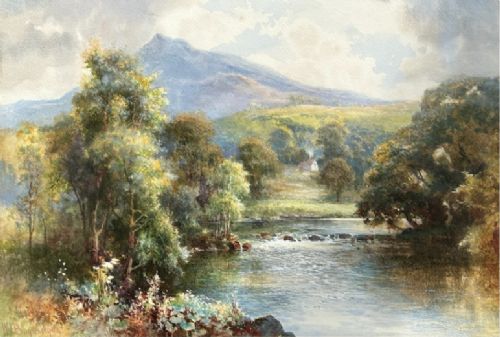
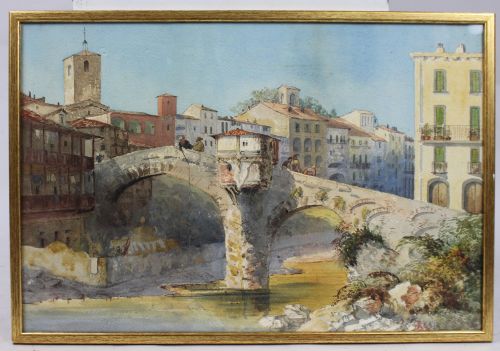
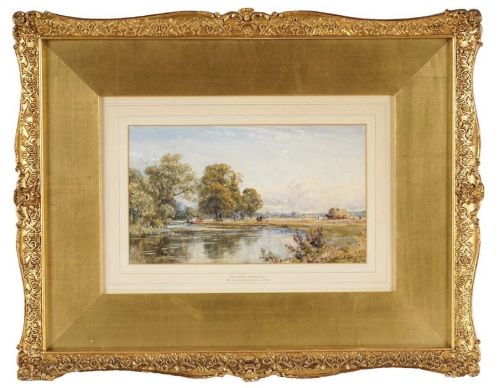
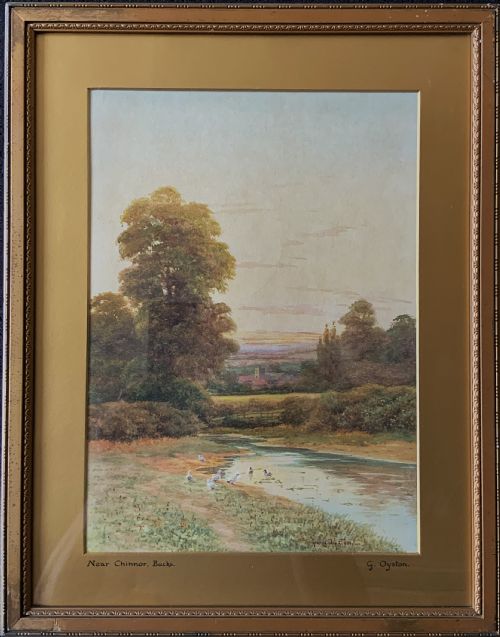
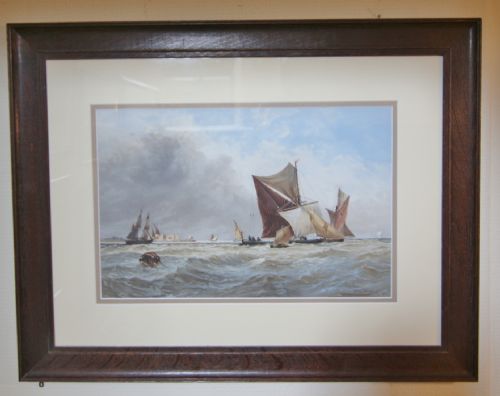
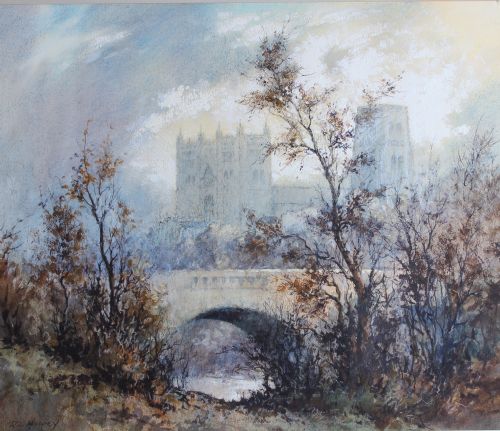
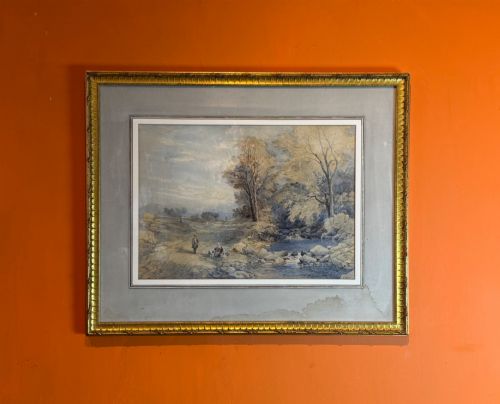
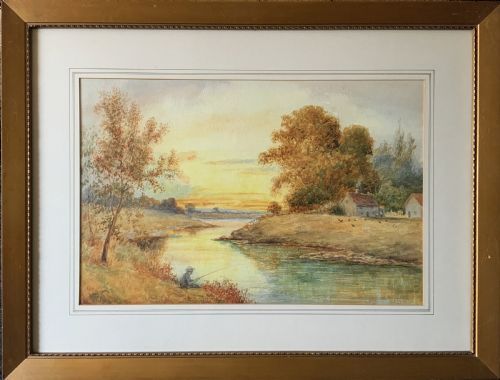
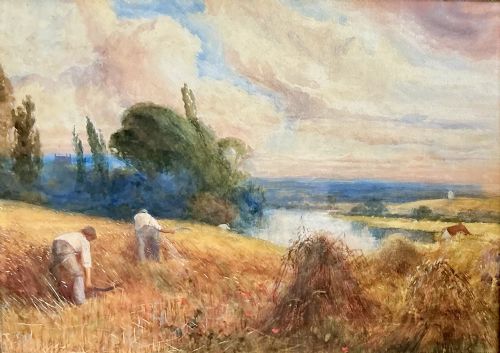
When you search for an antique river watercolour, you uncover original fine art paintings executed on paper depicting bridges, mills, and pastoral riverbanks. The pieces available span from the Victorian period through to the early decades of the twentieth century, focusing primarily on British rural and historical scenes.
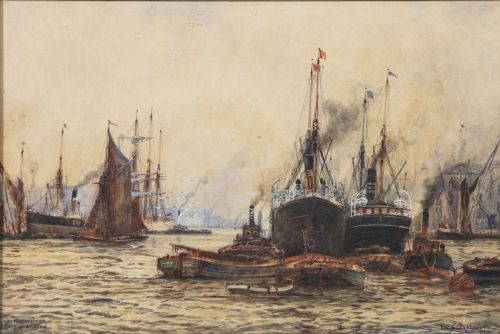
Subjects range from tranquil Devon and Yorkshire river views to Welsh valleys and Thames landmarks. Artists rendered these locations with careful attention to natural light, weather, and topography, often framing the waterways with cattle, bridges, or traditional vessels.
Materials and execution
Painters applied watercolour pigment directly onto paper surfaces, utilising the white of the sheet to create luminosity in the water and sky. These works were subsequently mounted behind glass within wooden frames, frequently finished in gilt wood to complement the palette of the composition.
The techniques relied on transparent washes alongside finer brushwork for detail, allowing artists to build depth across landscapes without heavy layers of paint.
Retail Price Guide 2026
Typical UK retail prices for river watercolour, calculated from the Sellingantiques database of over a million retail prices indexed since 2003. This retail price guide relies exclusively on Sellingantiques data; no external sources or auction records are used, so the figures do not describe the wider market.
Listings feature paper, watercolour pigment, and glass within wooden frames, spanning the Victorian era and the early twentieth century.
Assessing quality
The distinction between standard works and finer examples lies in the precision of brushwork and the artist's command of atmospheric light. Superior paintings demonstrate confident handling of water reflections and tonal transitions in the sky.
Provenance and documentation also separate works, with signed pieces by established nineteenth and twentieth-century painters holding greater art historical interest than anonymous school pieces.
Thomas Hunn·Robert Winchester Fraser·George Sykes·Tom Dudley·John Syer·David Cox Senior
The Antique River Watercolour Glossary
- Watercolour pigment
- Finely ground colour suspended in a water-soluble binder, applied to paper in washes. This medium allows for translucent effects characteristic of nineteenth-century British landscape painting.
- Gilt wood
- Timber framing coated with a thin layer of gold leaf or metallic gilt paint. This traditional finish enhances the visual weight of works on paper.
- Victorian Naturalism
- An artistic approach focusing on the detailed, realistic depiction of the natural world. This style governed many landscape paintings produced during the later nineteenth century.
- Fine art
- Original visual works created for aesthetic contemplation rather than practical utility. These paintings represent unique expressions by named or attributed artists.
Frequently Asked Questions
What subjects appear in these watercolours?
The compositions record British and Welsh rivers, bridges, cathedrals, and pastoral valleys.
Artists frequently included local elements such as cattle, toll bridges, and rowing boats within the wider landscape.
How should I frame these paintings?
Historical works on paper require preservation behind glass to protect the pigment from dust and atmospheric moisture.
Traditional wood frames or gilt wood moulding complement the period aesthetic of nineteenth-century art.
How do I date these watercolours?
Dating relies on artist signatures, period framing, and stylistic markers associated with Victorian naturalism.
Many works include inscribed dates or artist notations alongside the painted composition.
Where were these river scenes painted?
Locations span English rivers including the Thames, Ouse, and Esk, alongside Welsh waterways such as the River Conway.
Artists travelled across Britain to record specific historical towns, bridges, and rural valleys.