
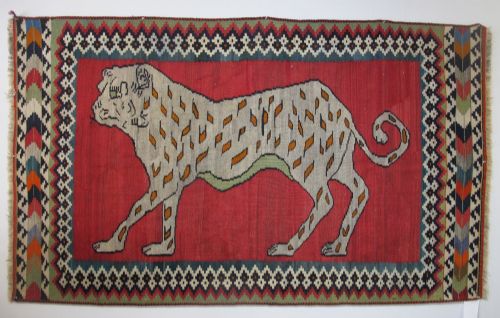
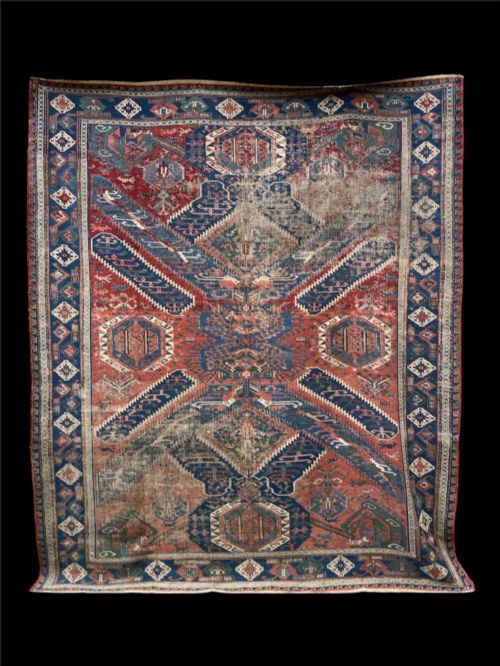
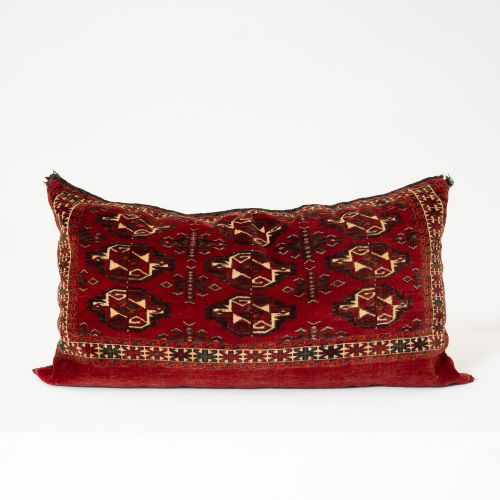
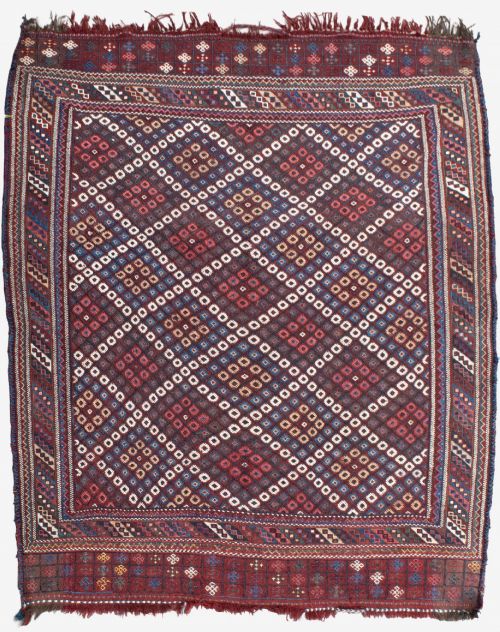


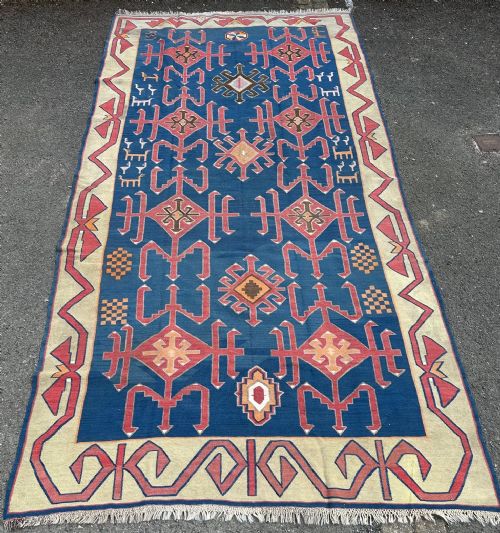


Antique Red Kilim Rug
An antique red kilim rug brings rich tribal geometry and saturated madder tones directly from nomadic weaving traditions into a modern interior.
Antique Red Kilim Rug
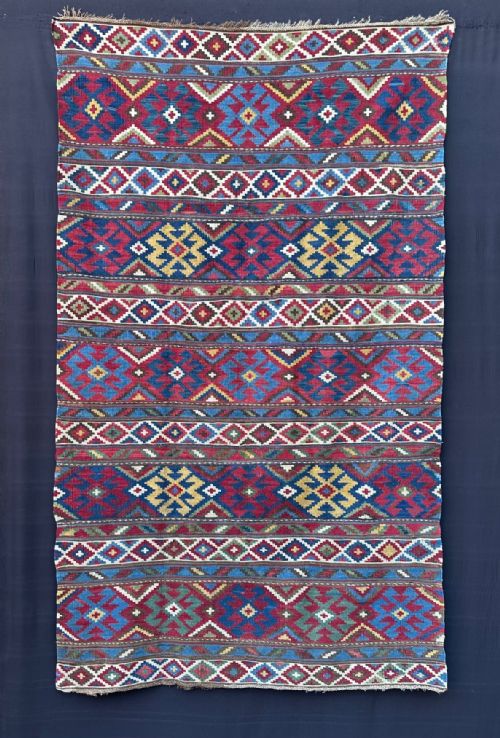
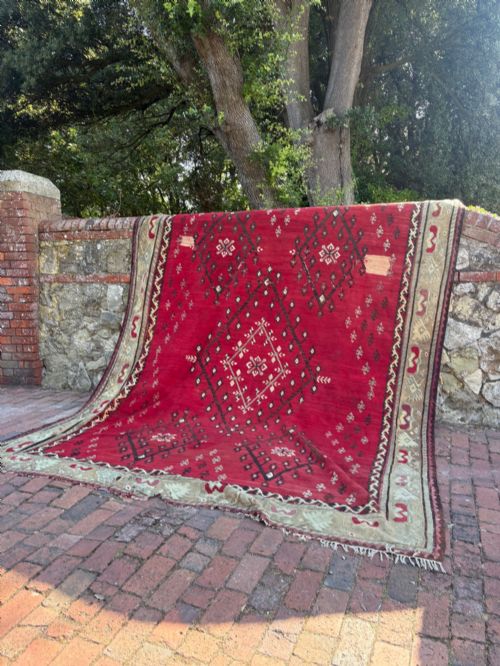
When searching for an antique red kilim rug, you encounter flatwoven textiles created by nomadic and village weavers across Persia, the Caucasus, Anatolia, and Central Asia. These pieces function without a pile, relying instead on interlocking warp and weft threads to build sharp geometric patterns.
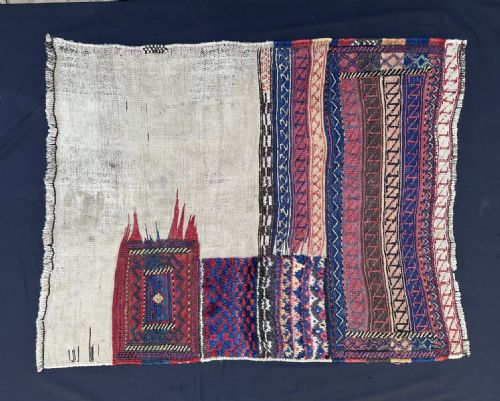
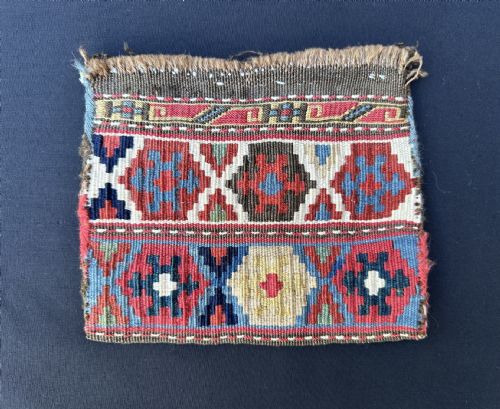
The selection ranges from large floor carpets and runners to smaller utilitarian objects such as bread sofrehs, storage bags, and cushions. Pieces originate from distinct tribal groups including the Qashqai, Shahsavan, Yomut Turkmen, and Lori-Bakhtiari.
Dating across the listings spans from the mid-nineteenth century through the early twentieth century. Village flatweaves and tribal panels display regional motifs passed down through generations of makers.
Materials and construction methods
Weavers relied primarily on hand-spun wool and cotton, occasionally incorporating goat hair for structural durability along the edges. Natural dyes provide the characteristic palette, yielding deep reds, terracotta, and madder hues through botanical and insect sources.
The slit-tapery technique creates the characteristic vertical splits where different colour blocks meet, allowing weavers to achieve crisp geometric contours. Supplementary weft-wrapping appears in sumak structures, adding textural relief to the flat surface.
The listings span weaving traditions from the Caucasus, Anatolia, Persia, and Central Asia, utilising hand-spun wool and natural dyes across the nineteenth and early twentieth centuries.
Distinctions in quality and execution
Quality rests upon the fineness of the weave, the clarity of the geometric drawing, and the depth of the natural dyestuffs. Tightly beaten foundational warps create a dense, stable textile that withstands generational use.
Finely executed tribal pieces display precise symmetry in their motifs and harmonious colour saturation across the field. Condition also plays a role, distinguishing untouched surfaces from those requiring timeworn structural repairs.
The Antique Red Kilim Rug Glossary
- Kilim
- A flatwoven textile produced without a pile by tightly interlacing warp and weft threads. This technique creates a lightweight rug with identical patterns visible on both sides.
- Sofreh
- A utilitarian cloth used by nomadic groups for food preparation, dining, or wrapping bread. These pieces often feature bold central medallions flanked by tribal border motifs.
- Sumak
- A flatweave technique utilising a wrapping method that adds structural weight and surface texture. It appears frequently in Caucasian and Persian bag faces and storage sacks.
- Warp
- The stationary longitudinal threads stretched across a loom before weaving begins. These parallel strands form the foundational skeleton of the textile.
- Weft
- The transverse threads passed horizontally over and under the warp yarns to build the design. In flatweaves, these coloured threads completely conceal the warp.
Antique Red Kilim Rug: Frequently Asked Questions
How were kilims used originally?
Nomadic tribes used flatweaves as floor coverings, animal trappings, storage bags, and dining cloths.
These versatile textiles adapted easily to life in transit, serving multiple domestic functions within tents and village homes.
How do I care for a flatweave?
Vacuum gently without using a rotating brush bar to prevent pulling the delicate wool threads.
Keep the textile out of direct sunlight to protect the natural dyes from fading over time.
Are these rugs entirely handmade?
Every piece listed is a hand-woven textile created on traditional vertical or horizontal looms.
Weavers spun the wool by hand and sourced natural dye materials from plants and insects.
How do I identify the region of origin?
Regional attribution relies on specific colour palettes, structural techniques, and recurring tribal motifs.
For instance, Caucasian pieces often show crisp geometric medallions, while Persian tribal weavings use softer madder reds and intricate border bands.