
Antique Printed Pottery
Antique printed pottery brings domestic tables alive through transfer-printed scenes rendered in cobalt pigment and pearlware glazes.
Antique Printed Pottery
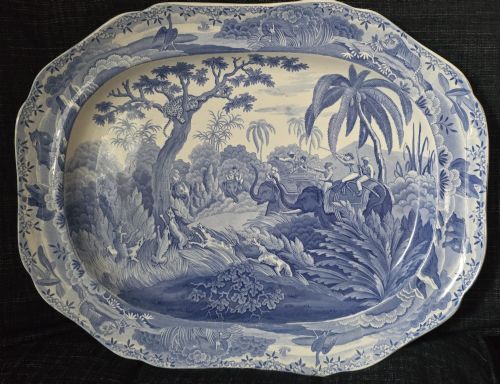
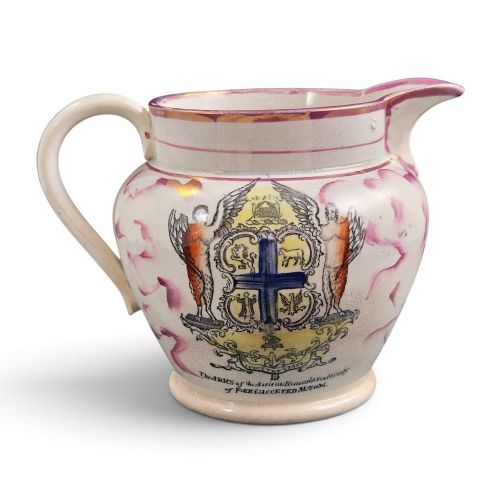
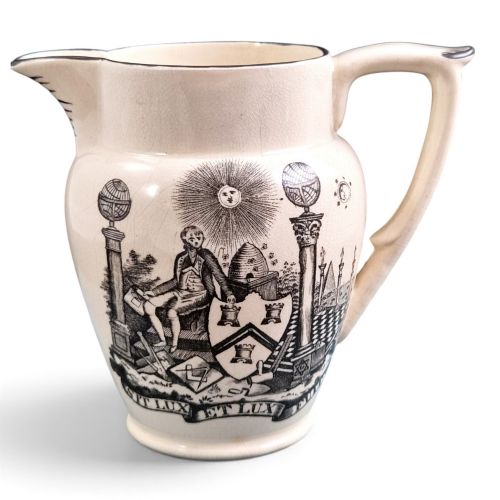
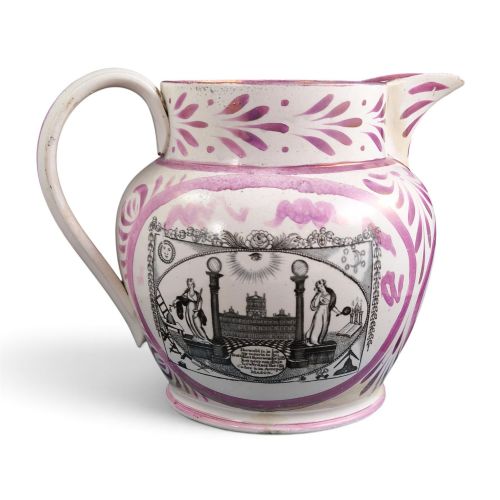
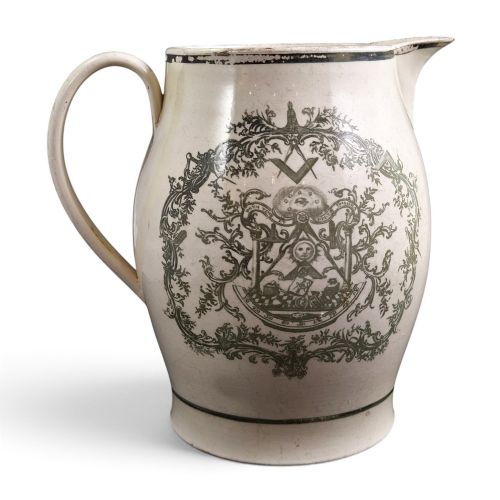
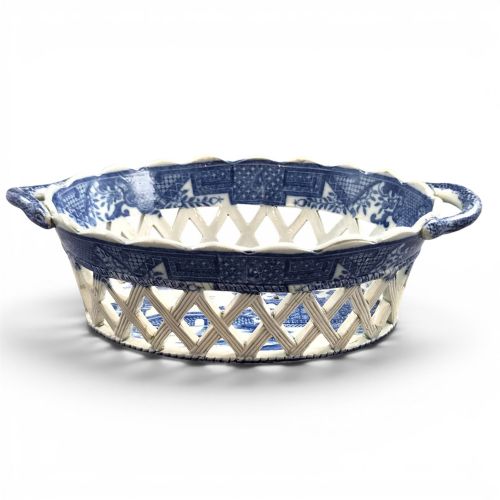
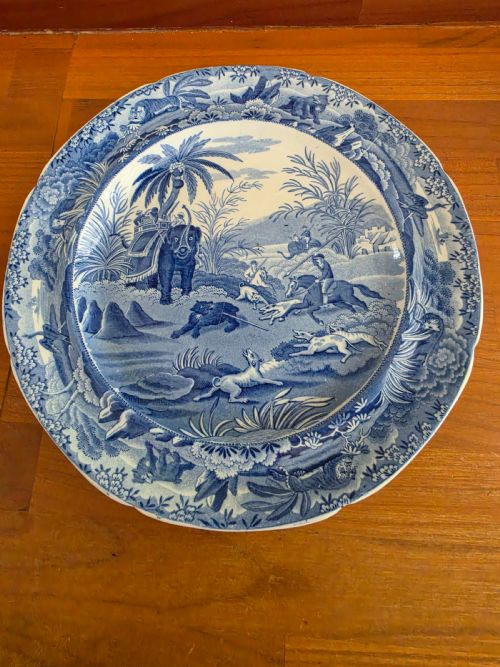
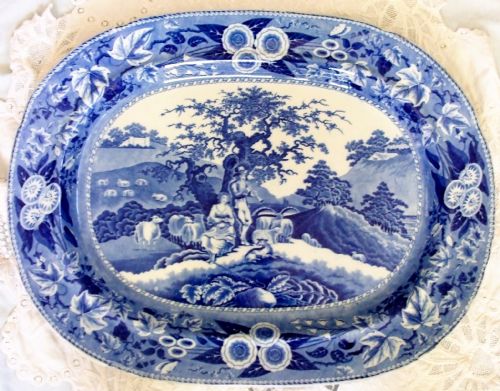
When you search for antique printed pottery, you encounter utilitarian and decorative vessels produced across the nineteenth century. These objects include blue and white meat platters, chestnut baskets, Masonic jugs, and soup tureens.
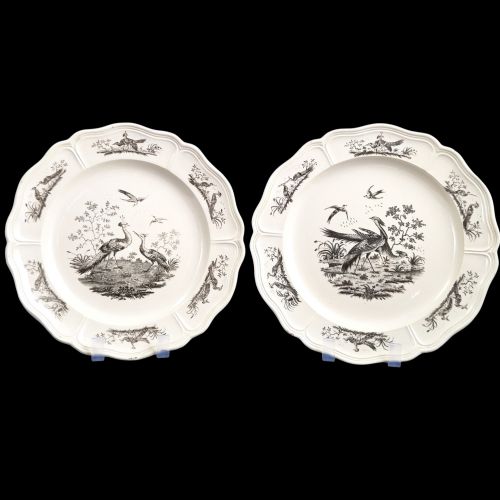
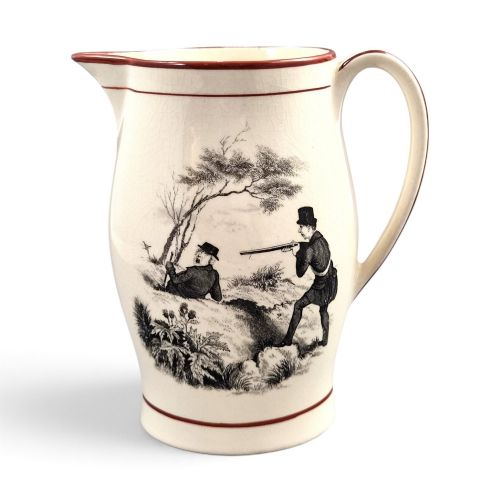
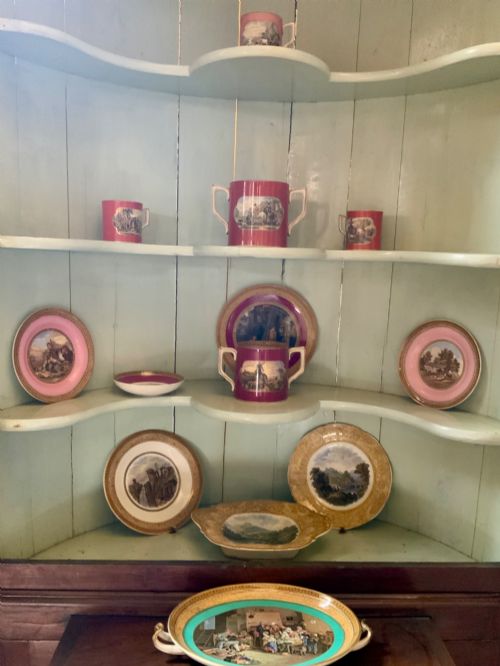
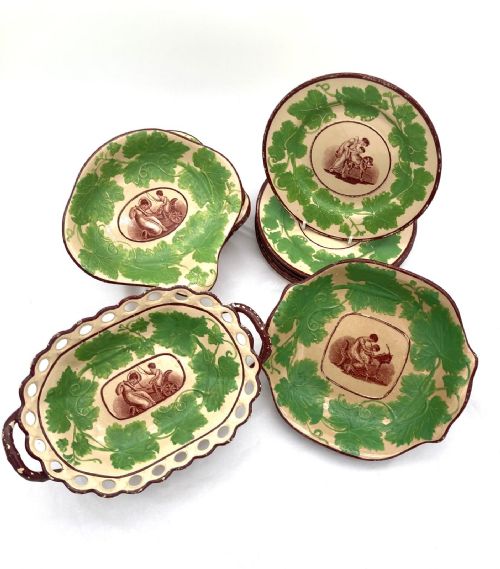
The pieces appearing on this page stem predominantly from Georgian and Victorian periods, stretching from creamware jugs to later earthenware services. Makers applied transfer printing to transfer narrative scenes, botanical studies, and topographical views onto ceramic bodies.
Domestic service vessels dominate the selection, ranging from chamber pots and custard sets to large serving platters and footbaths. Each form demonstrates how printing technology transformed everyday ceramic decoration during the industrial era.
Materials and transfer techniques
Potters formed these pieces using earthenwares, pearlware, and creamware bodies finished with transparent ceramic glazes. Artisans then transferred engraved copperplate designs onto tissue paper before pressing them onto the porous ceramic surface.
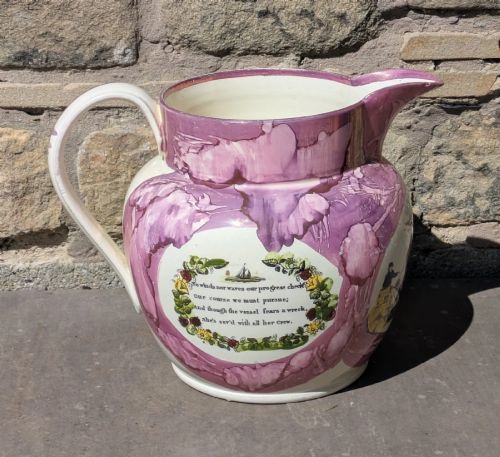
Manufacturers utilised cobalt pigment for classic blue and white transfer prints, alongside pink lustre and metallic glazes for Sunderland wares. Firing the decorated pottery in kilns fixed the pigment permanently beneath or above the glaze layer.
Several Victorian jugs incorporate interior ceramic frogs designed to leap out and surprise drinkers as the beverage lowered.
Evaluating quality and execution
Quality rests upon the crispness of the transfer print and the clarity of the underlying ceramic body. Well-executed pieces display sharp copperplate lines without blurring, smudging, or overlapping at the pattern joins.
The sophistication of the form also dictates standing, moving from simple utilitarian chamber pots to reticulated chestnut baskets and large scenic meat platters. Early pearlware and creamware bodies show finer potting standards than later mass-produced earthenwares.
J. & R. Clews·J. & R. Riley·Stubbs·Spode·Copeland·Minton Hollins
The Antique Printed Pottery Glossary
- Pearlware
- A refined earthenware developed by Josiah Wedgwood featuring a bluish-tinted glaze that pooled softly in crevices. This glaze made the underlying ceramic body appear whiter than standard creamware.
- Creamware
- A fine earthenware possessing a warm, buttery cream-coloured hue produced throughout the Georgian period. It provided a smooth surface ideal for transfer printing.
- Transfer printing
- A decoration method where an engraved copperplate design is inked and transferred via tissue paper onto ceramic biscuit or glaze. This technique allowed intricate pictorial scenes to be replicated rapidly.
- Lustreware
- Earthenware decorated with metallic glazes that created a reflective, iridescent sheen. Pink and copper lustre finishes frequently adorned nineteenth-century maritime and Masonic jugs.
Antique Printed Pottery: Frequently Asked Questions
What is antique printed pottery?
Antique printed pottery encompasses ceramic vessels decorated using mechanical transfer printing rather than hand painting. These items include plates, jugs, tureens, and platters produced primarily during the Georgian and Victorian eras.
Potters used engraved copperplates to apply detailed pictorial scenes, landscapes, and commemorative motifs onto earthenware bodies. This innovation brought affordable, highly decorated ceramics into nineteenth-century homes.
How do I date a transfer-printed piece?
Dating relies on examining the ceramic body, glaze colour, and style of the printed subject. Early pieces often utilise creamware or pearlware bodies with rich cobalt blue prints, while later Victorian items feature heavier earthenwares and diverse colour palettes.
Maker marks, registration diamonds, and named commemorative subjects also help narrow the production window. Comparing the printed motifs to known historical events or topographical series provides further chronological anchors.
How were these pottery items used?
These ceramics served practical functions across dining rooms, kitchens, and bedchambers. Large platters and tureens presented meat and soup at formal meals, while chestnut baskets held fruit and desserts.
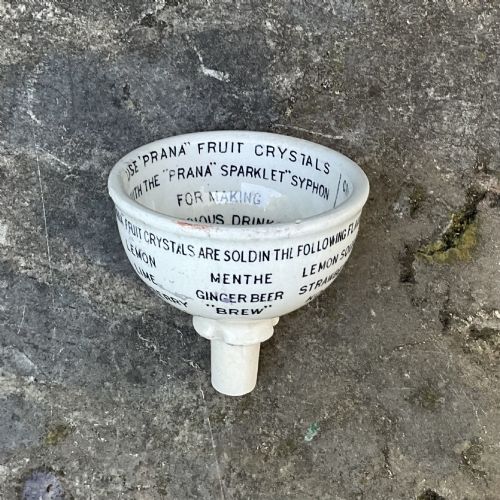
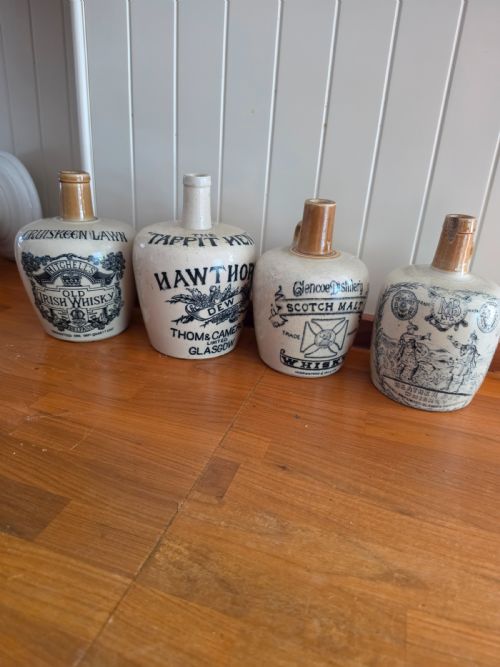
Utilitarian objects like footbaths, chamber pots, and advertising flasks fulfilled daily household and trade requirements. Meanwhile, commemorative jugs and Masonic mugs marked social memberships, maritime themes, and fraternal gatherings.
How do I care for antique printed pottery?
Care requires gentle hand washing in warm water using mild, non-abrasive dish soap. Avoid dishwashers, harsh scrubbers, and soaking, as aggressive cleaning can damage nineteenth-century glazes and soften old ceramic bodies.
Display pieces safely away from direct sunlight and dramatic temperature fluctuations to protect the integrity of the earthenware. Handle large platters and tureens with support under the base rather than lifting by the handles alone.