


Georgian Dessert Service
A georgian dessert service brings elaborate porcelain, ironstone, and earthenware plates and serving dishes to the table for the final course of a formal meal.
Georgian Dessert Service
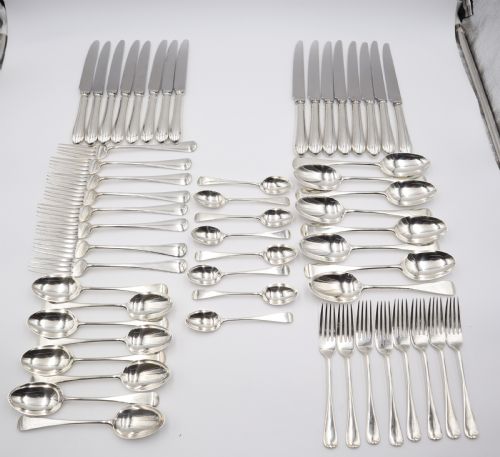
When you search for a georgian dessert service, you encounter matching tableware including decorative plates, serving dishes, porcelain baskets, and cutlery sets. These items represent the formal dining customs of the eighteenth and nineteenth centuries, spanning the Georgian, Regency, and Victorian periods.
The services recorded here encompass various ceramic bodies, notably porcelain, earthenware, ironstone, and creamware, alongside silver and steel cutlery sets. Maker output includes notable English factories such as Derby, Spode, Worcester, Minton, and Wedgwood.
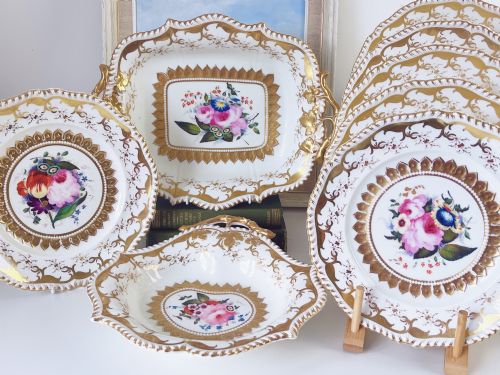
Surviving examples range from single chestnut baskets and shell dessert dishes to multi-piece services complete with handpainted floral decoration, transfer printing, and gold leaf highlights. Buyers most frequently meet matched or partial services created for aristocratic and middle-class dining rooms.
How they were made
Potters shaped these vessels using traditional clay bodies like soft-paste porcelain, earthenware, and ironstone, often finished with coloured glaze or enamel. Factories such as Worcester and Derby applied handpainted botanical motifs and gilding over fired glazes.
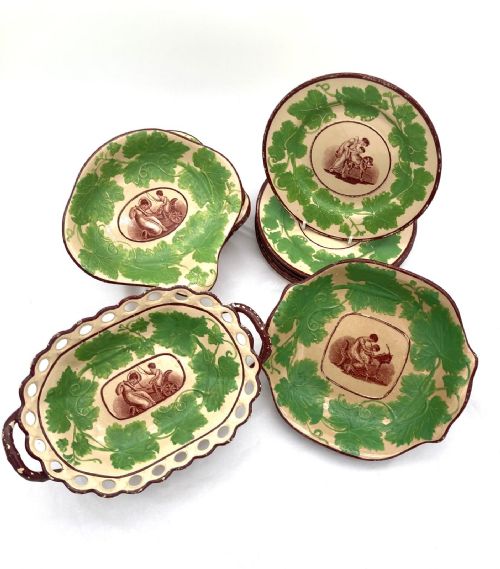
Decorative plates and dishes also utilised transfer printing techniques, as seen in bar printed patterns and ironstone dessert shapes. Metal components like cutlery sets paired steel blades with silver handles.
Specialised items such as chestnut baskets and oval dessert dishes required intricate pierced work and moulded elements before receiving hand-applied enamel colours and gold leaf details.
Listings feature ceramics spanning the Georgian, Regency, and Victorian periods alongside silver and steel cutlery.
What varies in quality
Quality in a georgian dessert service lies in the finesse of the ceramic body and the skill of the brushwork on handpainted flowers and fruit. Services decorated by named artists or major potteries command attention through superior modelling and rich gilding.
The integrity of the glaze, the crispness of moulded details like shell and basket weaves, and the preservation of original gold leaf distinguish finer table services from standard utilitarian wares.
Grainger Lee And Co·Derby Porcelain·Spode·Minton Porcelain·Barr Flight And Barr·Wedgwood
The Georgian Dessert Service Glossary
- Creamware
- A refined earthenware developed in England, characterised by a pale yellowish-cream glaze over a fine cream-coloured body.
- Ironstone
- A heavy, durable type of earthenware patented to resist chipping and cracking while providing a solid base for enamelled decoration.
- Enamel
- Opaque vitreous colours fused to ceramic surfaces at high temperatures to create vibrant painted scenes and floral details.
- Gold leaf
- Extremely thin sheets of beaten gold applied to ceramics and cutlery handles for decorative highlights and gilded borders.
Georgian Dessert Service: Frequently Asked Questions
What pieces comprise a service?
A standard service includes matching dessert plates, serving dishes, and specialised forms like chestnut baskets or shell dishes.
These pieces were designed to present fruit, sweetmeats, and confections at the conclusion of a formal dinner.
How do I identify periods?
Dating relies on ceramic bodies, transfer printing styles, factory marks, and recorded working dates of specific potteries.
Early pieces often feature handpainted botanical studies, while later nineteenth-century examples incorporate ironstone and printed patterns.
Can I use these for dining?
While historic tableware remains functional, many collectors prefer to display delicate porcelain and painted plates.
Handwash antique ceramics carefully and avoid modern dishwashers to protect the enamels and gold leaf.
What is drabware?
Drabware is a type of stoneware or earthenware featuring a muted greyish-brown or olive body popular during the nineteenth century.
Wedgwood produced notable examples of this subtle ceramic style for formal table settings.