
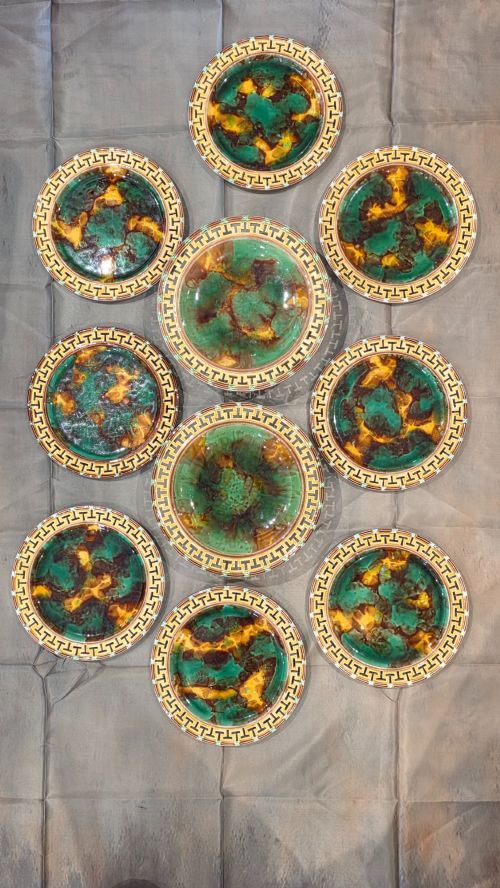
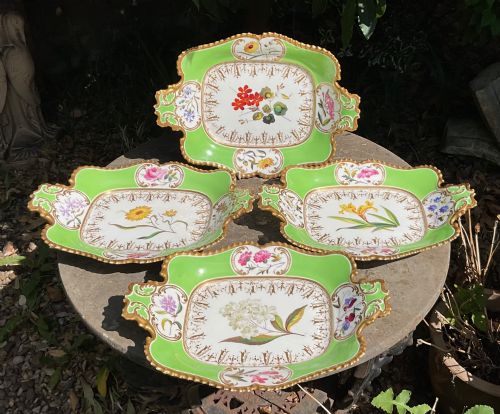
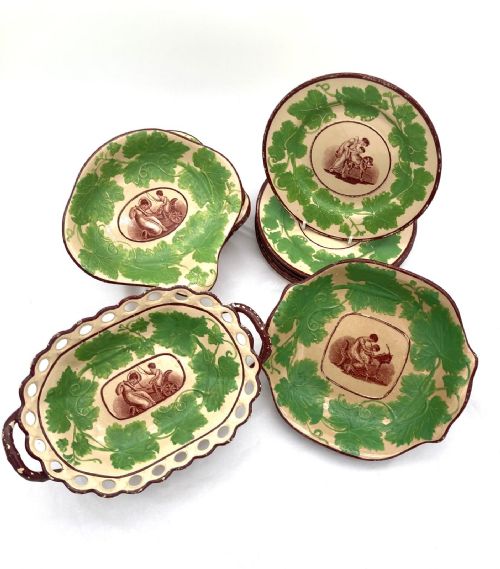
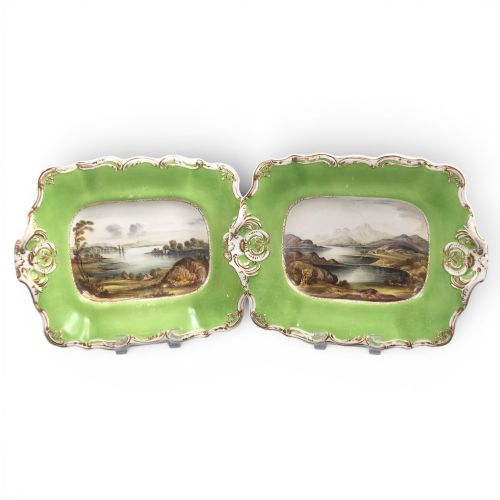
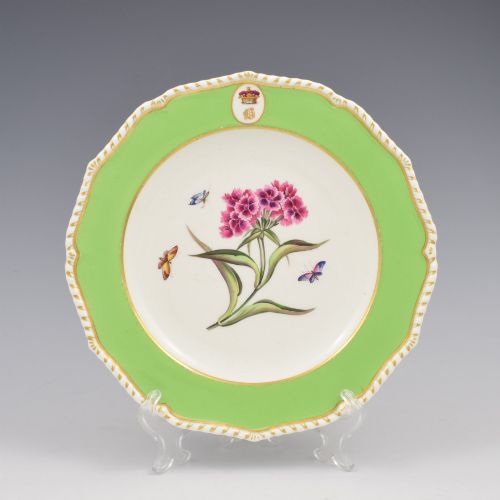


Green Ceramic Dessert Plates
These green ceramic dessert plates bring botanical colour and Regency elegance to the table, offering a refined way to serve fruit and sweets at the end of a meal.
Green Ceramic Dessert Plates
Green ceramic dessert plates span the Georgian, Regency, and nineteenth-century periods, appearing alongside full dessert services, porcelain dishes, and cabinet plates. The listings show works from notable factories featuring apple green glazes, botanical hand-painting, and armorial details.
Makers such as Wedgwood, Chamberlains Worcester, Spode, Minton, Rockingham, and Bloor Derby dominate the selection, often produced around eighteen-twenty to eighteen-thirty. Buyers encounter both individual cabinet plates and matched sets intended for formal dining.
How they were made
Potters utilised porcelain, earthenware, and ironstone as bodies for these plates, applying rich enamel colours and glossy glazes by hand. Gilding and gold leaf accent borders, whilst transfer printing methods like bar printing introduce intricate patterns onto the ceramic surface.
Firing techniques in nineteenth-century kilns fixed the vibrant apple green backgrounds and botanical motifs, with some pieces bearing printed or painted factory marks verso.
Object forms range from single cabinet plates to comprehensive dessert services and serving dishes.
What varies in quality
Artistic execution separates standard service ware from exceptional cabinet pieces, particularly in the precision of hand-painted botanical studies and armorial crests. The depth and evenness of the green glaze, alongside the crispness of the gilding and gold leaf application, determine visual distinction.
The prestige of the manufactory also shifts standing, with factories like Chamberlains Worcester, Minton, and Spode commanding particular attention for their superior ceramic bodies and sophisticated form.
Wedgwood·Chamberlains Worcester·Copeland and Garrett·Bloor Derby·Spode·Minton·Mason·Rockingham·Royal Crown Derby
The Green Ceramic Dessert Plates Glossary
- Cabinet plate
- A decorative plate intended for display in a cabinet rather than for daily dining use. These pieces often feature elaborate painting or armorial decoration.
- Ironstone
- A dense, durable type of earthenware patented in the nineteenth century. It provided a robust alternative to porcelain for heavy-use services.
- Gilding
- The application of gold leaf or gold powder to ceramic surfaces. It highlights rims, handles, and borders with a metallic sheen.
- Enamel
- A glassy substance fused to ceramic through firing to add colour and design. Enamels provide the vibrant hues seen on botanical plates.
Green Ceramic Dessert Plates: Frequently Asked Questions
How were green ceramic dessert plates used?
These plates served fruit, nuts, and sweetmeats at the conclusion of a formal dinner.
Hosts displayed them as part of a grand dessert service or as individual cabinet plates to showcase wealth and taste.
Can I use these antique plates for dining?
Most buyers treat nineteenth-century plates as decorative objects or handle them with care for special occasions.
Historic glazes and delicate gold leaf can wear down with modern dishwashing and frequent use.
How do I identify a Regency period plate?
Regency plates typically date from around eighteen-ten to eighteen-thirty, featuring distinct apple green grounds and botanical or armorial painting.
Factory marks on the reverse, such as those from Spode or Bloor Derby, help confirm the exact era.
What is ironstone china?
Ironstone is a sturdy ceramic material patented in the nineteenth century by makers like Mason.
It combined the practicality of earthenware with the strength of stone to withstand heavy service use.