




Antique Print Holder Stand
An antique print holder stand is a sturdy floor-standing rack designed to display large folios and artwork.
Antique Print Holder Stand
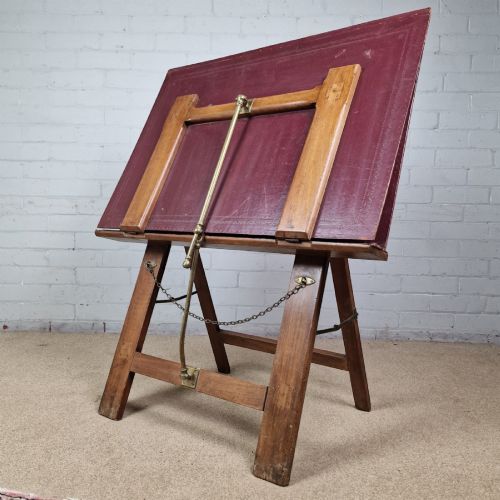
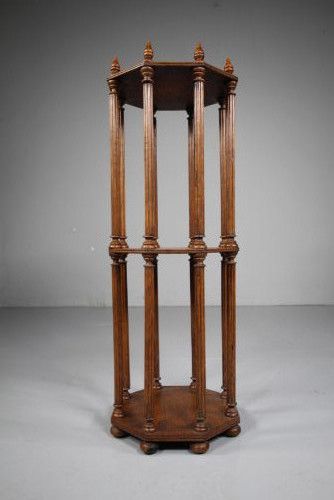
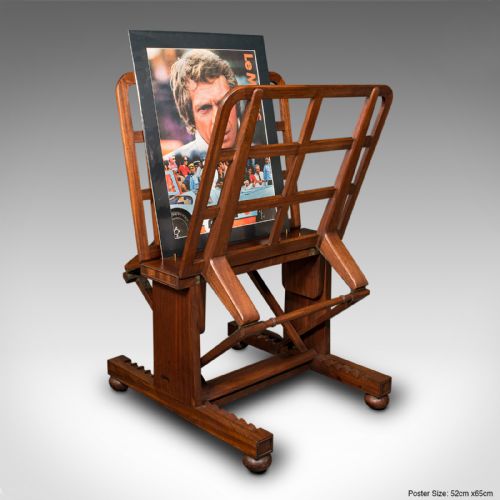
An antique print holder stand takes the form of a folio stand, scroll stand, or large canterbury designed to store paper, prints, and drawings.
The pieces appearing on this page span the Regency, Late Georgian, George IV, and Victorian periods.
Makers utilised woods such as mahogany, oak, walnut, and rosewood, often pairing them with brass or leather details.
How they were made
Cabinet makers built these racks using dense timbers including mahogany, walnut, oak, and rosewood to support heavy portfolios.
Many examples incorporate adjustable mechanisms, allowing the user to alter the angle at which the materials rest.
The listings here include items from the Regency, George IV, Late Georgian, and Victorian periods, constructed in mahogany, oak, walnut, and rosewood.
What varies in quality
The distinction between standard examples and grand scale country house proportions lies in the ambition of the timber selection and the presence of working adjustable mechanisms.
Finer pieces show careful attention to brass fittings and secondary materials such as leather, distinguishing them from simpler utility racks.
The Antique Print Holder Stand Glossary
- Folio stand
- A hinged rack designed to hold large sheets of paper, prints, or drawings. These stands typically fold flat or adjust in angle.
- Scroll stand
- A vertical rack or cylinder used to store rolled maps, plans, or architectural drawings. They are less common than flat folio stands.
- Canterbury
- A low wooden stand with partitions, originally used for sheet music or folios. Some large country house versions double as print holders.
- Regency
- An English design period spanning the early nineteenth century. Furniture from this era often shows classical restraint and fine timber grain.
Antique Print Holder Stand: Frequently Asked Questions
What is an antique print holder stand?
An antique print holder stand is a piece of library or studio furniture built to store and display large unbound papers, prints, and drawings.
These pieces typically feature adjustable frames or folding sides to accommodate varying quantities of folios.
How were print stands used?
Artists, architects, and collectors used these stands to keep large works accessible without creasing the paper.
They allowed viewers to flip through prints in libraries, studies, and drawing rooms.
What woods were used for print stands?
Cabinet makers utilised traditional hardwoods including mahogany, oak, walnut, and rosewood.
These dense timbers provided the necessary weight and strength to support heavy paper collections.
How do I identify a Regency print stand?
Regency stands date from the early nineteenth century and often feature classical proportions and rich mahogany or rosewood.
Details such as brass castors and adjustable rack mechanisms help confirm the period.