







Brown Portfolio Stand
A brown portfolio stand holds large sheets and watercolours upright with timber frame and adjustable sides.
Brown Portfolio Stand
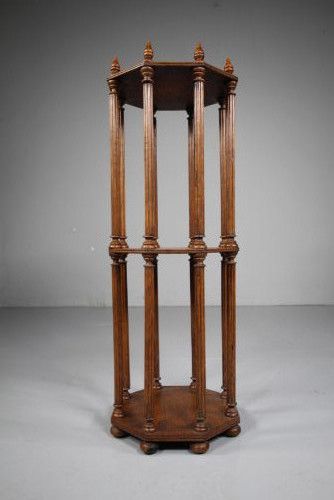
A brown portfolio stand provides an orderly rack for large works on paper, prints, and architects' plans. When searching for a brown portfolio stand, a buyer encounters timber framing designed to keep large sheets flat and accessible in a study or studio.
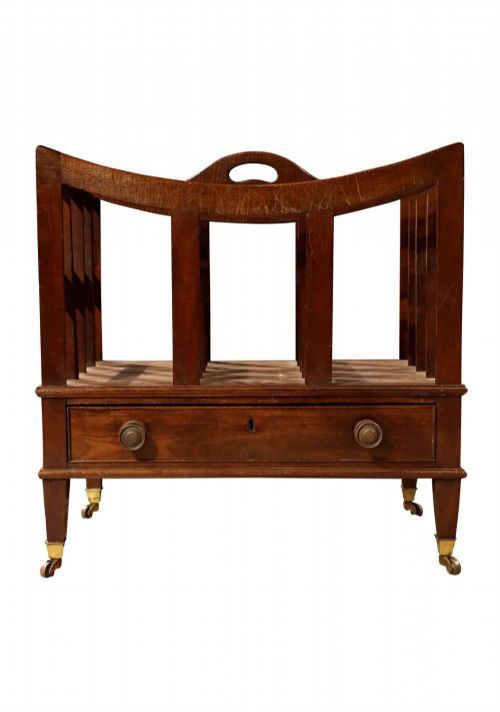
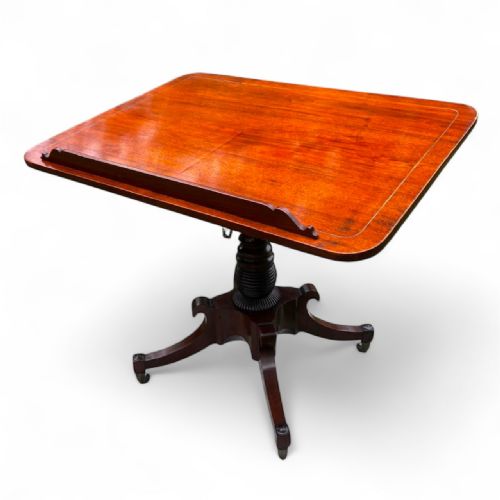
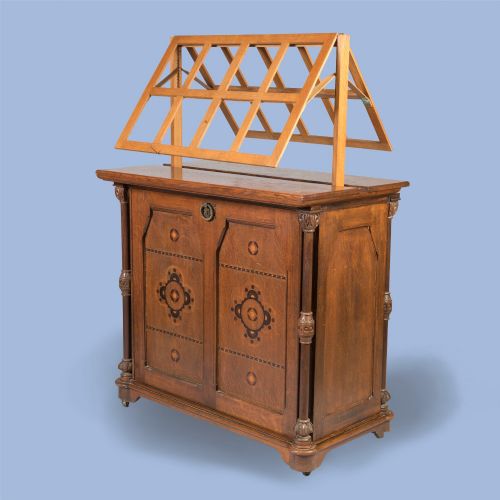
The selections span the nineteenth century through the Edwardian era, taking forms such as folio cabinets, music canterburys, and reading tables. Mahogany, oak, and walnut appear frequently in these designs.
Makers utilised architectural styles from Regency lines to Gothic Revival details. Most examples on this page reflect formal library and studio furniture from British workshops.
How they were made
Cabinet makers constructed these stands primarily in mahogany, oak, and walnut, selecting timber for strength and deep grain pattern. Brass fittings such as hinges, castors, and adjustable struts provide functional movement.
Inlay work appears through marquetry and brass stringing set into the wooden surfaces. Joinery methods include traditional framing and panel construction designed to support heavy paper collections without warping.
Object forms on this page include folio cabinets, music canterburys, scroll stands, and reading tables from the Regency to the Edwardian period.
What varies in quality
The standard of a brown portfolio stand depends on the crispness of the timber carving and the integrity of the adjustable mechanism. Finer pieces demonstrate precise joinery and well-fitted brass hardware that operates smoothly.
The presence of secondary elements like fitted drawers and maker attribution elevate an item above standard utility pieces. Timber selection and restrained inlay distinguish finer workshop output from basic commercial production.
Benjamin Taylor & Sons
The Brown Portfolio Stand Glossary
- Folio stand
- A wooden rack designed to hold large sheets of paper, prints, or drawings upright. These stands feature folding or fixed sides to keep contents secure.
- Canterbury
- A low piece of furniture with partitions for holding sheet music or books, often fitted with a drawer below. Makers introduced them in the late eighteenth century for music rooms.
- Marquetry
- The art of applying decorative pieces of veneer to a structure to form geometric or floral designs. Craftsmen used contrasting woods to achieve tonal depth.
- Gothic Revival
- An architectural and decorative style drawing on medieval forms, featuring pointed arches and heavy timber construction. It gained popularity during the nineteenth century.
Brown Portfolio Stand: Frequently Asked Questions
What is a portfolio stand used for?
These stands hold large prints, drawings, maps, and architectural plans in an upright position. They allow artists and collectors to browse through stacked sheets without damaging the paper edges.
Historically, studios and libraries utilised them to store works in progress or reference plates safely. Today they serve the same function while displaying graphic collections within a room.
How do I date a mahogany stand?
Dating relies on timber characteristics, construction methods, and stylistic details visible on the frame. Regency pieces often display clean classical lines with brass inlay, while Victorian examples introduce heavier proportions.
Examining the underside, drawer linings, and screw types helps confirm the period. Cabinet makers of different eras employed distinct joinery techniques that reveal their workshop origins.
Can these stands hold heavy items?
Solid timber frames in mahogany, oak, and walnut provide robust structural support for paper collections. The internal partitions and base boards are built to bear the weight of stacked folios.
Adjustable brass hinges and struts are engineered to hold the sides at set angles under pressure. Regular use requires checking that the floor castors and support stays remain securely fastened.
Where should I place this furniture?
A portfolio stand suits studies, art studios, and living rooms with adequate floor space for clearance. Keeping them away from direct sunlight protects the timber finish and the paper contents from fading.
Positioning the stand near a seating area makes the stored prints easy to access. The piece works well as a focal point for displaying a favored print on the outer leaf.