




Vintage Portfolio Holder
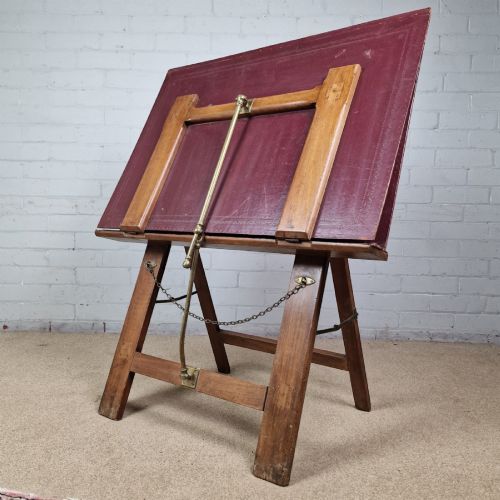
A vintage portfolio holder organises large papers and prints with architectural timber work and adjustable rests.
Vintage Portfolio Holder
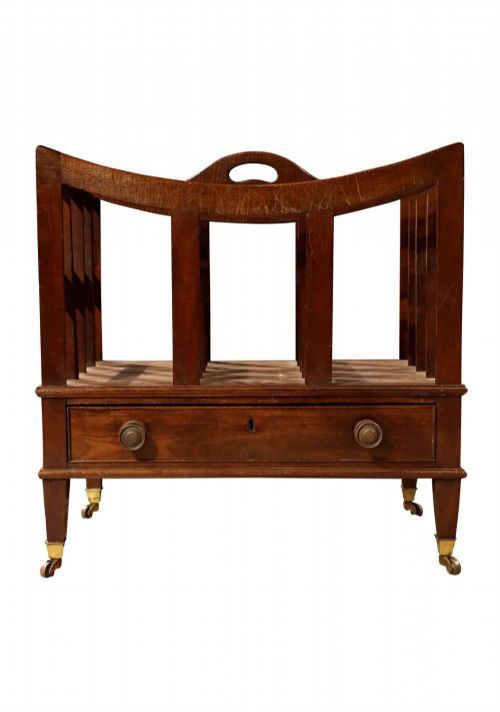
A vintage portfolio holder serves to store prints, drawings and oversized plates safely in domestic and studio settings. These pieces appear in forms such as folio stands, picture racks, and sheet music cabinets or canters.
Buyers meet examples shaped during the Regency, Late Georgian, Victorian and Edwardian eras. Mahogany, walnut and oak predominate in these offerings, often paired with brass fittings.
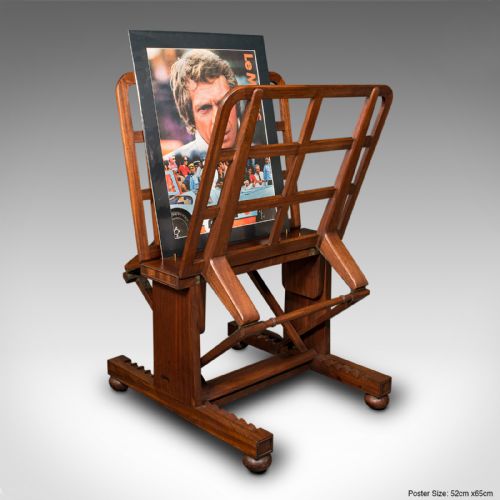
The architectural scale ranges from grand library stands to compact music cabinets fitted with drawers. Many examples show adjustable frames designed to display single sheets at a slant.
How they were made
Cabinetmakers built these pieces using solid timbers like mahogany and walnut, shaping frames with turned columns and stretcher bases. Brass hinges, castors and adjustable brackets allow the folding leaves to move and lock into position.
The joinery employs traditional techniques to support heavy paper collections without sagging. Drawer interiors feature secondary woods and hand-cut joints beneath leather or timber surfaces.
Some master stands include hidden drawers beneath the rack for storing charcoal, pencils, and stray nibs.
What varies in quality
The distinction between standard cabinet work and exceptional production lies in the handling of timber grain and the execution of mechanical adjustments. Superior examples integrate solid brass hardware that operates smoothly alongside finely figured mahogany or walnut.
Proportion and scale dictate the visual weight of the stand within a room. Master workshops achieved balanced tension in the folding mechanisms, ensuring the rack holds heavy folios securely at various angles.
The Vintage Portfolio Holder Glossary
- Folio stand
- A freestanding wooden rack designed with hinged sides to hold large prints, maps, or drawings. These stands adjust to display artwork for viewing.
- Canterbury
- A low wooden stand featuring partitions for sheet music, folios, or books, often incorporating a small drawer at the base. Makers constructed these in mahogany and walnut during the Georgian and Victorian periods.
- Regency
- An English design style spanning the early nineteenth century characterised by classical revival motifs and architectural lines. Pieces from this era often utilise rich mahogany timbers.
- Brass
- A copper and zinc alloy utilised for castors, hinges, and adjustable reading or display brackets on nineteenth-century furniture. Its bright finish complements dark hardwoods.
Vintage Portfolio Holder: Frequently Asked Questions
What is a folio stand used for?
A folio stand holds large paper sheets, artist portfolios, and maps upright or at an adjustable angle. They provide safe storage and display surfaces for oversized flat works.
Libraries, studios, and studies utilise these stands to keep delicate prints organised and accessible for examination.
How do I distinguish a Regency folio stand?
Regency stands display classical proportions, turned wooden uprights, and architectural timber framing typical of the early nineteenth century. They frequently feature mahogany construction with brass details.
Makers of this period focused on functional adjustments combined with restrained decorative carving.
Are these stands adjustable?
Many vintage portfolio holders incorporate hinged frames and brass ratchets to alter the display angle. This mechanism supports viewing art at different inclinations.
Fixed-frame variants rely on sturdy wooden partitions to keep folios upright and prevent warping.
Where should I place a folio stand at home?
Position a folio stand in a study, library, or living room away from direct sunlight to protect stored paper and timber. Freestanding designs require clearance around the folding leaves.
They serve both as practical storage furniture and as display furniture for showcasing framed or loose prints.