





Antique Prie Dieu Chair
An antique prie dieu chair provides a low seat and high back designed for private prayer, appearing here in nineteenth-century forms.
Antique Prie Dieu Chair
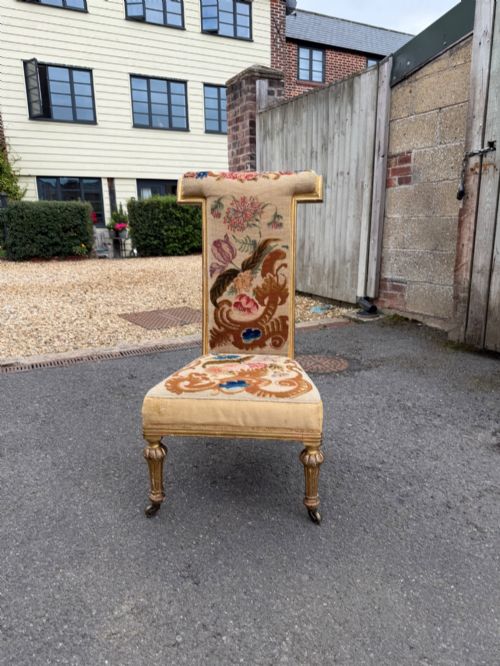
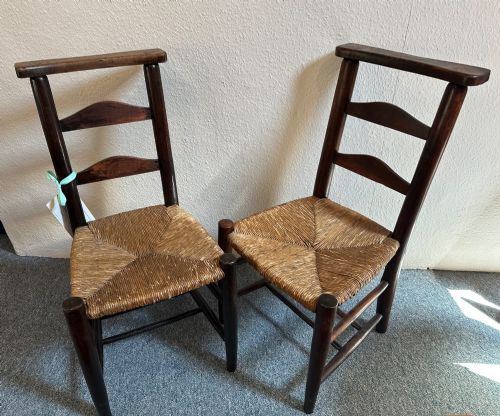
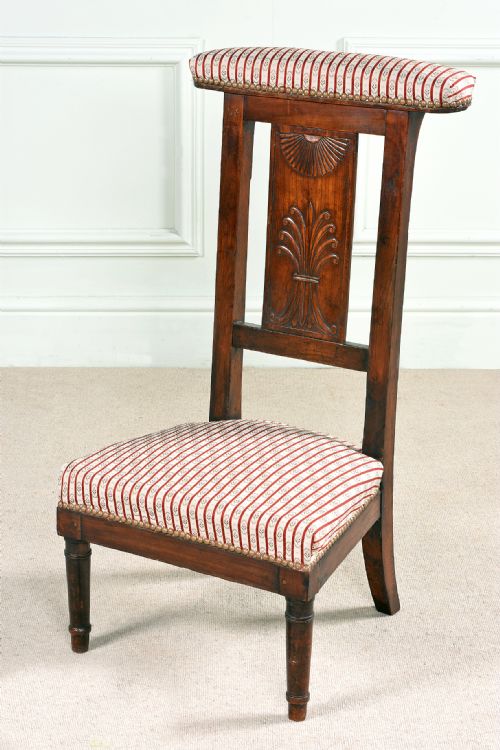
An antique prie dieu chair is a specialised devotional seat designed with a low seat rail and a tall, upright back that originally served kneeling worshippers in domestic and ecclesiastical settings. These pieces surface frequently in nineteenth-century styles, spanning Victorian and Regency periods, often functioning as prayer chairs, side chairs, or bedroom accents.
The common form on this page pairs a padded or needlepoint seat with a distinctive arched or fretted top rail, occasionally incorporating a lower ledge for kneeling. Walnut, mahogany, and rosewood frames dominate the selection, reflecting the mid-Victorian preference for rich timber alongside earlier Regency designs.
Beyond standard prayer seats, related forms include nursing chairs, hall chairs, and ecclesiastical seats originating from English cathedrals or continental workshops. These variations share the characteristic low proportions intended for contemplative domestic use.
How they were made
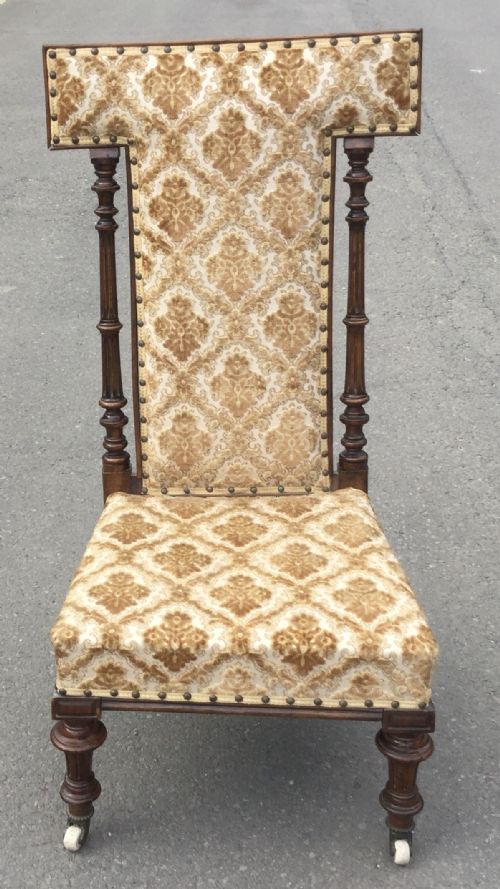
Cabinetmakers constructed these frames using dense hardwoods like mahogany, walnut, rosewood, and oak, often employing ebonisation or intricate carved details such as barley twists and acanthus motifs. Structural joinery relied on traditional mortise and tenon methods to support the tall, narrow back rails characteristic of the type.
Upholstery techniques combined webbed seat bases with durable textiles, velvet, needlepoint, or fabric coverings fixed with brass tacks. Specialised additions like fretted top rails and turned uprights required precise hand woodworking, particularly evident in Gothic Revival and ecclesiastical examples.
Antique Prie Dieu Chair Retail Price Guide 2026
Typical asking prices for prie dieu chair among the pieces listed under this phrase on Sellingantiques today, from the lower quarter to the upper quarter. They describe what is for sale here now, not the wider market.
Chairs stamped for St Paul's Cathedral bring quiet architectural gravity directly from London church pews into the domestic bedroom.
What varies in quality
The caliber of timber selection and depth of carving separate standard examples from finer commissions. Dense, figured rosewood or walnut frames with crisp, hand-carved Gothic tracery or barley twist turnings demonstrate superior workshop execution compared to plainer softwood-backed variants.
Originality of the frame construction and the integrity of the joinery dictate the standing of a piece. Chairs retaining their period upholstery foundations, stamped maker details, or specific ecclesiastical provenance hold greater documentary interest for collectors.
R Whytock of Edinburgh·St Paul's Cathedral London·Angerstein
The Antique Prie Dieu Chair Glossary
- Prie-Dieu
- A French term translating to pray-God, describing a devotional chair or kneeling desk built with a low seat and elevated back rail. This form evolved during the nineteenth century into domestic bedroom and parlor seating.
- Gothic Revival
- An architectural and decorative style popular during the Victorian era that revived medieval pointed arches, trefoils, and heavy carved tracery. Chairs in this manner often feature fretted top rails and ecclesiastical motifs.
- Barley twist
- A type of turning carved into furniture legs and uprights resembling a spiral rope or twisted barley sugar. This decorative technique appears frequently on nineteenth-century walnut and mahogany frames.
- Needlepoint
- A form of counted thread embroidery stitched onto canvas, commonly used for the seat and back panels of nineteenth-century prayer chairs. Surviving needlework often depicts floral or religious patterns.
- Ebonised
- Wood treated with a chemical stain or finish to imitate expensive ebony. This dark surface treatment was frequently applied to nineteenth-century frames paired with green velvet upholstery.
Antique Prie Dieu Chair: Frequently Asked Questions
What is a prie dieu chair used for?
A prie dieu chair was originally designed for private devotional prayer, featuring a low seat that accommodated the bulky garments or kneeling postures of the nineteenth century. The tall, narrow back often served as an armrest while kneeling or a support while sitting.
Over time, these pieces transitioned into domestic spaces as bedroom, nursing, or occasional chairs. Their compact footprint made them suitable for smaller parlours and sitting rooms.
How do I date an antique prayer chair?
Dating relies on examining timber choices, upholstery methods, and stylistic details such as turning and carving. Regency examples from the early nineteenth century typically feature lighter mahogany or rosewood with restrained classical lines, while mid-Victorian pieces lean toward heavier walnut or oak with Gothic Revival ornamentation.
Maker marks, stamped inscriptions, or documented ecclesiastical provenance provide precise chronological markers. Structural clues like hand-cut joinery also help distinguish earlier nineteenth-century production from later revivals.
Are prie dieu chairs comfortable to sit in?
These chairs feature unusually low seats compared to standard modern dining or desk chairs, designed originally to accommodate kneeling postures. This low profile changes the posture when seated normally, placing the knees higher than the hips.
Many people use them as occasional accent chairs in bedrooms or hallways rather than primary lounging seats. Their narrow backs and upright posture encourage an upright sitting position.
What woods were used for these chairs?
Cabinetmakers utilised dense hardwoods capable of supporting narrow, tall upright frames without warping. Mahogany and rosewood appear frequently in early and mid-nineteenth-century examples, offering rich grain patterns and deep natural colour.
Walnut and oak also feature prominently, particularly in Victorian Gothic Revival and ecclesiastical commissions. Some simpler or ebonised frames conceal secondary timbers beneath dark finishes.