
Antique Powder Jar
An antique powder jar brings dressing table elegance from the Victorian, Edwardian, and Art Deco eras into modern spaces.
Antique Powder Jar
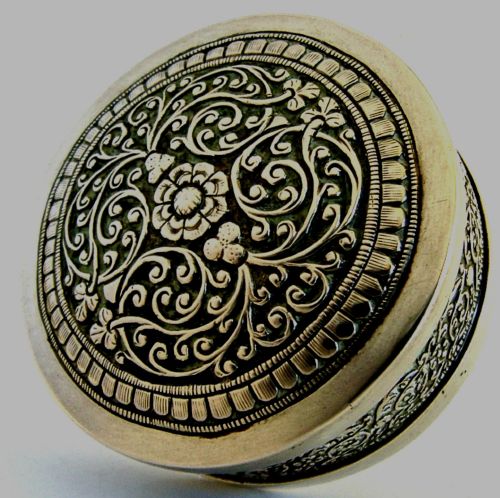
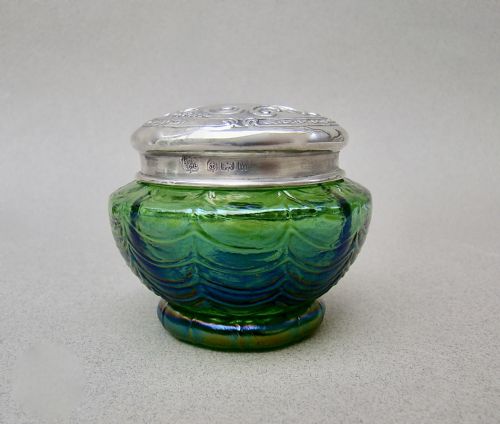
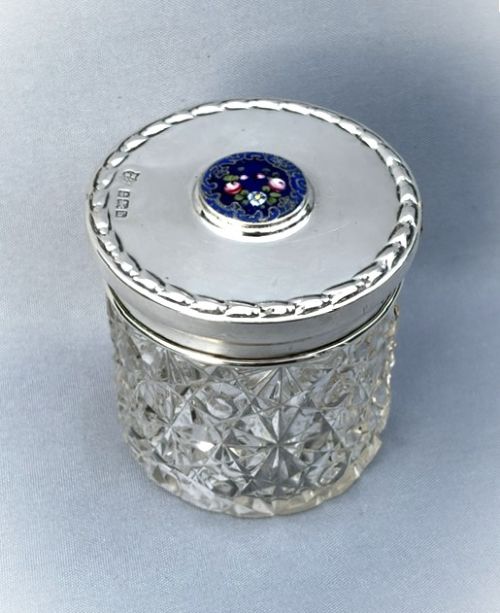
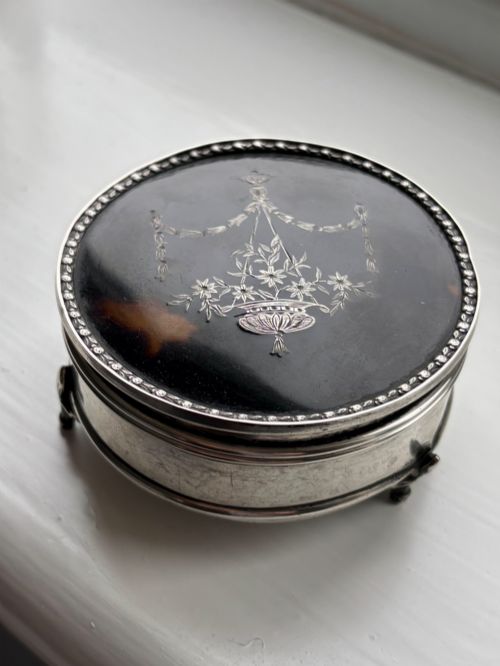
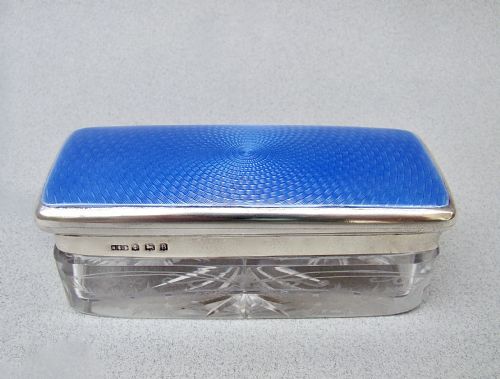
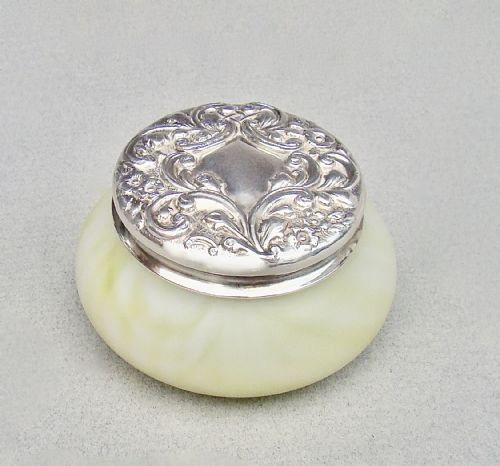
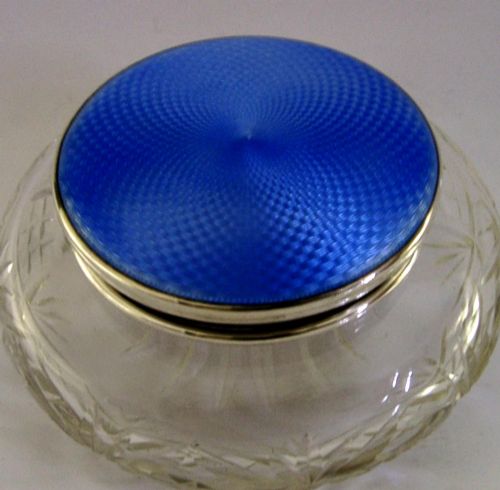
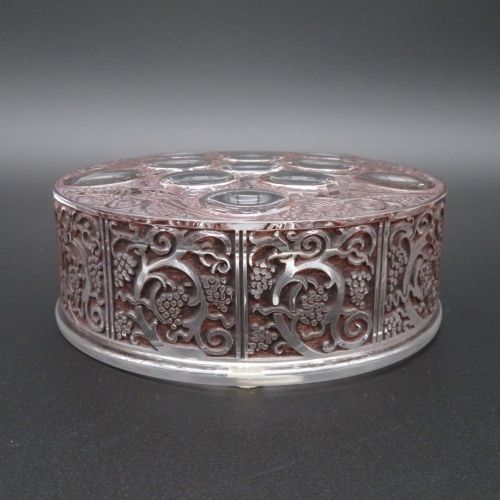
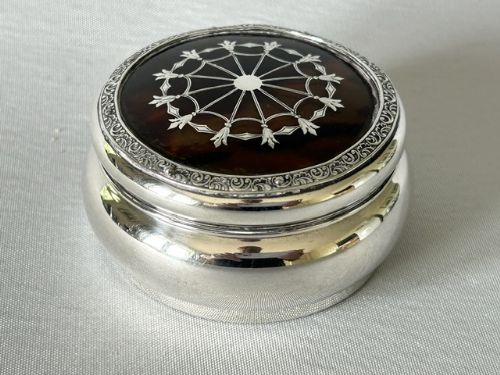
An antique powder jar serves as a container for cosmetics, pins, and trinkets on a dressing table. These pieces appear frequently as cut glass or crystal bowls fitted with silver, enamel, or tortoiseshell lids, alongside ceramic and porcelain vessels from the 19th and 20th centuries.
The materials and styles span Victorian, Edwardian, and Art Deco periods, encompassing English silver mounts, French glass, and German porcelain. Forms range from simple circular powder bowls to elaborately decorated vanity jars and dresser sets.
Materials and construction methods
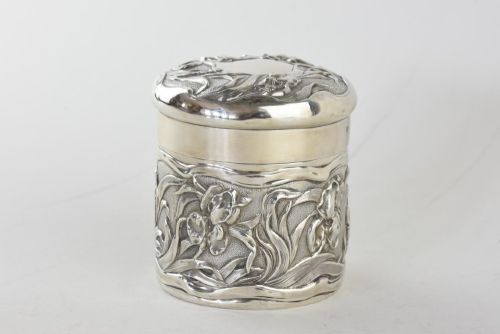
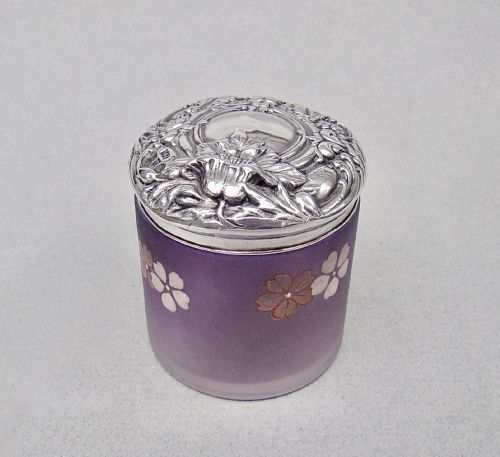
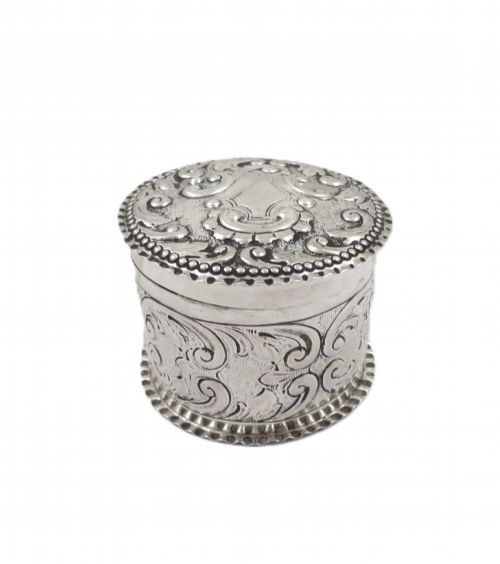
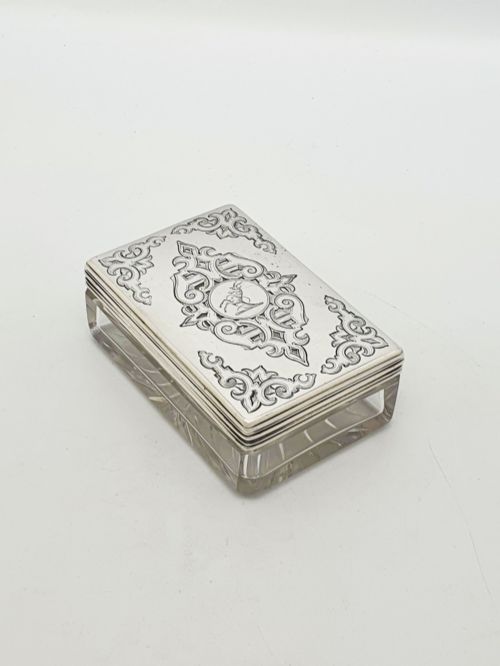
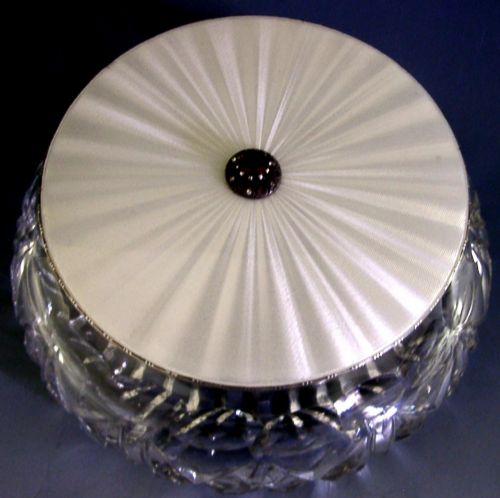
Cut glass and crystal provide the heavy, faceted body for many jars, often paired with sterling silver lids hammered, repousse decorated, or set with guilloche enamel. Silversmiths utilised Birmingham and London assay offices to hallmark sterling silver components during the Edwardian and George V periods.
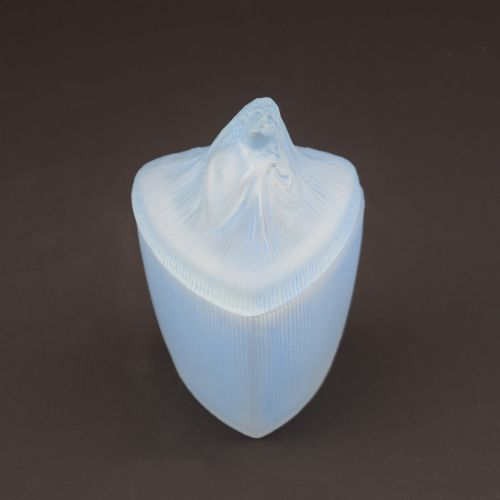
Ceramic and porcelain examples employ moulded clay bodies finished with glaze, sometimes featuring hand-painted motifs or figural designs such as flapper girls and jesters. Glass variants include satin glass, cranberry glass, and amethyst overlay produced by European glassmakers.
Some Art Deco vanity sets feature porcelain jester figures and flapper girl powder puff dolls ready to powder a guest's nose.
Distinguishing quality across examples
The crispness of the repousse decoration on silver lids and the depth of the cutting in crystal bodies distinguish finer vessels from standard production pieces. Enamel work that retains its smooth, undamaged guilloche pattern indicates superior craftsmanship.
The weight of the sterling silver mount and the precision with which the lid fits the glass or ceramic collar separate workshops of high repute from simpler commercial output.
A. J. Pepper & Co·Henry Clifford Davis·Goldsmiths and Silversmiths Company·A. Bromet & Co·Asprey & Co·Posen of Frankfurt·Meissen·Fasold & Stuach
The Antique Powder Jar Glossary
- Guilloche enamel
- Enamel decorated with intricate engine-turned geometric patterns beneath a translucent coloured layer. This technique frequently appears on Art Deco silver dressing table sets.
- Sterling silver
- An alloy consisting of silver and other metals, standardly marked to denote purity. British pieces commonly bear assay office town marks and date letters.
- Repousse
- A metalworking technique where the artisan hammers the design from the reverse side to form a raised relief on the front. It is typical of silver boxes from the Art Nouveau period.
- Satin glass
- Glass treated with hydrofluoric acid to produce a velvety, frosted surface finish. It was popular for Edwardian trinket pots and vanity jars.
- Vermeil
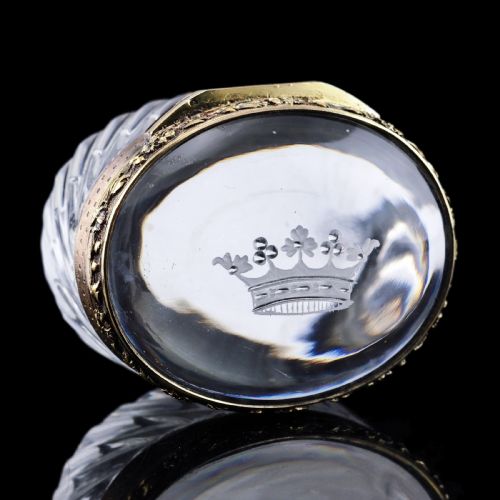
- Sterling silver plated with a thin layer of gold. This finish appears on French 19th-century covered bowls and vanity sets.
Antique Powder Jar: Frequently Asked Questions
What is an antique powder jar?
An antique powder jar is a vanity container used historically to hold face powder, cosmetics, or small dressing table accessories. They typically feature a glass, ceramic, or crystal base paired with a fitted lid made of silver, enamel, or tortoiseshell.
These items formed part of larger dressing table sets used throughout the Victorian, Edwardian, and Art Deco periods. Today, they function as decorative containers or collector's pieces.
How do I date a silver lidded jar?
Dating a silver lidded jar involves examining the hallmarks stamped into the metal mounts. British pieces usually display a standard mark, an assay office mark indicating the town, and a date letter.
Additional clues come from the overall style, such as the curved floral motifs of Art Nouveau or the geometric lines of Art Deco pieces.
What materials were used for these jars?
Makers constructed the bodies from cut glass, crystal, pressed glass, porcelain, or ceramic earthenware. Lids and mounts predominantly utilise sterling silver, often embellished with enamel, tortoiseshell, or pique work.
Coloured glass variants, including cranberry glass, Bristol blue, and amethyst overlay, also appear frequently across 19th and 20th-century examples.
How should I clean my antique jar?
Cleaning an antique jar requires gentle care depending on the materials present. Silver mounts benefit from non-abrasive silver polish applied carefully to avoid contact with glass or enamel.
Glass and ceramic bodies wash safely in warm soapy water, while pieces with delicate enamel or tortoiseshell need only a soft, dry cloth.