



1930s Vanity Accessories
These 1930s vanity accessories bring the polished geometry and vibrant colour of the Art Deco era directly to the dressing table.
1930s Vanity Accessories
When you search for 1930s vanity accessories, you encounter items designed for personal grooming and dressing table display during the interwar period. The selection on this page consists predominantly of Art Deco pieces created to organise and elevate daily routines.
The objects span a distinct range of dressing table equipment, including perfume bottles, atomizers, scent bottles, and trinket boxes. Alongside these sit porcelain powder boxes featuring half dolls and bathing belles, alongside practical items like silver hand mirrors, clothes brushes, and cigarette cases.
Originating largely from European makers in the 1920s and 1930s, these accessories reflect the sleek lines and stylised motifs typical of the period. Glass and ceramic forms dominate, frequently paired with metal mounts and vibrant enamel work.
How they were made
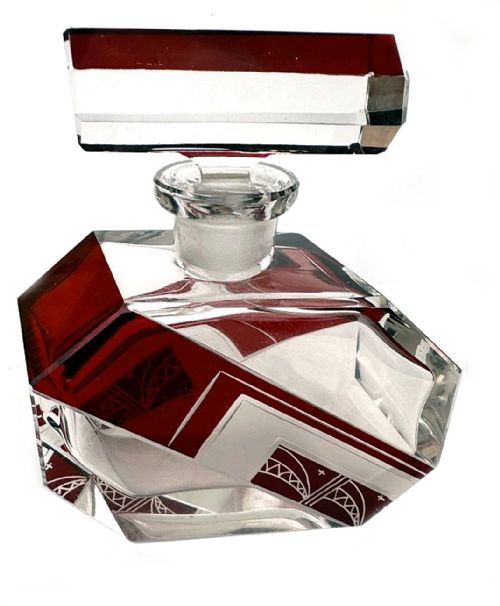
Makers utilised moulded, cut, and opalescent glass to create sculptural perfume bottles and atomizers, often incorporating geometric shapes. Ceramics and porcelain formed the basis for powder bowls and figural trinket boxes, frequently decorated with hand-painted details.
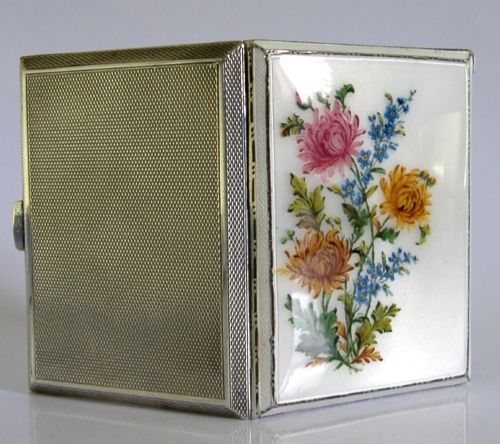
Sterling silver provided a durable structure for hand mirrors, clothes brushes, and compacts, frequently ornamented with colourful guilloche enamel. Enamel work also complemented glass scent bottles, adding opaque colour panels to transparent vessels.
Listings feature periods spanning the 1920s and 1930s, incorporating materials such as sterling silver, porcelain, enamel, and opalescent glass.
What varies in quality
The standard of workmanship depends heavily on the complexity of the materials and the reputation of the maker. Pieces bearing attribution to notable glass artists or established silversmiths display superior finishing in metal mounts and glass moulding.
The condition and application of guilloche enamel and hand-painted decoration dictate the refinement of the piece. Crisp lines in the enamel work and unblemished crystal or opalescent glass separate standard utilitarian items from finer cabinet examples.
Karl Palda·Asprey and Co·Fasold and Stuach·Limoges·Sabino
The 1930s Vanity Accessories Glossary
- Guilloche enamel
- A decorative technique where a metal surface is engraved with intricate geometric patterns before translucent enamel is applied over the top. This creates a shimmering, patterned depth beneath the coloured glass-like coating.
- Opalescent glass
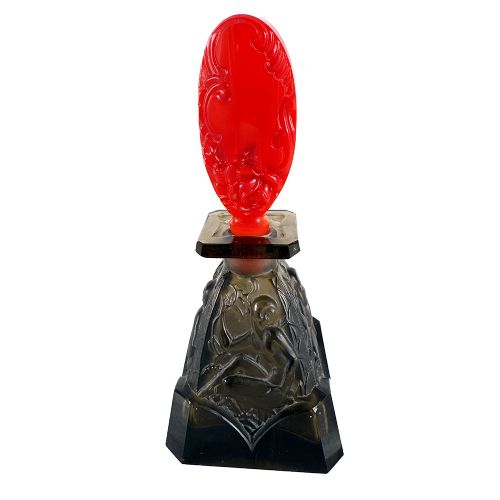
- A milky, semi-translucent glass that displays milky blue or amber highlights when viewed under light. It was widely utilised by interwar French glassmakers for sculptural perfume bottles.
- Atomizer
- A spray bottle mechanism fitted to a perfume vessel to disperse liquid fragrance in a fine mist. These typically incorporate a rubber bulb and metal mesh collar.
- Half doll
- A ceramic or porcelain upper torso used to decorate the lids of powder puffs and trinket boxes. The flared fabric dress completed the lower half of the figure.
- Flapper girl
- A cultural archetype of the interwar decades, often depicted in ceramics and illustrations with a bobbed hairstyle and modern attire. These figures frequently adorn powder boxes and hatpin holders.
1930s Vanity Accessories: Frequently Asked Questions
What counts as a vanity accessory?
Vanity accessories encompass objects used for personal grooming and dressing table presentation. This category includes perfume bottles, atomizers, powder bowls, hand mirrors, and clothes brushes.
Items from this period focus on decorative appeal alongside practical function, turning everyday dressing table items into display pieces.
How do I identify Art Deco vanity pieces?
Art Deco pieces display geometric forms, stylised figures, and clean symmetry characteristic of design from the 1920s and 1930s. Materials like chrome, guilloche enamel, and moulded glass are strong indicators of the period.
Maker marks, hallmarks on silver mounts, and distinct European glass moulding techniques further help pinpoint the era of production.
Were perfume bottles and atomizers used daily?
Most perfume bottles and atomizers were intended for regular use on dressing tables, holding scents for daily application. Their decorative glass and enamel finishes meant they remained on display when not in use.
Atomizers featured functional rubber bulbs and metal hardware designed to dispense fragrance, though many surviving examples now serve primarily as display objects.
How do I care for antique enamel and glass?
Antique glass and enamel require gentle handling to preserve delicate surface decoration and metal mountings. Cleaning should involve soft, dry cloths or minimal lukewarm water without harsh detergents.
Keeping pieces away from direct sunlight and moisture protects coloured enamels and prevents degradation of older silver and chrome finishes.