


Cut Glass Casket
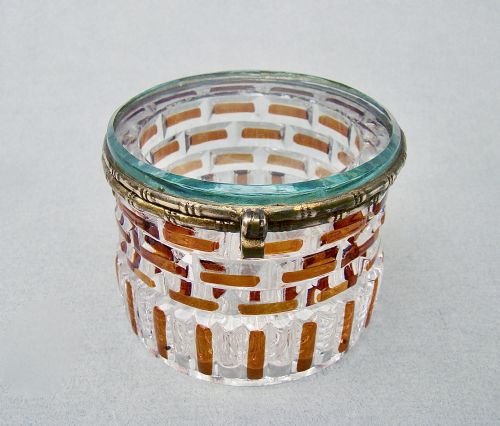
These cut glass casket pieces are heavy storage boxes designed for jewellery, scent bottles, and trinkets, mounted in brass, ormolu, and silver.
Cut Glass Casket
A cut glass casket is a rigid container designed for holding personal valuables, smelling salts, or small decorative items on a dressing table or desk. When searching for a cut glass casket, a buyer encounters lidded boxes and hinged receptacles spanning the nineteenth century up to the Edwardian period.
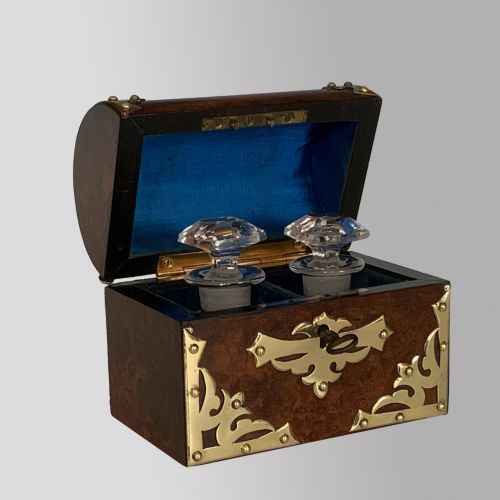
The objects take several distinct forms on this page, including jewellery boxes, scent bottle caskets containing glass bottles, and combination tantalus pieces. French and English examples dominate, often combining heavy moulded or cut crystal with metal mounts.
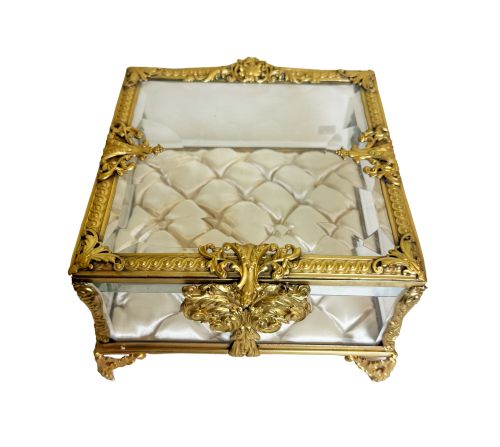
Victorian and Edwardian iterations frequently feature bronze, gilt bronze, or silver plating framing the thick glass body. Interiors are sometimes lined with silk, velvet, or leather to protect delicate contents.
What varies in quality
Quality in a cut glass casket rests on the crispness of the glass cutting and the weight of the metal mounts. Thick, clear crystal with deep, sharply defined facets distinguishes finer boxes from lighter, simpler moulded glass versions.
The engineering of the metalwork also separates tiers of production, seen in the thickness of the ormolu or silver gilt frames and the precision with which the hinged lid closes. Maker attribution, such as work by Baccarat or Posen, elevates the standing of a piece.
Some nineteenth-century scent caskets included hidden locking mechanisms so owners could keep their perfume safely away from inquisitive guests.
Posen·Baccarat
The Cut Glass Casket Glossary
- Ormolu
- Gilded bronze or brass applied to furniture and decorative objects as mounts. This technique was widely utilised by nineteenth-century French makers.
- Tantalus
- A locking wooden or metal frame holding decanters or bottles so they remain visible yet secure. In casket forms, it houses scent bottles.
- Baccarat
- A renowned French crystalworks operating through the nineteenth century and beyond. Their output includes heavy moulded and cut glass boxes with bronze mounts.
- Silver gilt
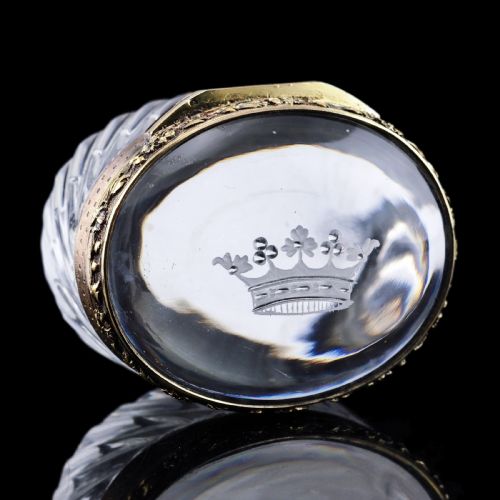
- Silver objects that have been coated with a thin layer of gold. This finish appears frequently on the mounts and coronet decorations of period caskets.
- Coromandel
- A dense, dark exotic wood with contrasting streaks, used for the carcasses of luxury nineteenth-century boxes.
Cut Glass Casket: Frequently Asked Questions
What fits inside a cut glass casket?
These containers were originally made to hold rings, necklaces, small keepsakes, and fitted scent bottles. Many retain their internal velvet or silk pads designed to cushion fragile items.
Buyers today use them on dressing tables and desks for modern jewellery or as standalone decorative objects.
How do I date a cut glass casket?
Dating relies on the combination of the glass-cutting style, the metal alloy used for the mounts, and any visible hallmarks. Victorian and Edwardian examples often show distinct revival styles from French or English makers.
Comparative study of hinges, locks, and internal fabric linings also helps narrow down the decade of production.
Are the scent bottles original to the box?
Many caskets made for perfume bottles retain their matching glass stoppers and original fitted internal tiers. Checking whether the cut patterns on the bottles match the exterior glass helps confirm originality.
Some surviving boxes show internal spacing designed specifically for multiple distinct glass vessels.
How should I clean the metal mounts?
Ormolu and gilt bronze mounts require gentle dusting with a soft, dry cloth to preserve the underlying gold layer. Avoid harsh chemical polishes that can strip the original gilding from the brass or bronze.
Glass panels can be cleaned separately with mild soapy water while taking care not to wet any aged fabric linings.