
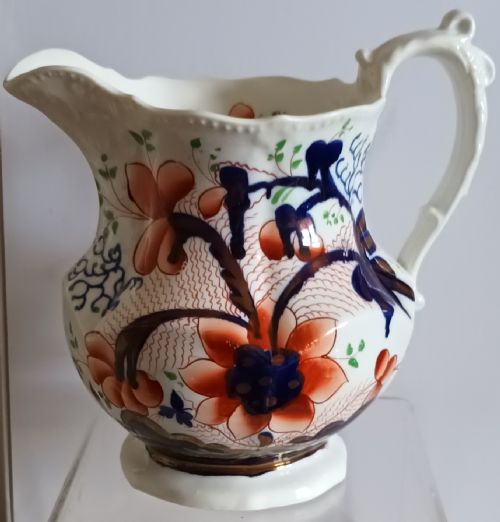


Antique Pottery Milk Pitcher
An antique pottery milk pitcher brings domestic utility into the parlour through hand-decorated earthenware, stoneware, and ironstone forms.
Antique Pottery Milk Pitcher
When you search for an antique pottery milk pitcher, you encounter domestic vessels shaped for pouring cream and milk during the Georgian, Regency, and Victorian eras. These containers take the form of jugs, creamers, and cow creamers fashioned by Staffordshire potters and regional English kilns.
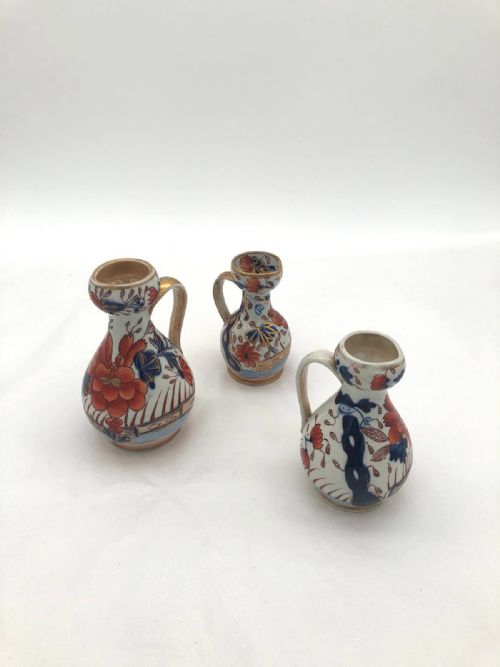
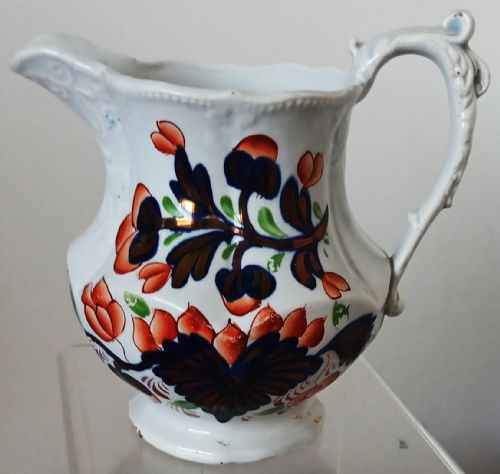
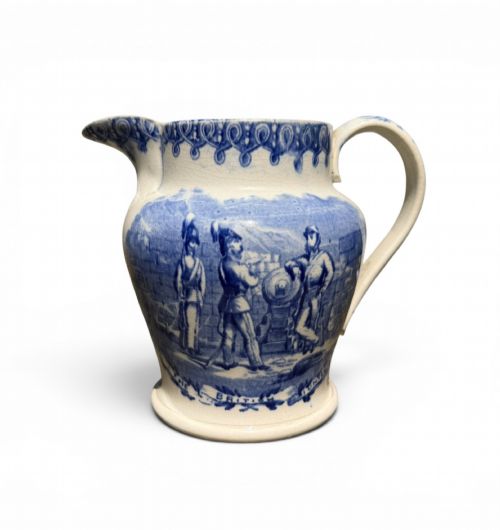
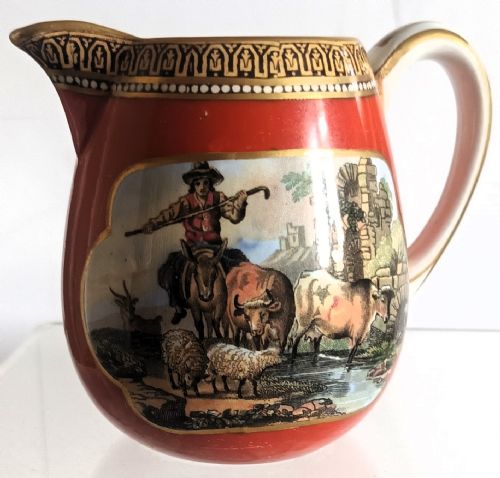
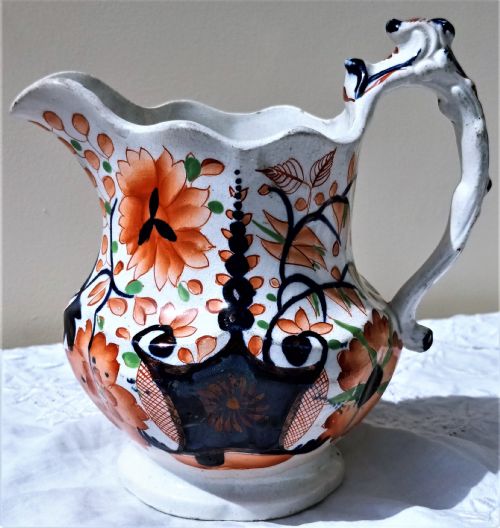
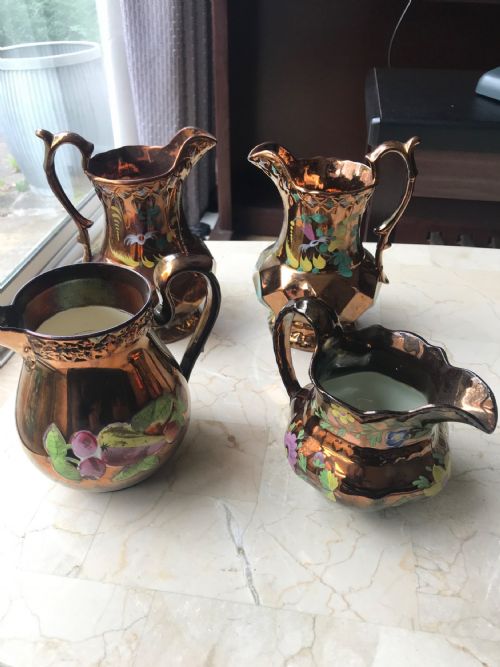
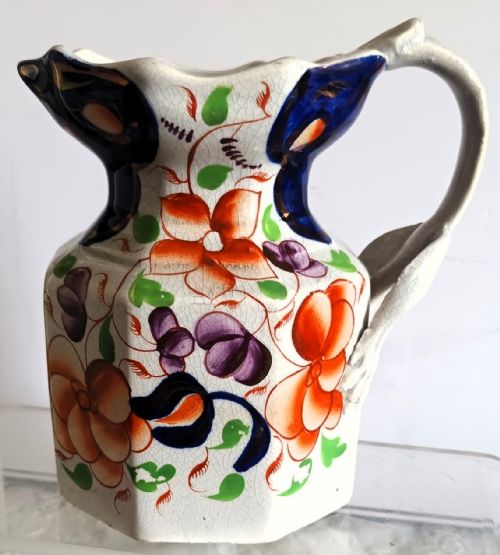
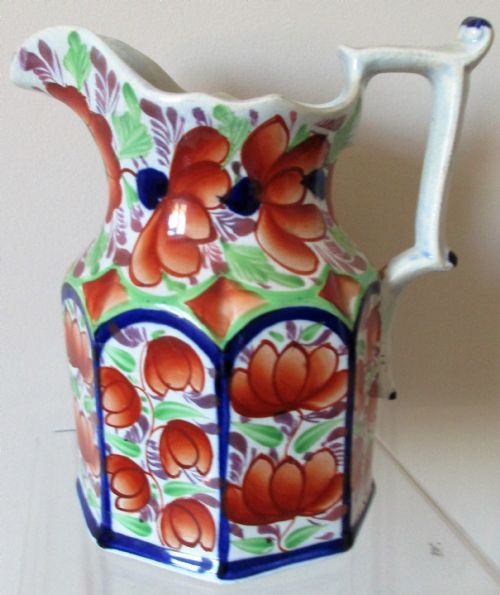
The pieces appearing most frequently on this page span the nineteenth century, featuring earthenware bodies finished with transfer decoration, copper lustre, or hand-painted Gaudy Welsh patterns. Alongside standard jugs sit more unusual forms such as hound-handled pitchers, faceted vessels, and complete jug and bowl sets.
Originating across English and Welsh potteries, these milk jugs served practical functions in households before transitioning into cabinet pieces valued for their regional patterns and traditional folk art motifs.
How They Were Made
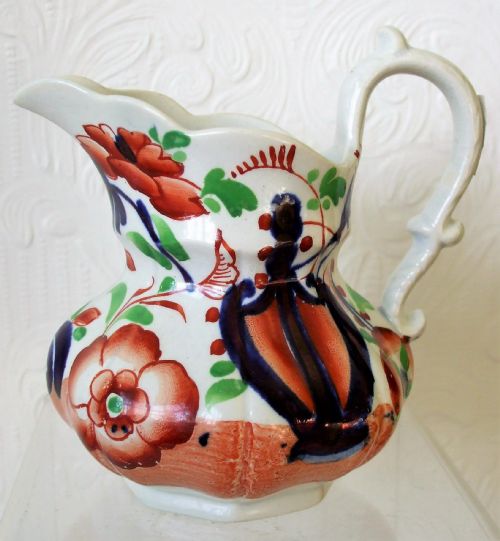
Potters built these vessels using earthenware, ironstone, pearlware, and stoneware, applying glazes and enamel colours to seal the ceramic bodies. Many examples incorporate copper lustre finishes, purple transfer decoration, or hand-painted botanical scenes applied directly over the fired clay.
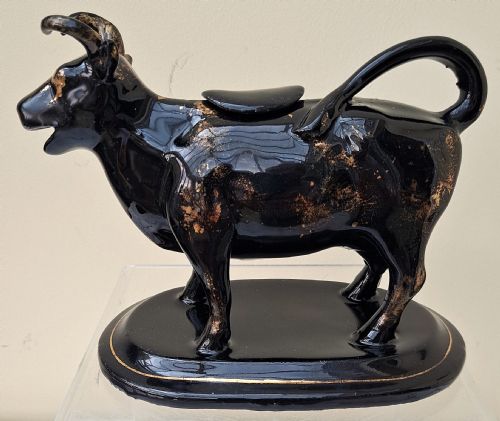
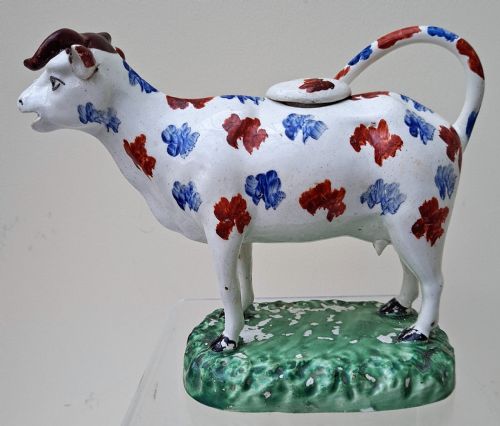
Specialised techniques produced distinctive utilitarian shapes, including moulded cow creamers complete with milkmaid figures, faceted bodies, and applied hound handles. Kiln workers fired these pieces across eighteenth and nineteenth century English and Welsh potteries to achieve durable domestic wares.
Several cows manage to pour tea without spilling a single drop.
What Varies in Quality
The sophistication of the glaze and the complexity of the palette - ranging from simple blue and white transfer designs to rich multi-coloured Gaudy Welsh patterns or lustrous copper finishes - distinguish standard utility vessels from finer collector examples.
Mason's Ironstone·Keeling and Co·Doulton Lambeth·Leeds Pottery·Livesley Powell and Co·Phillips and Bagster·Copeland Spode
The Antique Pottery Milk Pitcher Glossary
- Pearlware
- A fine earthenware developed in the late eighteenth century featuring a subtle blue-tinted glaze that pooled in recesses to mimic Chinese export porcelain. It provided a smooth white surface ideal for transfer printing.
- Copper Lustre
- A metallic glaze technique producing a warm, coppery sheen across the ceramic surface. Potters frequently applied this finish to nineteenth century jugs, often pairing it with hand-painted floral bands.
- Ironstone
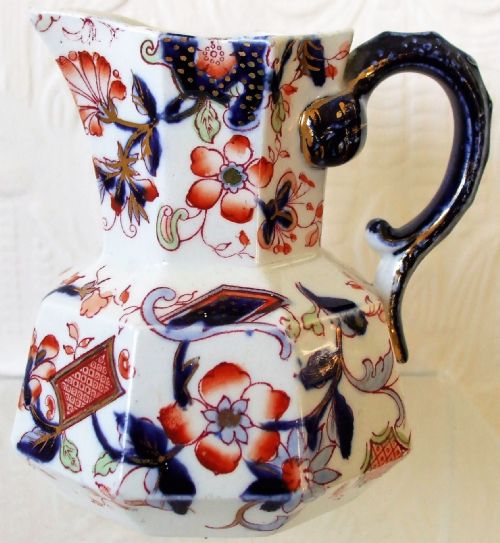
- A heavy, durable ceramic patented in the early nineteenth century to rival porcelain. It resisted chipping and supported robust domestic use while taking bright enamel colours well.
- Gaudy Welsh
- A distinctive style of brightly coloured pottery decorated with cobalt blue, iron red, copper lustre, and green enamel. These patterns found great popularity in Welsh and English households during the Victorian period.
- Cow Creamer
- A hollow ceramic figure of a cow designed with an opening on the back for filling with milk and a spout formed through the animal's mouth. These whimsical vessels date primarily to the Georgian and Victorian eras.
Antique Pottery Milk Pitcher: Frequently Asked Questions
How were antique milk pitchers used?
These vessels functioned primarily as creamers and milk jugs on dining tables and tea services during the Georgian and Victorian periods. Households utilised them for serving milk or cream alongside tea and coffee.
Over time, many of these utilitarian containers transitioned into display pieces, appreciated for their regional pottery designs and hand-painted decorative motifs.
What materials are these pitchers made from?
Potters constructed these jugs using a variety of ceramic bodies including earthenware, stoneware, pearlware, and ironstone. Makers then finished the surfaces with clear or coloured glazes, enamel paints, and metallic lustre.
Transfer printing and hand-brushing provided the surface patterns, ranging from Oriental scenes to botanical illustrations and geometric Gaudy Welsh designs.
How do I identify a Victorian jug?
Victorian examples often display heavy ironstone bodies, vibrant enamel palettes such as Gaudy Welsh patterns, or rich copper lustre finishes. Makers during this period also produced specialised novelty forms like cow creamers and hound-handled pitchers.
Stylistic cues draw upon nineteenth-century revivals, Art Nouveau influences, and Staffordshire folk art traditions rather than the restrained neoclassical lines of the previous century.
What is a cow creamer?
A cow creamer is a ceramic milk jug modelled in the shape of a cow, featuring a filling hole on the back and a pouring spout at the mouth. These pieces often include a flat base or accompany a milkmaid figure.
Originating in Georgian and Victorian workshops, these figural vessels combined humorous domestic utility with traditional Staffordshire pottery skills.