
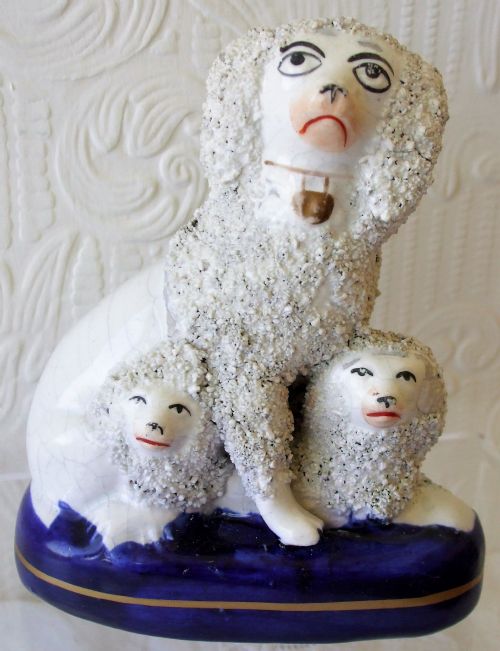


Antique Pottery Mantelpiece Figure
An antique pottery mantelpiece figure brings domestic Victorian character into a room, most often found as pairs of dogs, lions or portrait groups.
Antique Pottery Mantelpiece Figure
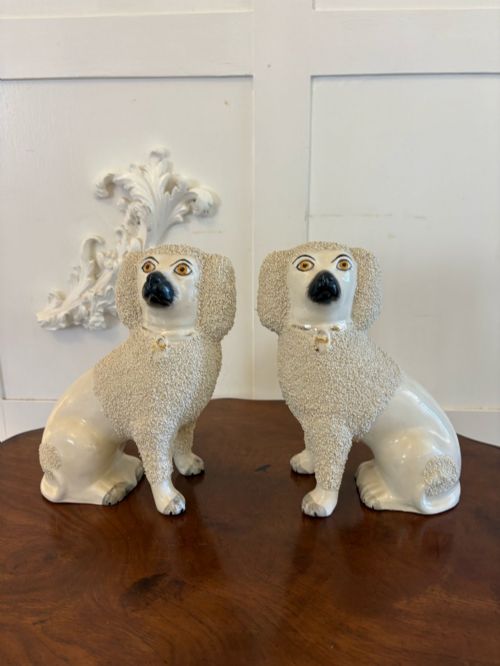
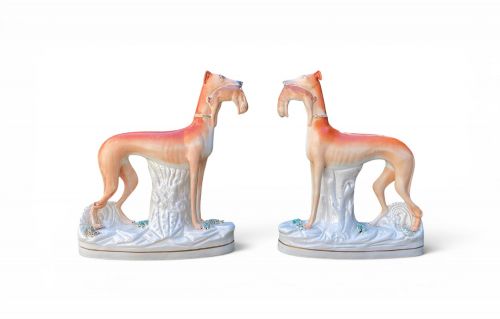
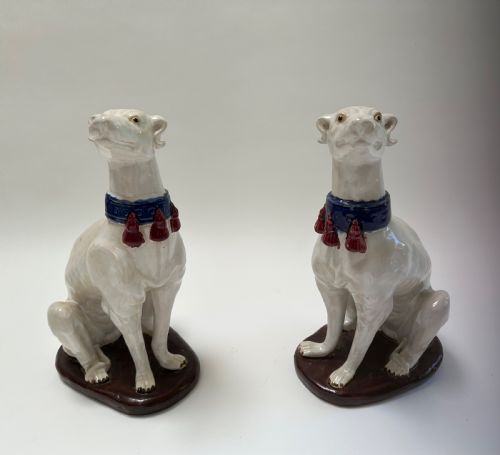
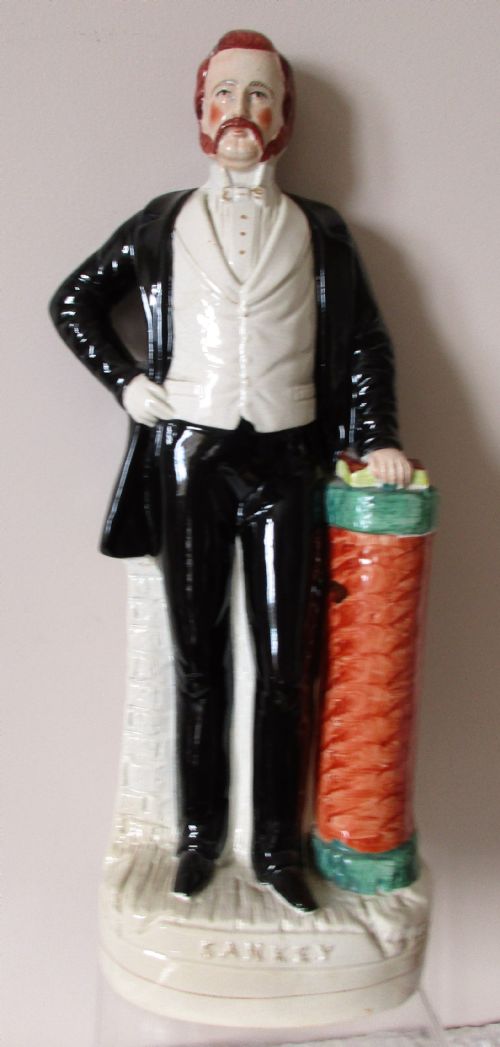
When you search for an antique pottery mantelpiece figure, you encounter earthenware and ceramic sculptures designed for display on a shelf or mantel. The selection centres heavily on Victorian Staffordshire productions, spanning pairs of poodles, greyhounds, spaniels and lions alongside flatback portrait groups and spill vases.
You meet both single figures and matched pairs, depicting subjects from royal figures and Scottish highlanders to theatrical characters and farm workers. The forms reflect mid to late nineteenth-century British domestic tastes, modelled to sit flat against a wall or in the round.
Originating largely from nineteenth-century potteries, these figures served as decorative ornaments in parlours. The pieces on this page demonstrate the enduring appeal of traditional earthenware subject matter, from domestic animals to historical personages.
How they were made
Many flatback pieces were hollow-cast to save weight and material during firing, leaving the reverse unglazed or simply painted. The application of glaze protected the porous ceramic body and created the characteristic glossy surface seen across nineteenth-century examples.
Listings feature earthenware and ceramic pieces predominantly from the 19th Century, incorporating lead glaze, enamel and gold leaf.
What varies in quality
The sophistication of the glaze also marks the grade of a piece, with rich copper lustre or deep lead glazes outperforming plain or flat finishes. Lesser items show hurried brushwork and blurred details from worn moulds.
James Dudson·Royal Dux·Beswick
The Antique Pottery Mantelpiece Figure Glossary
- Flatback
- A figure modelled with a detailed front and a flat, often unglazed or minimally painted reverse designed to stand flush against a wall.
- Spill vase
- A hollow figural or architectural ceramic vessel incorporating a cylindrical holder intended to contain wooden spills for lighting fires.
- Earthenware
- A porous pottery body fired at lower temperatures, requiring a glaze to achieve impermeability to liquids.
- Lead glaze
- A glossy coating containing lead oxide applied to pottery before firing to provide a smooth, waterproof finish.
- Copper lustre
- A metallic glaze technique producing a reflective, copper-coloured sheen across the ceramic surface.
Antique Pottery Mantelpiece Figure: Frequently Asked Questions
Where were mantelpiece figures displayed?
These ceramic figures sat predominantly on the mantelpiece in Victorian living rooms, designed to be viewed from the front.
Their flat backs allowed them to rest securely against a wall or mirror frame without tipping forward.
Why are many figures found in pairs?
Victorian interior design favoured symmetry on mantelpieces and sideboards, leading potters to produce animals and human subjects as matching pairs.
Left and right orientations were modelled to face inward toward a central clock or ornament.
What is a spill vase figure?
A spill vase combines a decorative figural sculpture with an integrated cylindrical container.
Households used these holders to store thin wooden spills for transferring flames from the hearth to candles or pipes.
How do you date nineteenth-century pottery figures?
Dating relies on stylistic markers, subjects tied to specific historical events or reigns, and manufacturing techniques like flatback construction.
Pottery marks, where present, help narrow down the period of production within the nineteenth century.