




Antique Pottery Dishes
These antique pottery dishes span centuries of domestic service and table display, offering tactile history through earthenware, creamware, and blue and white transferware.
Antique Pottery Dishes
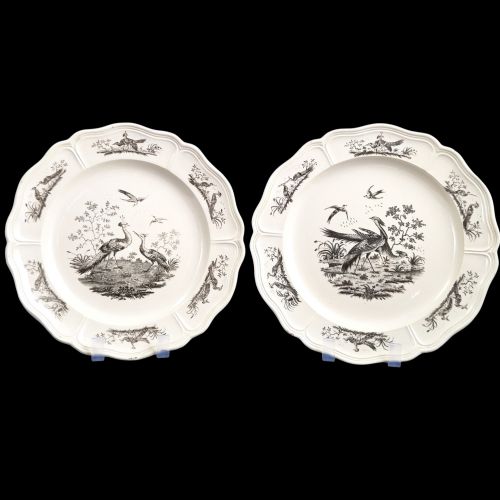
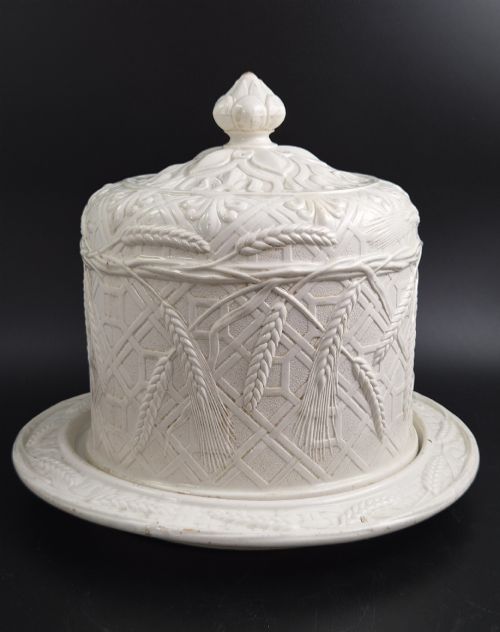
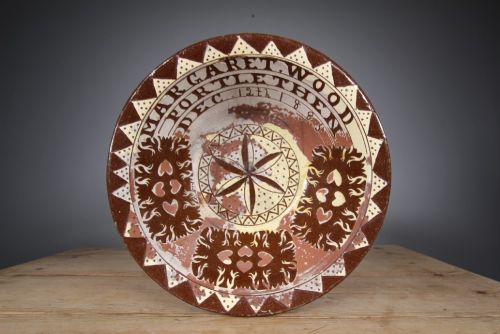
Antique pottery dishes encompass a broad domestic range from utilitarian service items to decorative display pieces, reflecting centuries of changing dining habits. When exploring antique pottery dishes, buyers encounter practical forms such as meat platters, vegetable tureens, cheese domes, and dessert plates alongside chargers intended for sideboard display.
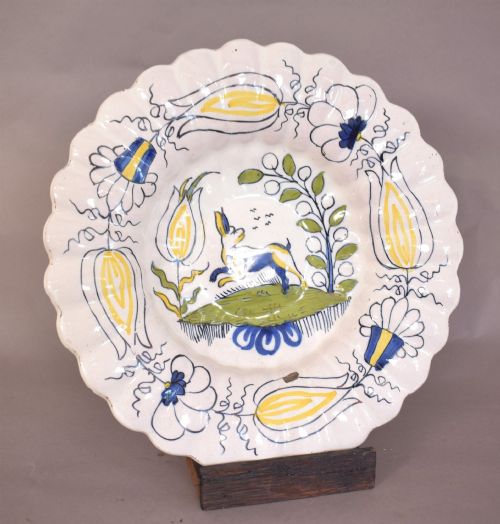
The selections span significant periods from the sixteenth century through the Victorian era, drawing on English, continental European, and Asian traditions. Creamware, tin-glazed earthenware, porcelain, and transfer-printed ironstone appear frequently across these utilitarian and ornamental forms.
How they were made
Makers shaped these wares using local clays, earthenware bodies, and refined ceramic pastes, which were then fired in kilns to create durable domestic surfaces. Glazing techniques defined much of the production, utilising tin glazes, lead glazes, and clear coatings to seal porous clay bodies.
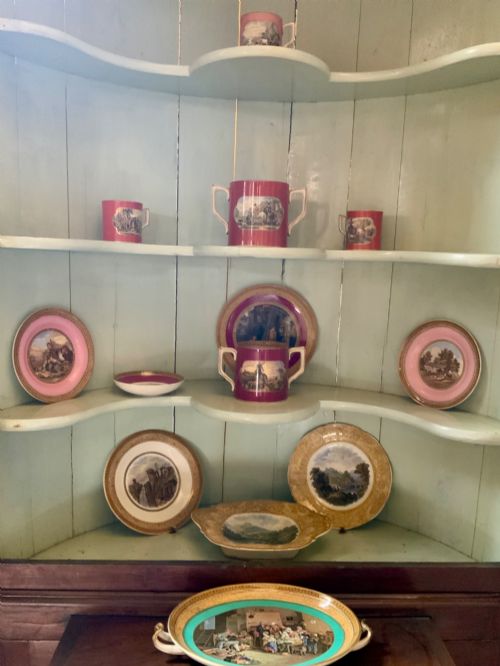
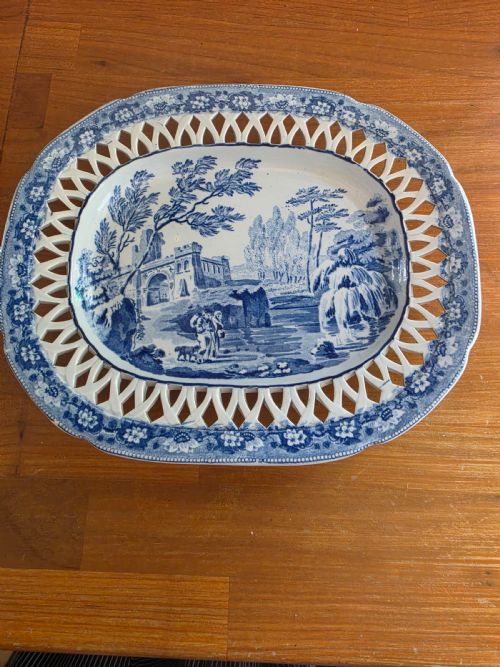
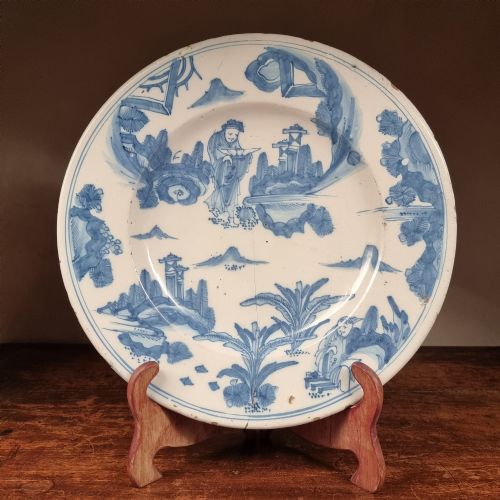
Decoration relied heavily on hand-painting, slip trailing, and copperplate transfer printing in rich blue and white pigments. Enamel colours and gold leaf accents were frequently added over the glaze before a final low-temperature firing.
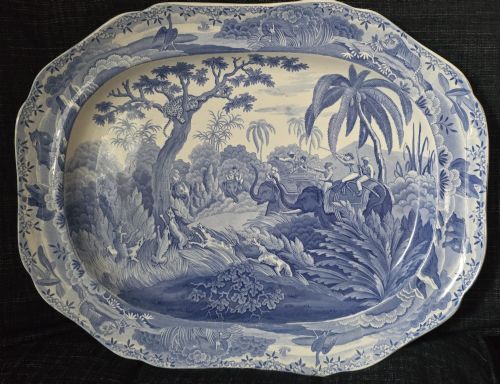
Platters decorated with nineteenth-century bear hunting scenes remind modern diners that nineteenth-century breakfast conversation carried a certain dramatic edge.
What varies in quality
Quality in these ceramics rests on the crispness of the transfer print, the uniformity of the glaze, and the fineness of the potting body. Superior pieces demonstrate steady control in the kiln, resulting in smooth surfaces without excessive warping or pooling in the tin or lead glazes.
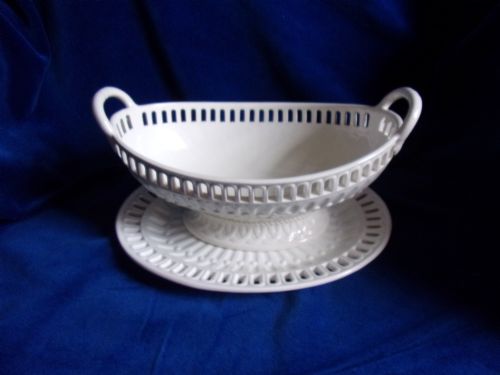
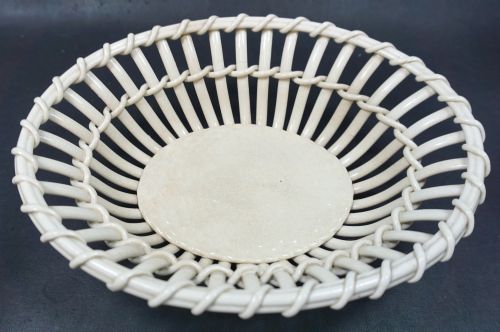
Artistic execution sets exceptional examples apart, particularly in hand-painted motifs, intricate relief moulding such as basket weave, and carefully aligned polychrome enamels. The clarity of historical narrative scenes and the precision of applied borders directly reflect the skill of the potter and decorator.
Wedgwood·Spode·Leeds Pottery·George Jones·J. & R. Clews
The Antique Pottery Dishes Glossary
- Creamware
- A fine earthenware developed in England during the eighteenth century, characterised by a pale yellowish-cream hue produced by a lead glaze over a refined cream-coloured clay body.
- Transferware
- Pottery decorated by applying a monochrome or coloured design from an engraved copper plate onto tissue paper, which was then transferred onto the unglazed or bisque-fired ceramic surface.
- Majolica
- A type of earthenware coated with an opaque tin glaze and painted with metallic oxide colours, popular during the Victorian period for vibrant floral and animal relief models.
- Kraak porcelain
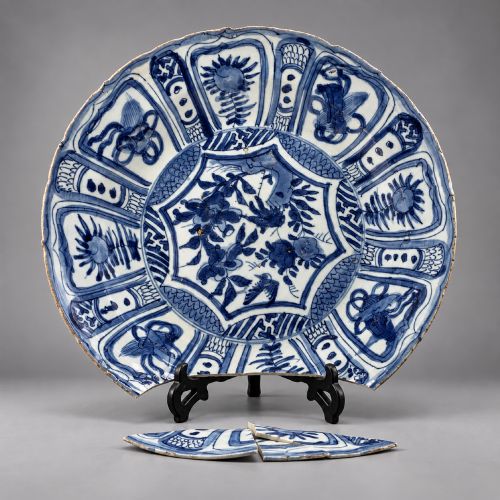
- Chinese export porcelain produced during the late Ming dynasty, typically featuring blue and white panels divided radially around a central motif.
- Charger
- A large decorative plate or shallow bowl used traditionally for ceremonial table service or displayed upright on sideboards and walls.
Antique Pottery Dishes: Frequently Asked Questions
How do I date an old pottery dish?
Dating relies on identifying potting styles, glaze compositions, and maker marks stamped or printed on the underside. Stylistic clues like transfer-printed subjects and shape profiles also help narrow the decade.
Examining the foot ring and wear patterns provides further confirmation of age, distinguishing nineteenth-century production from later revivals.
Can I use antique plates for dining?
While many pieces were designed for food service, older soft glazes and porous earthenware bodies require careful handling. Lead content in early glazes and centuries of wear make everyday dining impractical for many fragile examples.
Gentle hand washing preserves the remaining enamel and prevents moisture from entering existing hairlines in the ceramic body.
What is the difference between earthenware and porcelain?
Earthenware is fired at lower temperatures, leaving the clay body porous and opaque until sealed with a glaze. It forms the heavy, tactile base for creamware, majolica, and transfer-printed dishes.
Porcelain is denser, vitreous, and often translucent, created from refined white clays fired at much higher temperatures.
How should I display heavy chargers?
Large chargers and platters need secure wall hangers with rubber-coated grips or sturdy plate stands designed for heavy weights. Placing them away from direct sunlight protects vulnerable enamel colours and gold leaf.
Ensuring stable placement on deep shelves prevents accidental tipping of these substantial ceramic pieces.