





Antique Pottery Animal Figurine
An antique pottery animal figurine brings domestic life and foreign fauna of past centuries straight onto the mantelpiece.
Antique Pottery Animal Figurine
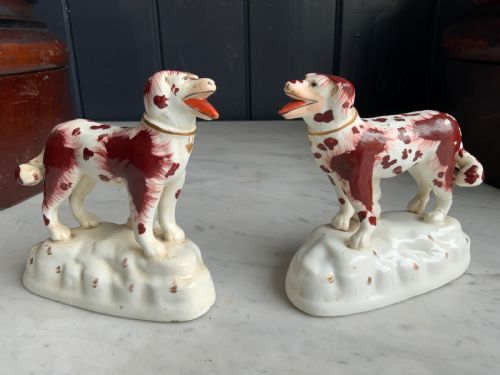
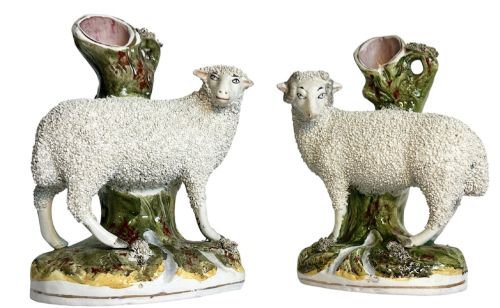
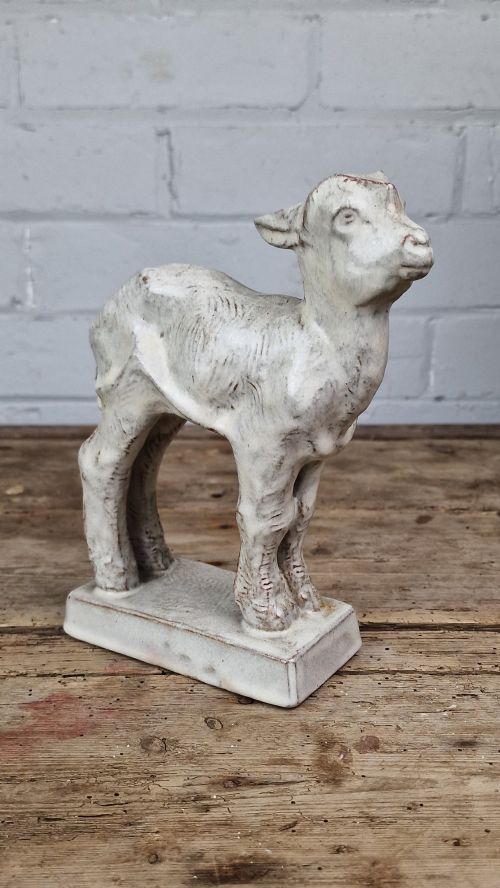
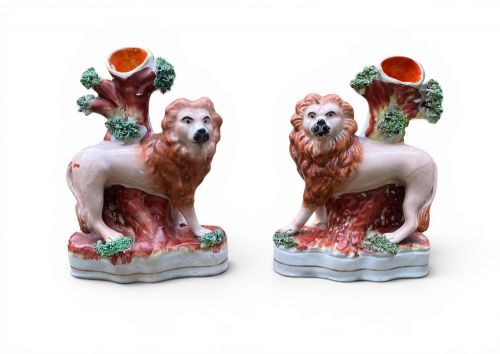
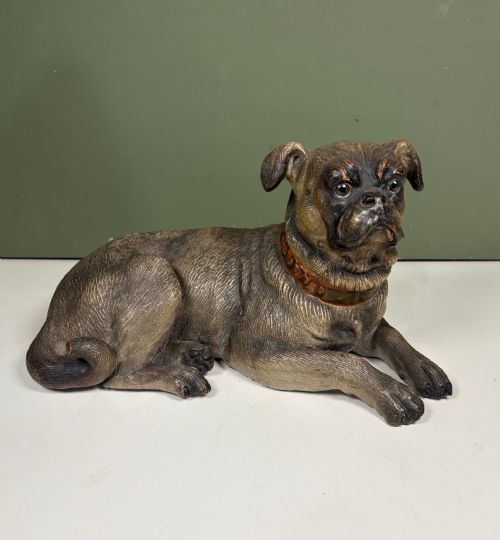
An antique pottery animal figurine captures creatures ranging from native sheep and pugs to exotic lions, zebras and apes. The listings here draw heavily on nineteenth-century Staffordshire works, alongside Dutch Delft blue and white cows, French cats with glass eyes, and Chinese Shiwan pottery tigers.
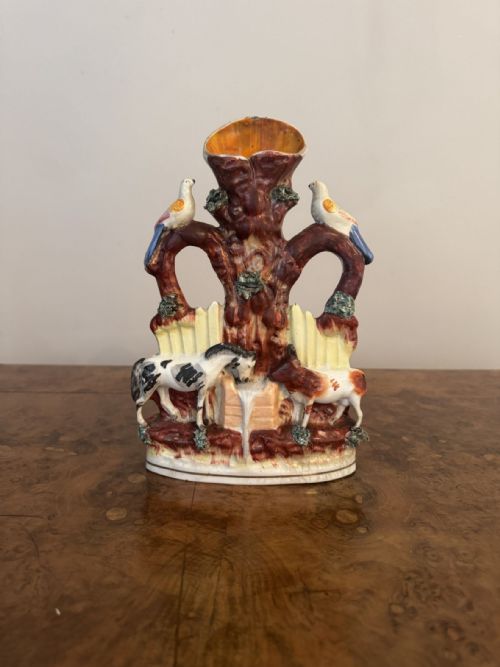
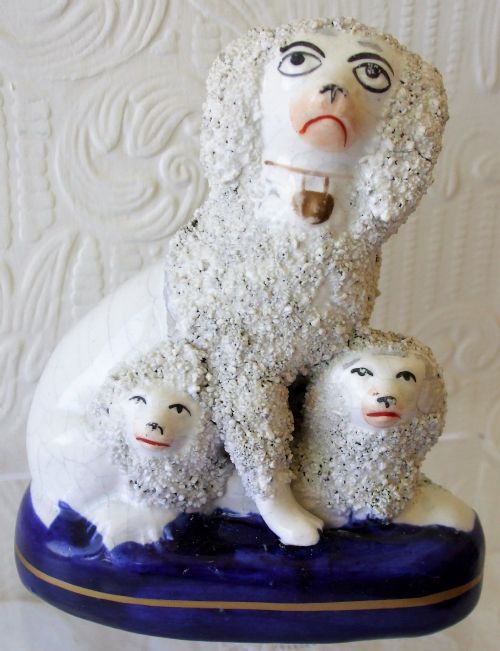
Buyers will encounter single sculptures, matched pairs intended for mantel symmetry, and functional spill vases that incorporated figures of sheep or lions. The forms vary from straightforward earthenware animals to elaborate group compositions featuring hunting dogs with hare or poodles with pups.
Materials and construction
Potters relied primarily on earthenware, pearlware, and glazed ceramic bodies to shape these animals. Techniques spanned simple slip moulding and hand finishing before the application of lead glaze, copper lustre, or bright enamels.
Many English and continental pieces received rich treacle glazes or tin-glaze coatings such as Dutch Delftware. Selected works integrated contrasting materials, notably the fitted glass eyes seen on twentieth-century French cat figures.
Antique Pottery Animal Figurine Retail Price Guide 2026
Typical asking prices for pottery animal figurine among the pieces listed under this phrase on Sellingantiques today, from the lower quarter to the upper quarter. They describe what is for sale here now, not the wider market.
Listings span the nineteenth century up to the nineteen-thirties, incorporating earthenware, pearlware, and glazed ceramic.
Distinctions in quality
Superior quality shows in the crispness of the moulding and the lively modelling of the animal's expression, rather than just the age of the piece. Firmer handling of the clay separates spirited figures from routine production.
The sophistication of the glaze work and enamel application dictates the visual success of the piece. Rich copper lustre, deep treacle surfaces, and carefully painted details elevate specific examples well above standard factory output.
Walton·Wooley·Bavent
The Antique Pottery Animal Figurine Glossary
- Pearlware
- A fine earthenware developed in the late eighteenth century featuring a faint bluish glaze that pooled in recesses. It provided a paler ground for enamels than standard creamware.
- Spill vase
- A hollow hollow-backed ceramic vessel designed to hold taper splints for lighting candles or fires. They frequently incorporated decorative figures of sheep or lions on the front.
- Treacle glaze
- A dark, translucent brown glaze applied over earthenware to create a rich, glossy finish. It proved especially popular on nineteenth-century lion and dog figures.
- Copper lustre
- A metallic glaze technique producing a warm, reflective copper sheen on pottery surfaces. It appears on sculptural animal figures from the nineteenth century.
Antique Pottery Animal Figurine: Frequently Asked Questions
Where were these figures displayed?
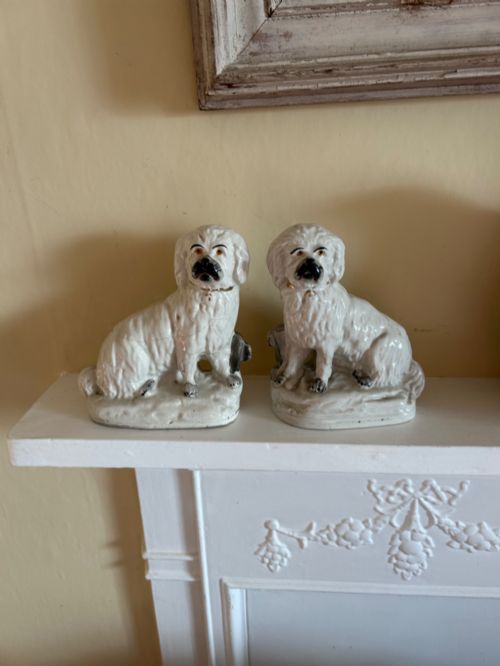
Most animal figures found a home on the mantelpiece, often arranged in pairs to balance the hearth.
Larger models and spill vases also sat upon sideboard tops or chest surfaces in nineteenth-century parlours.
What is a spill vase?
A spill vase combines a hollow upright tube with a sculpted animal figure at the base.
They held thin wooden splints used to transfer fire from the hearth to candles or pipes.
Why are dogs so common?
Pugs, poodles, and spaniels reflected Victorian domestic affection for household pets and loyal companions.
Potters manufactured these dogs in large numbers to satisfy the steady demand for mantel ornaments.