


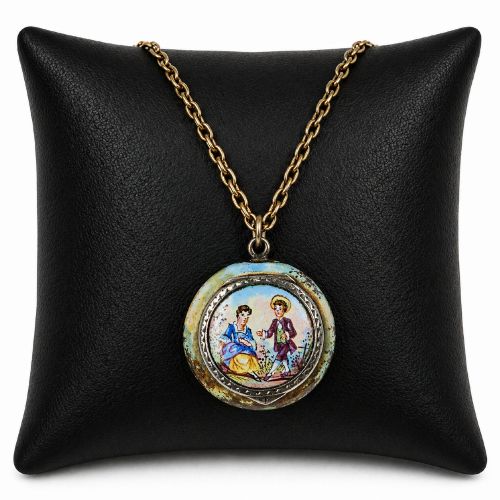


Antique Portrait Necklace
These antique portrait necklaces bring miniature paintings and painted likenesses to the neck, offering wearers a tangible link to past centuries.
Antique Portrait Necklace
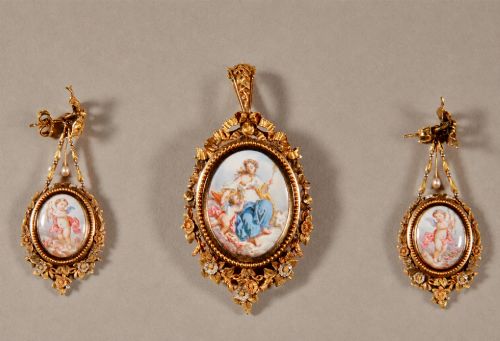
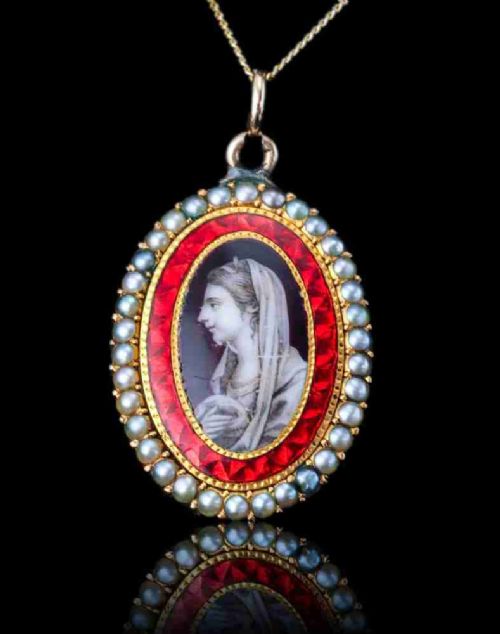
An antique portrait necklace brings together painted likenesses and wearable settings, taking the form of pendants, lockets, and miniature paintings adapted for suspension. The most common versions on this page combine gold or silver metalwork with hand-painted images under glass or enamel, spanning Georgian, Victorian, and Art Nouveau periods.
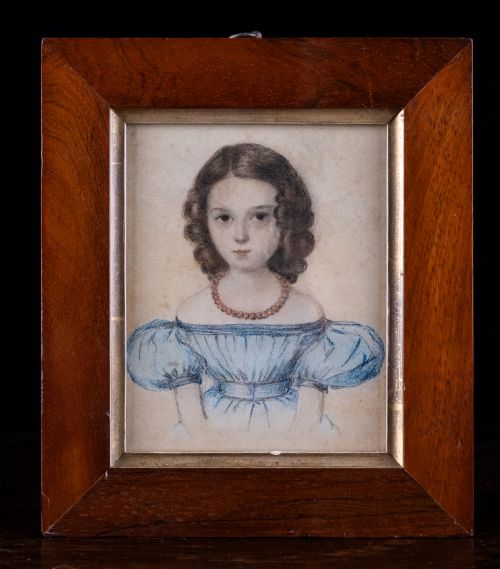
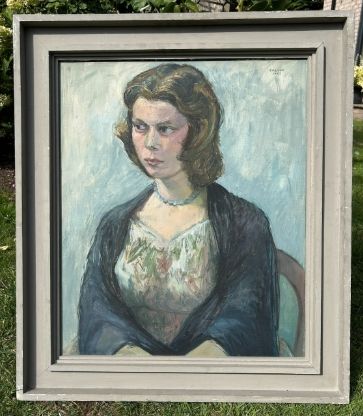
The objects vary from intimate miniatures rendered in watercolour on paper or enamel to small oil paintings on canvas and panel. These pieces reflect diverse origins including Georgian, Victorian, Regency, and 19th Century Viennese workshops, often incorporating pearls or coloured glass within the design.
Materials and construction methods
Makers utilised gold, 9ct gold, and sterling silver to house painted portraits, frequently framing the central image with pearls or enamel work. Metal settings were shaped by hand to form hinged lockets or secure bezels for delicate portrait miniatures.
Portraits themselves were executed using oil on canvas, watercolour, or enamel techniques, capturing subjects with fine brushes on small surfaces. Protective glass or crystal covers were then fitted over the painted elements to shield the delicate pigments from daily wear.
Antique Portrait Necklace Retail Price Guide 2026
Typical asking prices for portrait necklace among the pieces listed under this phrase on Sellingantiques today, from the lower quarter to the upper quarter. They describe what is for sale here now, not the wider market.
Several ladies immortalised in these pendants steadfastly refused to part with their coral necklaces.
Factors determining quality
The material integrity of the setting and mount separates standard items from superior works. Solid gold housings, intact enamel panels, and secure original bezels or pearl borders indicate higher original craftsmanship and better survival over time.
Henry Jacob Burch·Pieter Nason·William Owen RA·GALLIA·Leo Klin
The Antique Portrait Necklace Glossary
- Portrait Miniature
- A small, highly detailed painting of a person, typically executed in watercolour, enamel, or oil on a small surface. These were often kept as personal keepsakes or worn close to the heart.
- Locket
- A small ornamental case worn on a chain around the neck, designed to hold a portrait, lock of hair, or other memento. Hinged lids protect the contents within the metal cavity.
- Enamel
- A glassy substance fused to metal through firing, used to add durable colour and decorative designs to jewellery and pendants. It appears in smooth, glossy surfaces on various period pieces.
- Bezel
- A grooved rim or collar of metal that holds a stone, glass, or painted miniature securely in place within a pendant mounting. It provides the primary mechanical boundary for the artwork.
- Oil on Canvas
- A painting technique using pigments suspended in drying oils applied to stretched fabric, found in both small pendant formats and larger framed works. This medium allows for rich colour depth and blended tones.
Antique Portrait Necklace: Frequently Asked Questions
What is an antique portrait necklace?
An antique portrait necklace is a piece of jewellery that suspends a painted human likeness around the neck, typically housed in a gold, silver, or enamel frame. These items combine wearable ornaments with miniature fine art.
They serve as personal mementos or decorative accessories, often opening as lockets or presenting fixed miniature paintings under protective glass covers.
How do I date an antique portrait necklace?
Dating relies on examining the style of the portrait, the cut of the subject's clothing, and the construction methods of the metal setting. Georgian pieces often feature sepia painting or flat-backed gold settings, while Victorian examples frequently incorporate pearls and heavier bezels.
Art Nouveau pieces from around 1900 display characteristic fluid lines, organic motifs, and specific hallmarks associated with the turn of the century.
How were these necklaces worn in the past?
People wore these necklaces suspended from chains or ribbons around the neck, keeping the painted portrait visible against clothing. They functioned as both fashion accessories and intimate personal tokens.
Many of these pieces were designed to be worn close to the heart, sometimes holding hidden hair or miniature photographs inside hinged locket compartments.
Are portrait miniatures always painted on ivory?
While ivory was a common surface for miniatures, the evidence here records various materials including enamel, oil on canvas, and watercolour on paper. Each support requires different handling and exhibits distinct ageing characteristics.
The choice of material often points to the period and regional workshop where the piece was originally produced.
How should I care for an antique portrait necklace?
Care requires keeping the piece away from moisture, direct sunlight, and harsh chemical cleaners that can damage delicate paintwork, enamel, or organic materials like pearls. Gentle dusting with a soft, dry cloth is usually sufficient for maintenance.
Because the painted surfaces and glass covers are fragile, storing the necklace in a dedicated padded box prevents impact damage when not being worn.