



Antique Porcelain Tea Service
An antique porcelain tea service brings the warmth of eighteenth- and nineteenth-century parlours directly to the table.
Antique Porcelain Tea Service
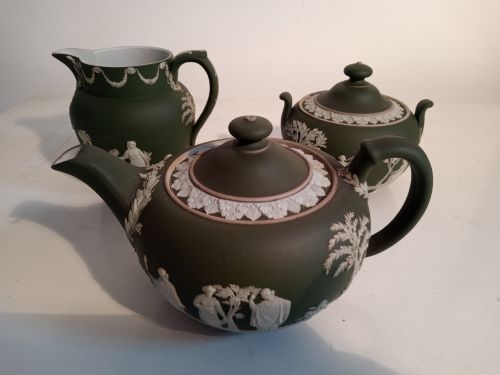
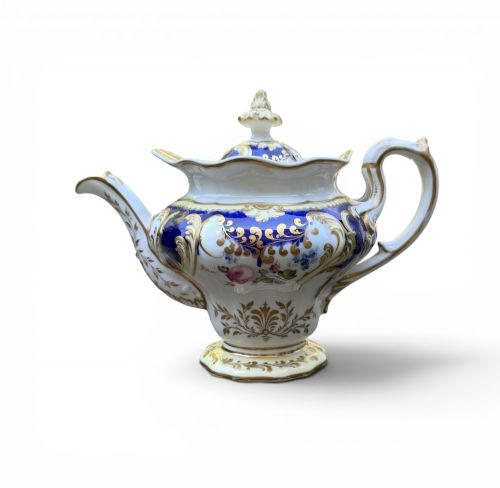
An antique porcelain tea service comprises matched or coordinated ceramic vessels designed for the ritual of pouring hot beverages, spanning periods from the eighteenth century through the Art Deco era. You will encounter forms ranging from full afternoon tea sets and breakfast sets down to compact child's services and specialised coffee services.
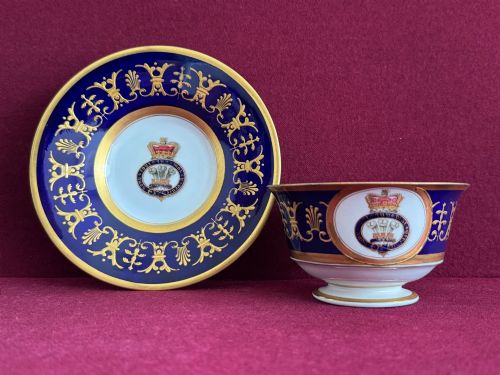
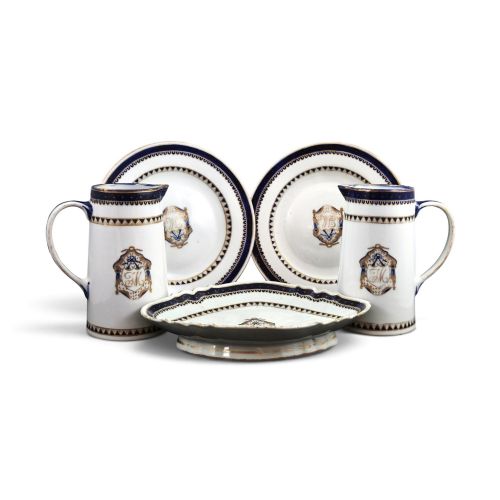
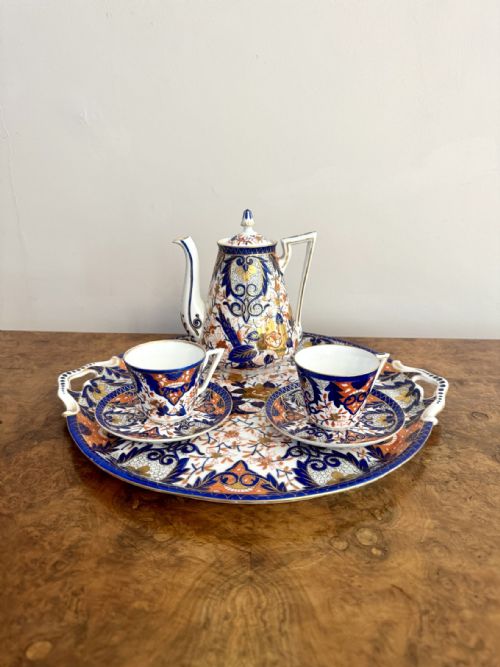
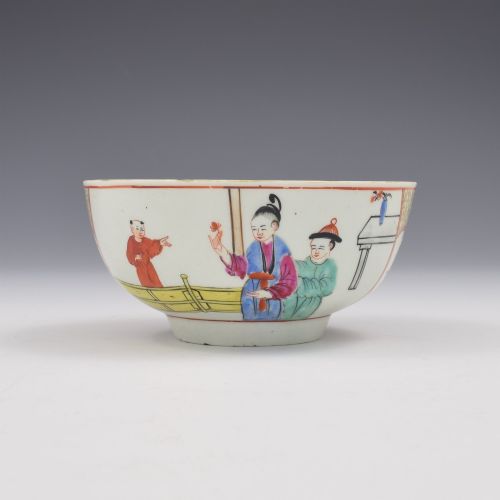
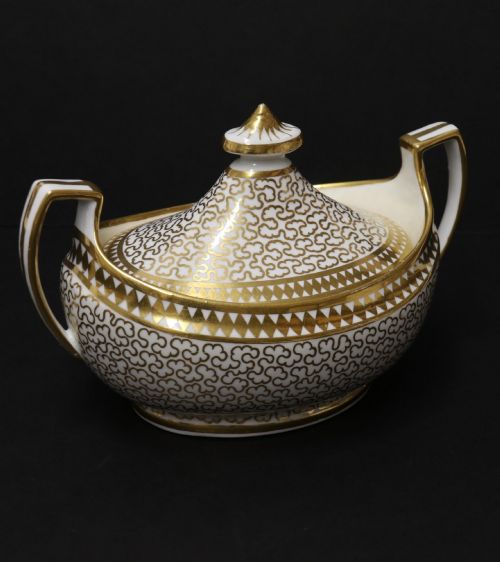
The materials you find on this page include bone china, earthenware, and fine porcelain, often accented with gold leaf, gilt, and vibrant enamels. Styles run the gamut from Chinese Export and Georgian hand-painted designs to Victorian Imari and 1930s geometric patterns.
Manufacture and materials
Potters shaped these services using porcelain body mixes and bone china pastes, firing them in kilns before applying hand-painted or transfer-printed decoration. Flow blue techniques and intricate enamel work required precise temperature control during multiple kiln firings.
Makers embellished their wares with gold leaf and rich gilding, alongside cobalt blue underglazes seen on pieces from Worcester and Chinese export workshops. Earthenware and ironstone variants provided durable alternatives for everyday household use.
Listings feature 18th century, Regency, Victorian, and 1930s periods, executed in porcelain, bone china, and earthenware.
Judging quality and craftsmanship
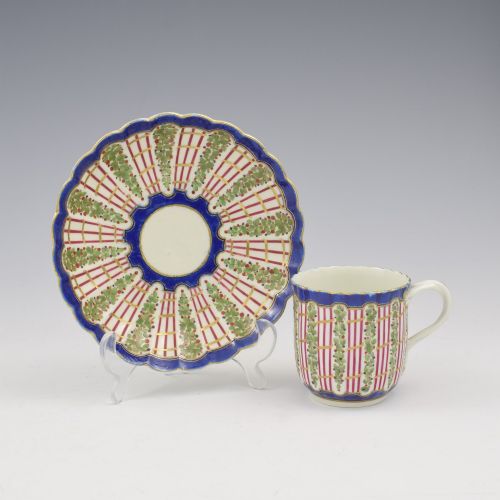
Quality reveals itself in the delicacy of the porcelain body, the crispness of the transfer print, and the precision of hand-painted brushwork on motifs like hop trellises or floral sheets. Superior sets maintain uniformity across cups, saucers, teapots, and sucriers without warping from the kiln.
The application of gilding and enamel decoration distinguishes finer services from standard wares, alongside the prestige of the manufacturing house such as Dr Wall Worcester or Minton. Completeness of surviving pieces within a service further elevates the integrity of the set.
Dr Wall Worcester·Royal Crown Derby·Minton·Spode·Coalport·Copeland·Royal Worcester·Wedgwood·Shelley·Limoges
The Antique Porcelain Tea Service Glossary
- Sucrier
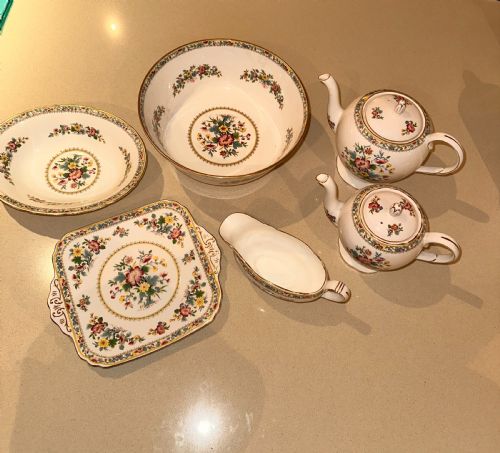
- A small lidded sugar bowl designed to accompany a teapot in a matching service. These vessels often feature delicate handles and flower head knops on the cover.
- Flow blue
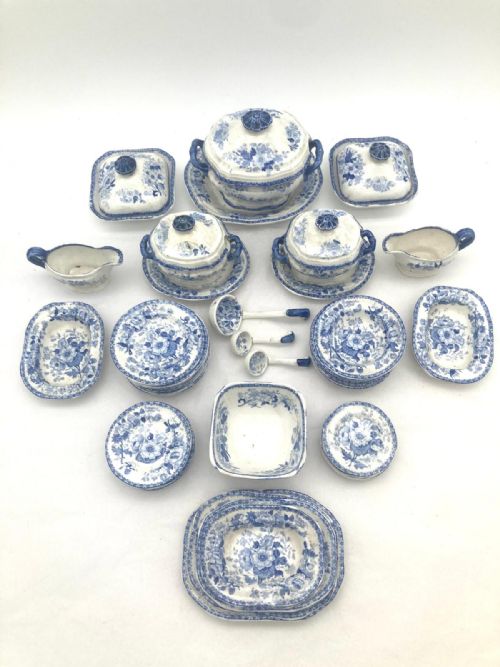
- A printing style originating in the nineteenth century where cobalt blue colour bled slightly into the white glaze during firing. This produced a misty, atmospheric depth on plates, cups, and bowls.
- Bone china
- A type of soft-paste porcelain containing bone ash, which creates a strong, translucent body. It became a staple of English ceramic production by the Victorian period.
- Kakiemon
- A style of Japanese-influenced Japanese-colour enamel decoration featuring asymmetrical motifs of birds, tigers, and floral arrangements. European factories frequently imitated this palette on tea wares.
- Imari
- A decorative style characterised by underglaze blue, iron red, and gilt highlights, heavily adapted by English potteries from Japanese exports.
Antique Porcelain Tea Service: Frequently Asked Questions
How do I care for antique porcelain?
Wash pieces gently by hand using mild detergent and warm water, avoiding abrasive sponges or modern dishwashers that can strip away historic gilding and delicate enamels.
Store cups and teapots securely with adequate padding between stacked saucers to prevent chipping along the vulnerable rims.
Were these services used daily?
Many sets served for formal afternoon gatherings and special domestic occasions rather than routine daily meals, which accounts for the high survival rate of certain decorative components.
Larger dinner and breakfast services saw heavier household employment, resulting in varying degrees of wear across individual pieces.
How do I distinguish eighteenth-century pieces?
Early pieces from periods like the eighteenth century often display characteristic paste variations, unglazed foot rims, and hand-painted underglaze blue motifs typical of Dr Wall Worcester or Chinese export wares.
Maker marks evolve from handwritten crescents and squares to impressed factory names by the Regency and Victorian eras.
Can I mix pieces from different sets?
Mixing items is historically acceptable as households frequently replenished broken components through matching patterns or complementary colour palettes like flow blue or transfer prints.
Purists prefer complete original services bearing uniform factory patterns and matching period characteristics.