


Vintage China Tea Set
A vintage china tea set brings the ceremony of the Victorian parlour or the elegance of the Art Deco table straight to the modern home.
Vintage China Tea Set
A vintage china tea set encompasses everything from grand breakfast services and afternoon tea sets for ten to intimate bachelor teasets and single trios. Buyers searching this phrase encounter forms spanning the Georgian period through the Edwardian era and into the 1930s.
The configurations vary widely across the inventory, ranging from large multi-piece dinner and tea services down to pairs of teacups and saucers. Materials such as bone china, porcelain, and ironstone predominate alongside decorative elements like gold leaf and enamel.
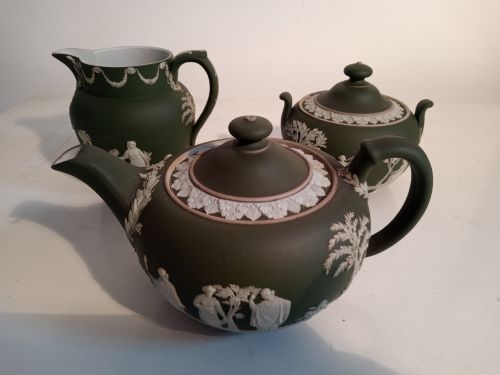
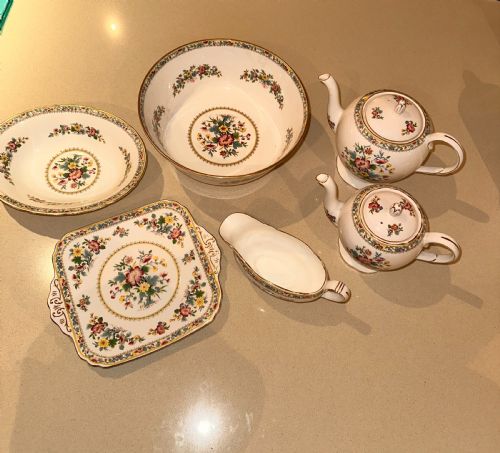
Victorian and Edwardian examples sit alongside pieces from the 1930s, offering a broad spectrum of traditional English styles, Victorian Neoclassical designs, and Art Deco patterns. Teapots, jugs, bowls, and canisters frequently accompany the core service.
Materials and technique
Makers shaped these sets from bone china, porcelain, and ironstone, building the core forms before applying intricate surface decoration. Artisans then utilised hand-painted motifs, transfer printing, and enamel colours to define patterns such as Bat Wing or floral trailing daisies.
Gilding and gold leaf finished many of the rims, handles, and details, adding the metallic lustre seen on pieces from Royal Worcester, Coalport, and Shelley. Firing techniques evolved from the 18th century onward, resulting in the refined translucency characteristic of fine antique ceramics.
Separating top from bottom
The distinction between ordinary and exceptional sets rests on the crispness of the hand-painting, the precision of the gilding, and the completeness of the service. Maker attribution plays a decisive role, with wares from established potteries commanding greater interest than unmarked pieces.
Wedgwood·Coalport·Royal Worcester·Royal Albert Crown China·Doric China·Sutherland Ware·Worcester·Masons·Copeland Spode·Gladstone Potteries
The Vintage China Tea Set Glossary
- Bone china
- A type of soft-paste porcelain containing animal bone ash, producing a strong, highly translucent ceramic body.
- Trio
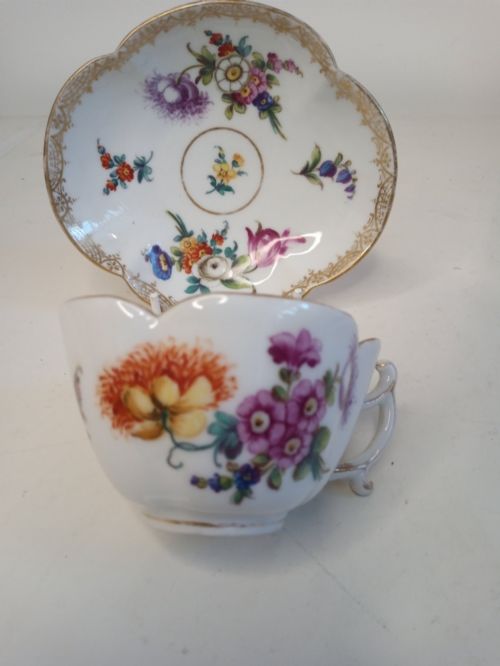
- A matched three-piece grouping consisting of a teacup, a saucer, and a corresponding tea plate.
- Gilding
- The application of gold leaf or powdered gold onto ceramic surfaces to highlight rims, handles, and patterns.
- Ironstone
- A heavy, durable type of commercial ceramic patented in the 19th century as a robust alternative to porcelain.
- Imari
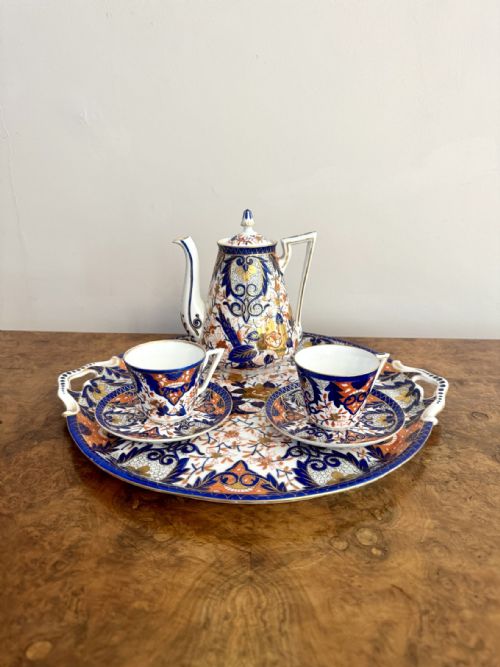
- A decorative style inspired by Japanese export wares, featuring a distinctive palette of iron red, cobalt blue, and gold.
Vintage China Tea Set: Frequently Asked Questions
How do I date a china tea set?
Dating relies on maker marks, pattern numbers stamped on the base, and stylistic cues such as Victorian floral motifs or 1930s geometric shapes. Comparing the potting style and handle form against known factory production periods helps narrow the decade.
Changes in backstamps often record shifts in ownership or the introduction of new manufacturing techniques. Consulting registry marks on 19th-century pieces reveals the exact year or month a design was officially registered.
Can I use antique tea sets daily?
Using older porcelain requires care, as hand-painted enamels and gold leafing can degrade when exposed to modern dishwashers and harsh detergents. Hand washing in warm water with mild soap preserves the surface decoration.
Thermal shock from boiling water poured directly into freezing china can crack fragile 18th or 19th-century bodies. Warming the pot or cup gently beforehand prevents sudden temperature stress.
What is a bachelor teaset?
A bachelor teaset is a compact, single-person tea service typically comprising a small teapot, sugar bowl, milk jug, and a single cup and saucer. They were designed for private use in a bedroom or study rather than for entertaining guests in a drawing room.
These smaller configurations are rarer than standard six or ten-person services because they were produced in lower quantities. Their diminutive scale makes them particularly popular for display in cabinet collections.
How are tea services and sets different?
A tea service generally refers to a comprehensive suite that includes pouring vessels such as a teapot, hot water jug, sugar basin, and milk jug alongside the cups and saucers. Simpler tea sets may only consist of cups, saucers, and plates without the matching service vessels.
Larger services often incorporated coffee pots or dinnerware components in unified patterns. The terminology reflects the original scope of the table setting.