

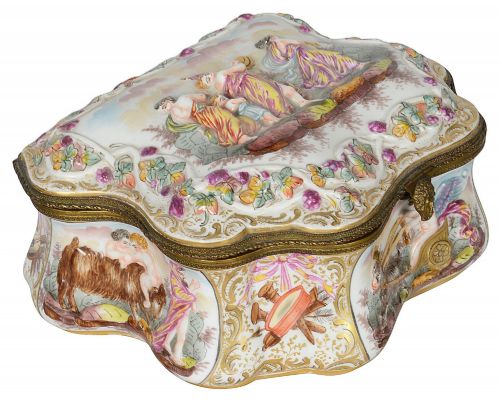


Antique Porcelain Relief
Antique porcelain relief pieces bring sculptural depth to ceramics, offering tactile surfaces shaped in low relief from the nineteenth century onward.
Antique Porcelain Relief
When you search for antique porcelain relief, you encounter three-dimensional moulded decoration on ceramic bodies ranging from delicate plaques to large display urns. The selection spans nineteenth-century European factories and Japanese ceramic traditions featuring raised motifs.
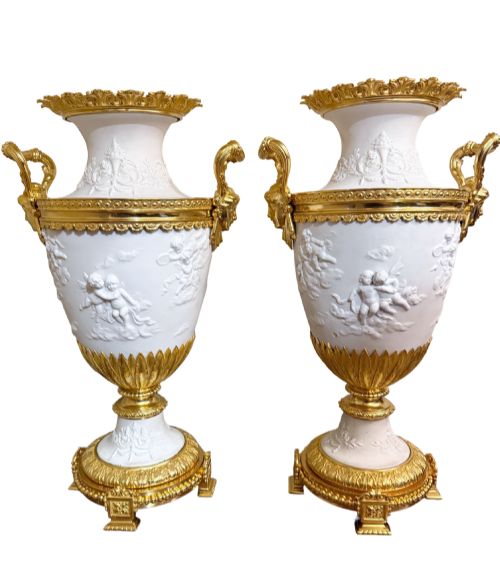
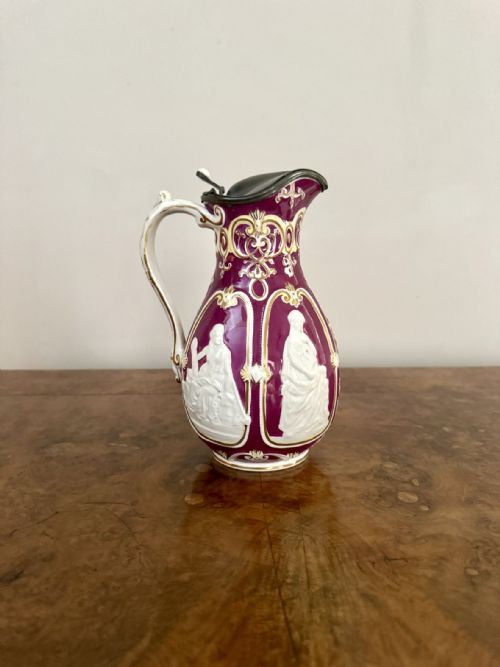
Vases, urns, table caskets and wall plaques dominate the forms available. These pieces incorporate moulded figures, floral arrangements and classical scenes standing out from the glazed background.
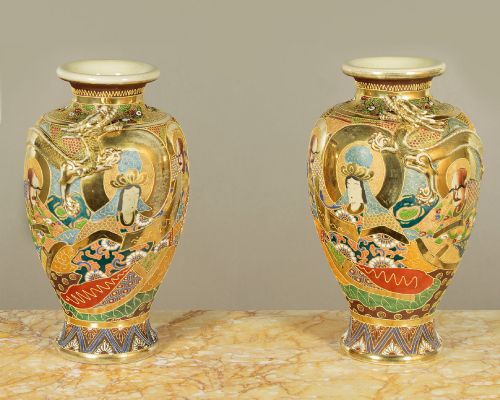
Origins include English manufacturers like Wedgwood and Mintons alongside continental producers such as Capodimonte, Royal Dux and Paris porcelain workshops. Japanese Satsuma and Imari wares also contribute moulded surface work to the category.
Materials and construction methods
Makers utilised porcelain, earthenware and Parian body pastes shaped with applied slips or moulded overlays. Pâte-sur-pâte technique involves building up layers of liquid white porcelain slip on a contrasting coloured body before firing.
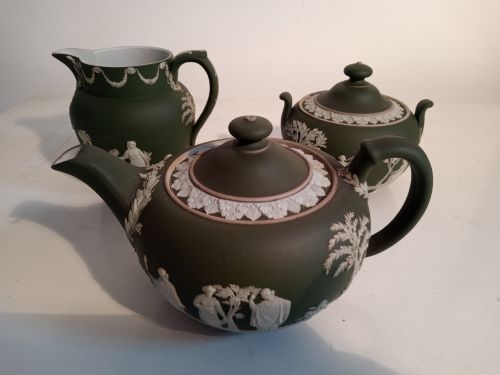
Glaze, enamel, and gold leaf finish many surfaces, while gilt bronze mounts support heavier French urns and vases. Jasperware utilises fine-grained stoneware bodies combined with contrasting applied white ceramic reliefs.
Distinctions in quality and execution
The definition and crispness of the moulded relief define the visual success of each piece. Skilled modellers achieve sharp contours and delicate undercut details that lesser press-moulded copies lack.
Hand-painting and gilding quality distinguish standard production items from masterworks produced by factories like Mintons or Sevres. The integration between the applied relief and the underlying ceramic body demonstrates technical mastery.
Sevres·Wedgwood·Royal Worcester·Mintons·Royal Dux Bohemia·Paul Dachsel Amphora
The Antique Porcelain Relief Glossary
- Bas-relief
- Low-relief sculpture where figures project only slightly from the background plane. This technique defines much of the moulded ornamentation found on nineteenth-century ceramics.
- Jasperware
- A type of fine stoneware developed by Wedgwood featuring unglazed ceramic bodies. It typically pairs a coloured matte ground with applied white classical reliefs.
- Pâte-sur-pâte
- A French term meaning paste on paste. Artists build up raised white designs using successive layers of liquid porcelain slip before high-temperature firing.
- Suiban
- A shallow Japanese ceramic basin used for displaying stones or flower arrangements. These vessels often incorporate moulded creatures or figures along the rim.
- Bisque
- Unglazed porcelain fired once to produce a matte, porous finish resembling marble. English Parian ware utilises this formula for sculptural jugs and figures.
Antique Porcelain Relief: Frequently Asked Questions
What is antique porcelain relief?
Antique porcelain relief refers to ceramic objects featuring raised decorative motifs moulded or applied onto the surface. These designs stand out physically from the background glaze or body.
Items range from decorative wall plaques and table caskets to large mantel urns. The category includes European factory productions and Japanese moulded ceramics.
How do I care for relief porcelain?
Dust these pieces gently using a soft, dry brush to prevent dirt settling in the recessed areas around the relief work. Avoid submerging items that feature delicate gilt bronze mounts or painted enamel.
Keep them away from direct sunlight and damp environments to protect the integrity of the glaze and any applied gold leaf.
How are pâte-sur-pâte pieces made?
Pâte-sur-pâte involves painting successive layers of liquid porcelain slip onto a damp, unglazed ceramic body. The artist builds up the design stroke by stroke to create translucent relief effects.
This painstaking method requires immense skill from the ceramic painter before the piece undergoes final kiln firing.
How do I identify nineteenth century pieces?
Examine the base for factory impressed marks, painted numbers, or artist signatures that correspond to historical ceramic registries. The weight, paste composition and mounting style also provide clues to the period.
Nineteenth-century items often exhibit hand-finishing details and distinct glaze formulations characteristic of Victorian and Meiji production methods.