

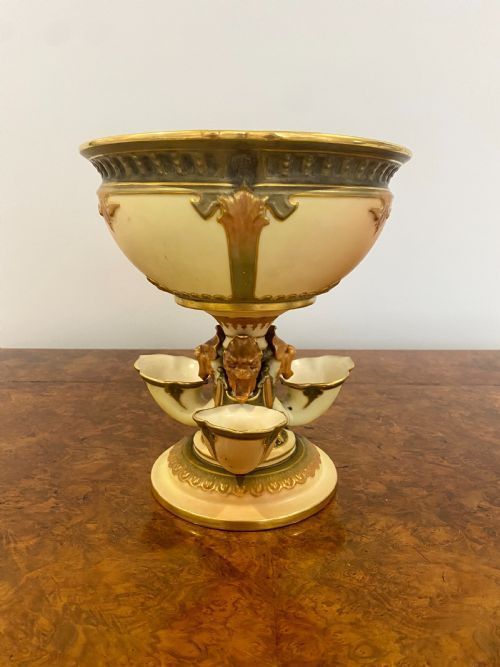
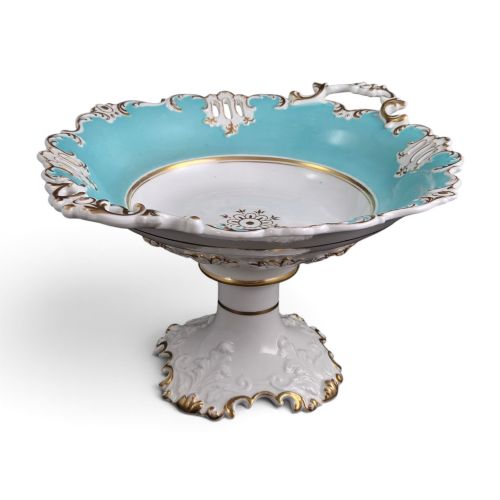
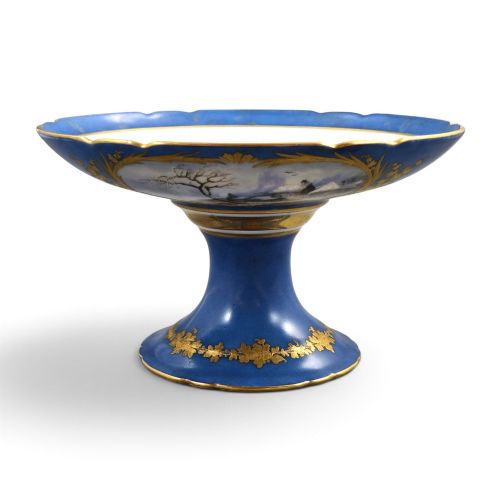
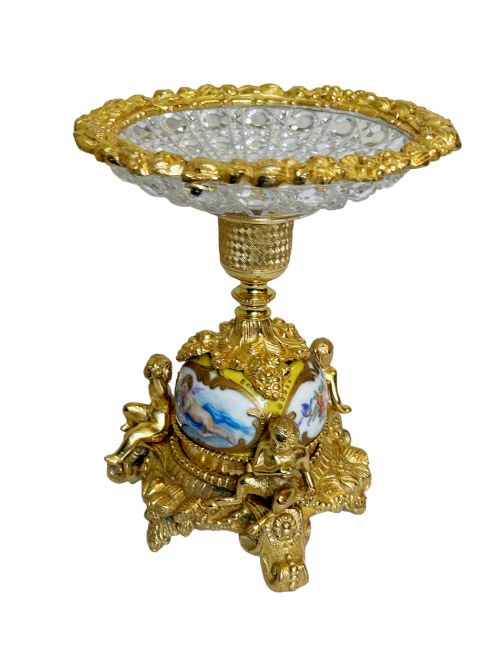
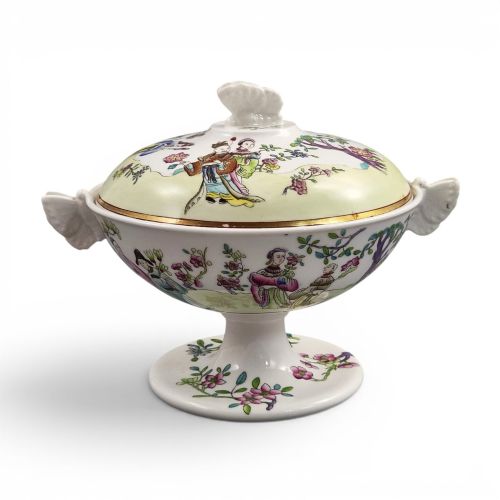
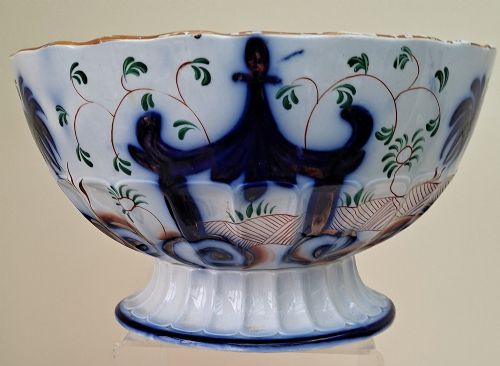
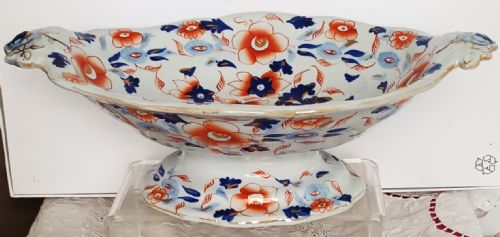


Antique Porcelain Pedestal Dish
An antique porcelain pedestal dish brings height and presence to a table, offering a raised platform for fruit or display.
Antique Porcelain Pedestal Dish
An antique porcelain pedestal dish elevates fruit, flowers, or confections above the surface of the table, giving the dining room or parlour a sense of occasion. These elevated vessels appear across several periods, including Georgian, Victorian, and Edwardian eras, reflecting changing tastes in tableware and interior display.
The form encompasses footed bowls, comports, compotes, and tazzas, often made from porcelain, bone china, or ironstone. Makers employed styles ranging from French Rococo Revival to Chinese Export, creating varied silhouettes for both formal dining and decorative display.
Many examples function as part of larger dessert services, while others stand alone as centrepieces. Their forms balance practical utility with ornamental ambition, serving as focal points within period interiors.
How they were made
Potters shaped these vessels using traditional methods, combining moulded porcelain, bone china, or ironstone bodies with applied decorative elements such as cherubs, handles, and floral reliefs. Firing in kilns produced stable white ceramic bodies ready for subsequent painting and glazing.
Makers applied hand-painted enamels, gilding, and gold leaf to accent the moulded details, often featuring intricate patterns, landscapes, or botanical studies. Some pieces incorporated bronze mounts or cut crystal alongside the ceramic components.
Antique Porcelain Pedestal Dish Retail Price Guide 2026
Typical asking prices for porcelain pedestal dish among the pieces listed under this phrase on Sellingantiques today, from the lower quarter to the upper quarter. They describe what is for sale here now, not the wider market.
Listings feature porcelain, ironstone, and bone china pieces decorated with enamel and gold leaf across the Georgian, Victorian, and Edwardian periods.
What varies in quality
The refinement of the modelling separates standard production from exceptional work, particularly where figures, handles, or applied roses display sharp detail and careful relief. Superior pieces exhibit precise hand-painting and substantial application of gold leaf or gilding.
The balance of the pedestal and the purity of the porcelain body also distinguish finer examples. Maker attribution, such as work from established factories like Coalport, Sèvres, or Royal Worcester, often reflects higher standards of design and execution.
Coalport·Spode·Limoges·Schierholz Plaue·Wedgwood·Mason·Royal Worcester·Minton
The Antique Porcelain Pedestal Dish Glossary
- Tazza
- A shallow bowl or dish mounted on a stem and foot, traditionally used for serving fruit or sweetmeats. This form provides considerable visual height on a table setting.
- Comport
- A footed dish or bowl designed for serving fruit or desserts as part of a formal service. These pieces match the style of the accompanying tablewares.
- Ironstone
- A type of heavy, durable ceramic patented in the nineteenth century to rival true porcelain. It offers strength while accepting enamels and gilding effectively.
- Gilding
- The application of gold leaf or gold powder to the surface of ceramics for decorative enrichment. This technique highlights rims, handles, and moulded motifs.
- Bone china
- A type of porcelain containing bone ash, known for its high strength, chip resistance, and milky white translucency. It allowed makers to produce delicate pedestal forms.
Antique Porcelain Pedestal Dish: Frequently Asked Questions
How were pedestal dishes used?
These dishes served as centrepieces or held fruit, sweetmeats, and desserts during formal dining.
They occupied the middle of the table to provide height and visual interest among smaller service pieces.
What is the difference between a comport and a tazza?
A comport generally refers to a footed bowl used in nineteenth-century dessert services.
A tazza describes a shallower, flat-topped dish on a pedestal, often following classical or Renaissance forms.
How do I date an antique pedestal dish?
Dating relies on factory marks, style indicators such as Rococo Revival or Edwardian motifs, and the composition of the ceramic body.
Changes in glaze and painting techniques across the Georgian and Victorian eras also help narrow the period.
Can I use antique pedestal dishes for serving food?
Many examples remain robust enough for serving dry foods or fruit during special occasions.
However, delicate gilding and historical enamels require hand washing and careful handling to prevent wear.