




Antique Porcelain Musician Figurines
These antique porcelain musician figurines bring eighteenth-century orchestras and pastoral players straight to the mantelpiece in glazed clay and enamel.
Antique Porcelain Musician Figurines
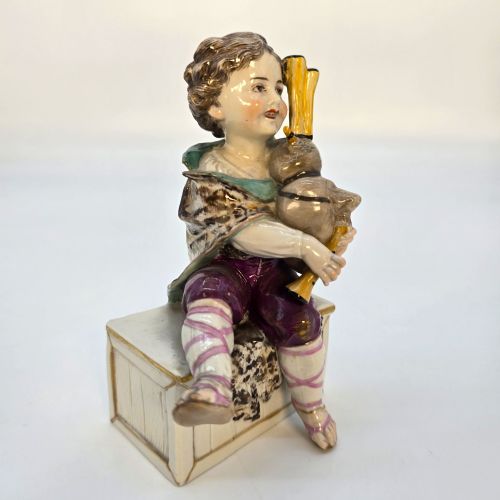
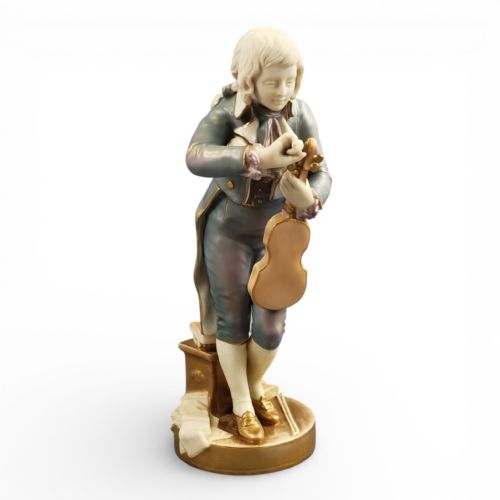
When you search for antique porcelain musician figurines, you encounter modelled figures holding instruments from bagpipes to hurdy-gurdies, alongside singers and drummers. The pieces range from eighteenth-century soft-paste figures to later nineteenth-century revivals.
You are most likely to meet eighteenth-century English and continental figures alongside larger Victorian and Edwardian factory productions. These take the form of single figures, pairs, and candlestick figures adorned with bocage foliage.
The subjects span from pastoral bagpipers and gallants to specific named models like the Piedmontese bagpiper and young Mozart. Makers across England, Germany, and France utilised these musical themes for table decoration and display.
Materials and manufacture
Potters shaped these figures using soft-paste porcelain, hard-paste porcelain, earthenware, and bisque. Early English factories like Derby and Bow relied on soft-paste bodies before hard-paste became widespread.
Surface decoration combined hand-applied enamel colours, glaze, and gilding with gold leaf. Many models featured elaborate bocage backgrounds built from applied foliage and flowers behind the central musician.
Listings span the eighteenth, nineteenth, and early twentieth centuries, featuring hard-paste porcelain, soft-paste porcelain, earthenware, and enamel.
Distinguishing quality
The presence of early factory marks, such as patch-marks on Derby bases or specific period factory stamps, separates standard decorative output from significant archival works.
Volkstedt Rudolstadt Factory·Meissen Porcelain·Derby Porcelain·Royal Worcester·Samson Paris·Fürstenberg Porcelain·Bow Porcelain·Royal Dux
The Antique Porcelain Musician Figurines Glossary
- Soft-paste porcelain
- An early artificial porcelain composition made from glass frit and white clay. It fires at lower temperatures than hard-paste and produces a warm, creamy glaze.
- Bocage
- Applied ceramic foliage and leafy backgrounds behind figures. This decorative element is common on eighteenth-century candlestick figures.
- Patch-mark
- Small unglazed spots on the underside of early figures caused by the kiln supports. These marks help date pieces from factories such as Derby.
- Bisque
- Unglazed fired porcelain with a matte, marble-like texture. It gained popularity during the nineteenth century for detailed sculptural groups.
Antique Porcelain Musician Figurines: Frequently Asked Questions
What instruments do the figures hold?
The listings show figures playing bagpipes, hurdy-gurdies, mandolins, and drums.
Some hold sheet music or sing without instruments.
How do I spot an eighteenth-century piece?
Early pieces often use soft-paste porcelain and show patch-marks on the base.
Stylistic details like rococo scrollwork also point to the eighteenth century.
Where were these figures made?
Production centres include England, Germany, and France.
Factories like Meissen, Derby, Bow, and Royal Worcester produced significant musician models.
Are these figures functional?
Many serve purely as decorative figurines for display on shelves and cabinets.
Some examples incorporate candle sockets to function as candlesticks.