



Antique Porcelain Mounted Cabinet
An antique porcelain mounted cabinet brings together rich timbers and glazed ceramic plaques to create a striking focal point in a reception room.
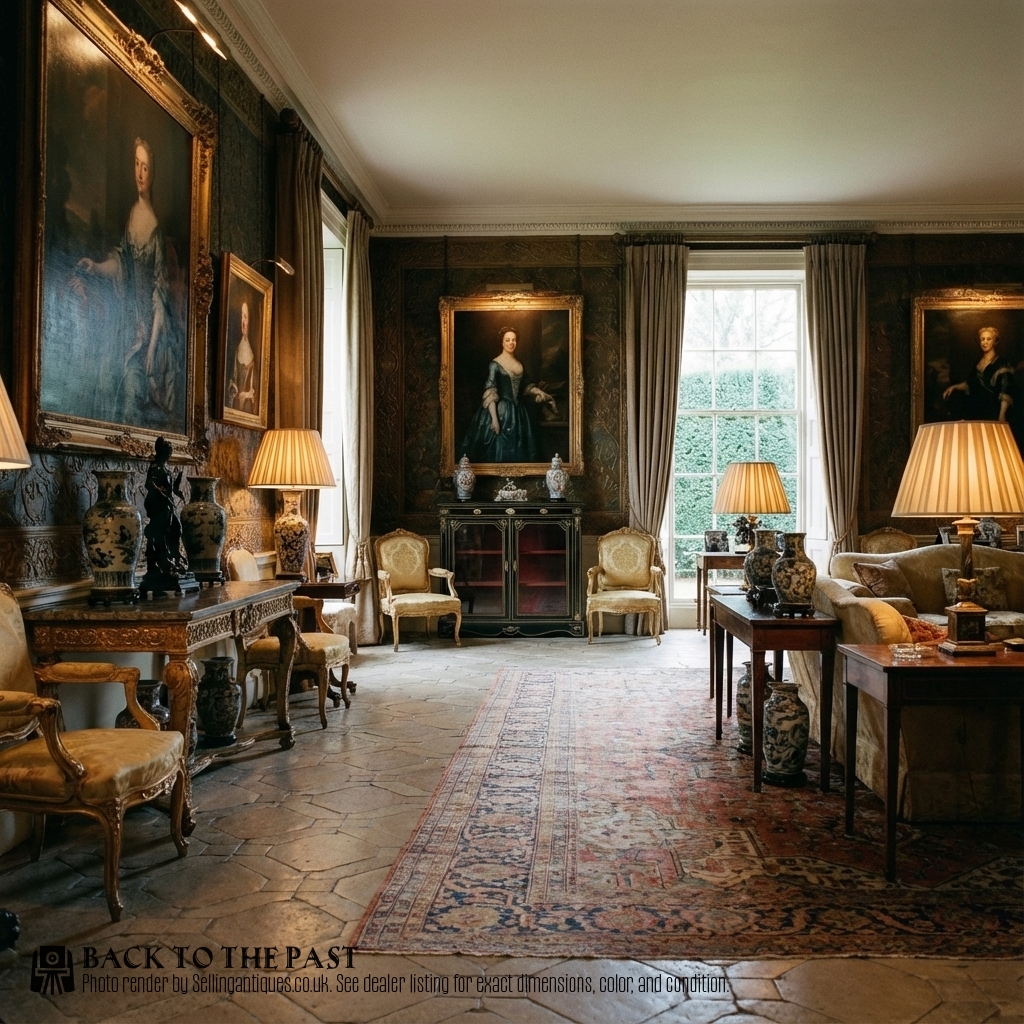
Antique Porcelain Mounted Cabinet
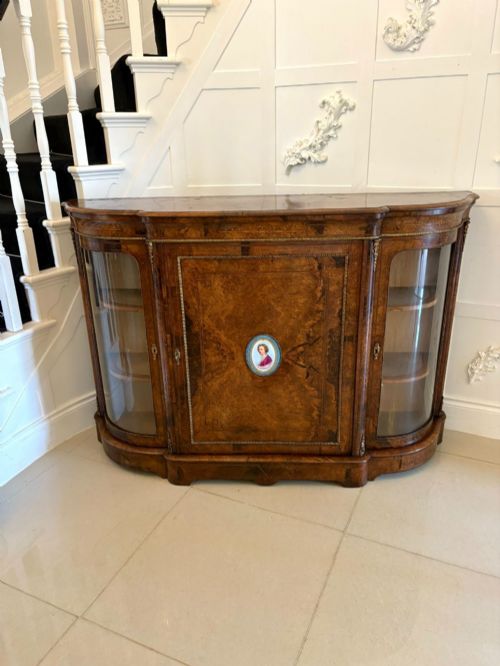
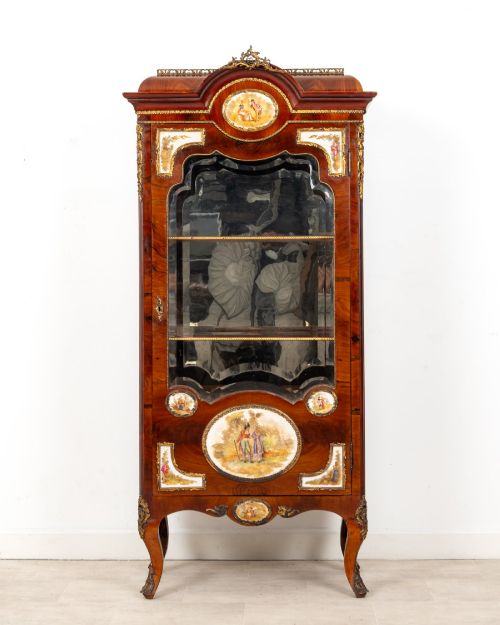
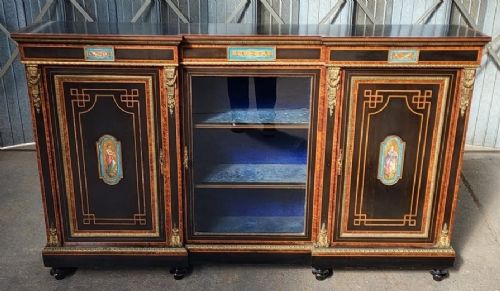
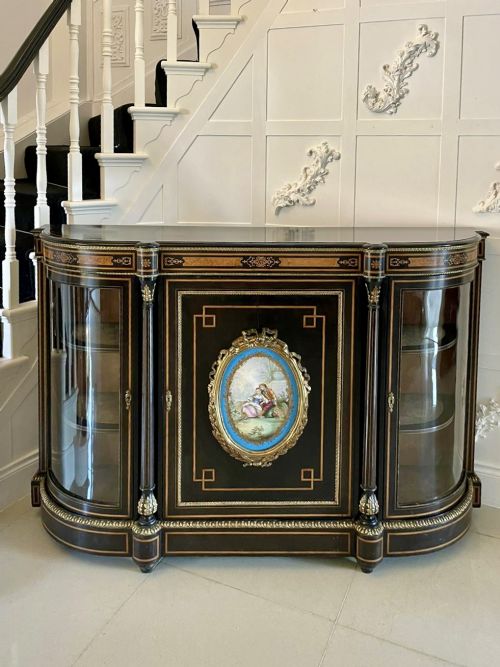
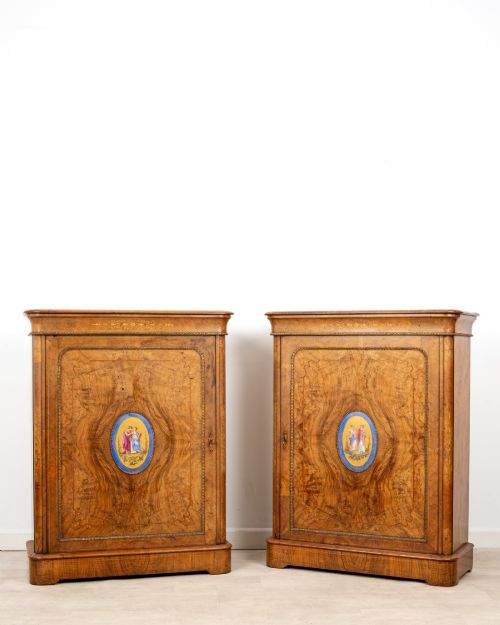
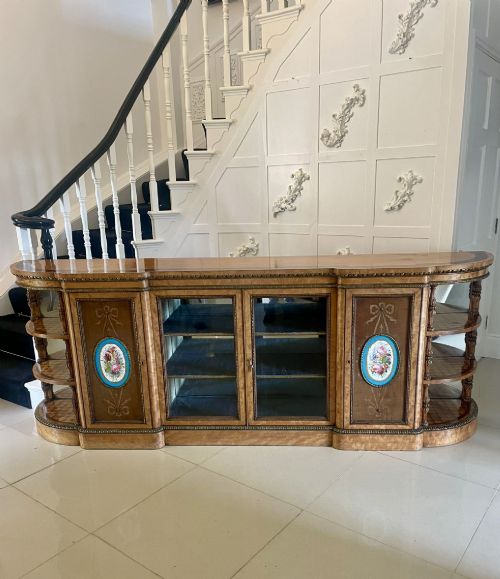
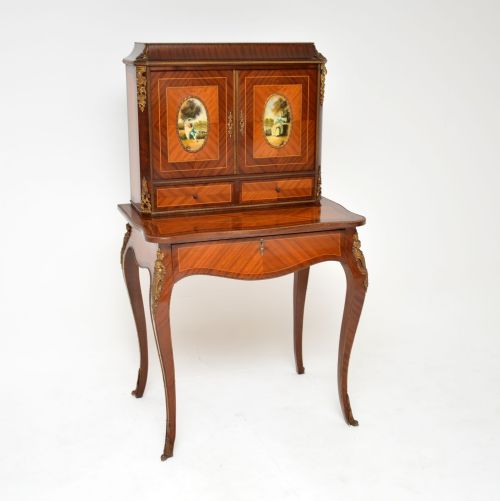
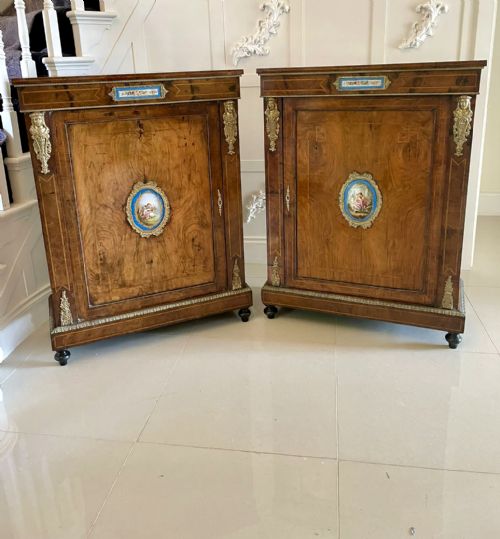
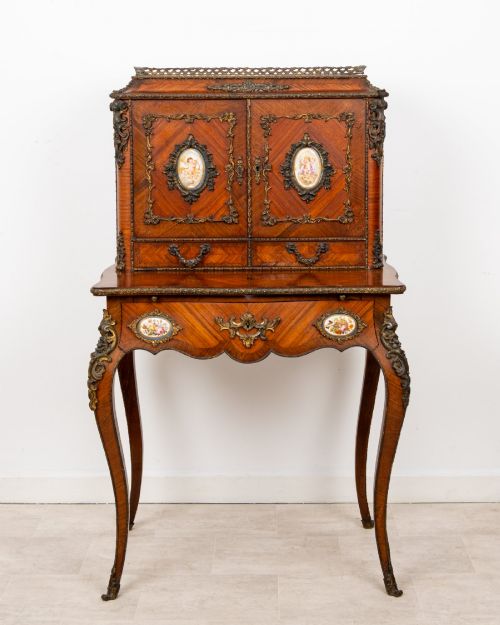
When you search for an antique porcelain mounted cabinet, you encounter disciplined nineteenth-century furniture designed to display decorative refinement alongside utility. The most common forms on this page include credenzas, pier cabinets, and writing desks produced during the Victorian and 19th-century periods.
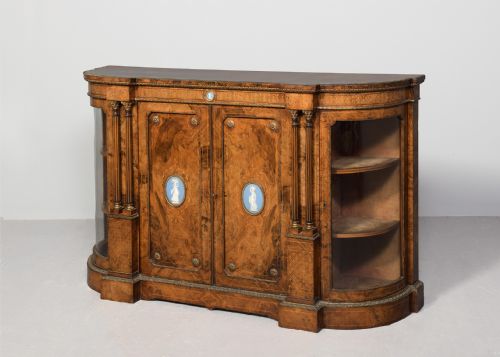
These items originate from both English workshops and French makers, spanning styles from French Rococo Revival to Louis XVI Revival and Napoleon III. Side cabinets and display cabinets often incorporate glazed doors to protect contents while highlighting the integrated ceramic plaques set into the timber.
Makers utilised various foundational woods such as burr walnut, kingwood, satinwood, and ebonised wood to frame the porcelain elements. Whether selecting a compact pier cabinet or a monumental credenza, buyers find pieces built to anchor principal rooms.
How they were made
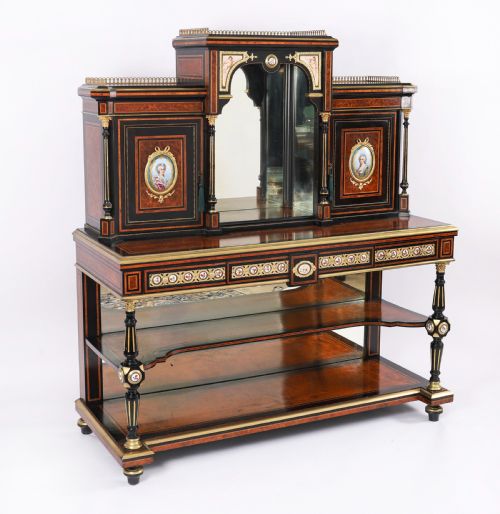
Cabinet makers built foundational carcases using dense timbers like walnut, kingwood, rosewood, and coromandel, often applying intricate marquetry or ebonising the surface. Carpenters then set porcelain plaques and Sevres style ceramic panels directly into the timber facades.
Gilt bronze and ormolu mounts frame the porcelain plaques and edge the structural corners, secured with precise brass fixings. Glass panels are integrated into doors for display cabinets and vitrines, while marble tops frequently finish the upper surfaces of French side cabinets.
Several ladies writing desks include hidden compartments behind porcelain plaques for secret correspondence.
What varies in quality
The degree of refinement in the ormolu mounts and the intricacy of the timber inlay separate standard production from exhibition quality pieces. Crisp chasing on the gilt bronze and meticulous marquetry indicate higher workshop standards during manufacture.
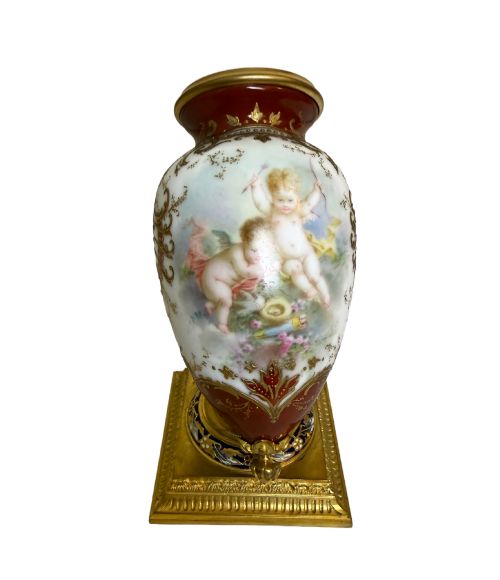
The quality of the porcelain plaques themselves, including hand-painted detail and the depth of the ceramic glaze, dictates the tier of the cabinet. Furthermore, timber selection such as figured burr walnut or richly grained kingwood alters the overall visual presence.
Lamb of Manchester
The Antique Porcelain Mounted Cabinet Glossary
- Ormolu
- Gilded bronze mounts used extensively for decorative edging and feet on 19th-century furniture. This technique added metallic contrast to dark woods and porcelain plaques.
- Credenza
- A large side cabinet often featuring three doors and glazed central display sections. These items sit low to the ground and frequently incorporate extensive marquetry.
- Pier Cabinet
- A narrow freestanding display cabinet designed to fit wall spaces between windows. They typically showcase single glazed doors and top porcelain plaques.
- Bonheur Du Jour
- A small light ladies writing desk featuring an upper cabinet section with drawers and shelves. These pieces often integrate porcelain plaques into the fall-front or superstructure.
- Marquetry
- The art of applying pieces of veneer to a structure to form decorative patterns. Cabinet makers used contrasting timbers to create floral or geometric designs.
Antique Porcelain Mounted Cabinet: Frequently Asked Questions
Where were porcelain mounted cabinets placed?
These cabinets sat principally in formal reception rooms and drawing rooms where guests gathered. Pier cabinets occupied narrow wall spaces between windows, while larger credenzas anchored main interior walls.
Writing desks and bonheur du jour variants served specific functional roles in private sitting rooms or ladies chambers. Their decorative ceramic plaques ensured they functioned as display pieces as well as practical furniture.
How do I identify French versus English pieces?
French examples often utilise kingwood, amboyna, or ebonised finishes paired with elaborate ormolu mounts and marble tops. They frequently lean towards Louis XV and Louis XVI revival styles with curved lines or delicate writing desk configurations.
English pieces more commonly employ burr walnut or satinwood with linear marquetry inlay and structured plinth bases. Victorian English workshops favoured grand credenzas and pier cabinets with substantial timber proportions.
What is the difference between a credenza and a side cabinet?
A credenza traditionally refers to a substantial low cabinet featuring three doors, where the central section often contains shelving enclosed by glass. They serve as major architectural statements within a room layout.
Side cabinets encompass a broader category of smaller or differently configured storage units without the specific three-door symmetry of a standard credenza. Both forms readily incorporate porcelain plaques and ormolu mounts.
How should I care for timber and porcelain furniture?
Maintain stable room humidity levels to protect sensitive nineteenth-century veneers such as kingwood and burr walnut from splitting. Avoid placing the cabinet in direct sunlight to preserve the colours of the timber and painted ceramic plaques.
Dust surfaces gently with a dry, soft cloth without applying modern chemical polishes that might damage the French polish or gilt bronze mounts. Professional maintenance ensures the structural integrity of the joints and glass panels remains sound.