


Antique Porcelain Centrepiece Basket
An antique porcelain centrepiece basket brings table-bound garden romance indoors through moulded ceramic flowers and woven lattice work.
Antique Porcelain Centrepiece Basket
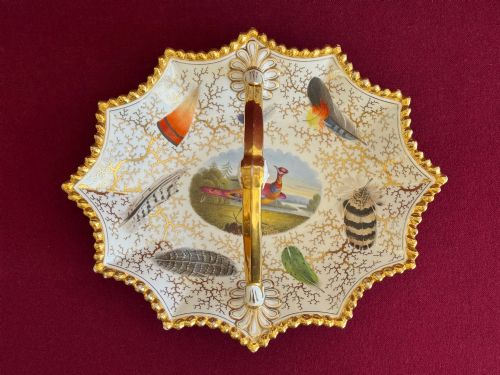
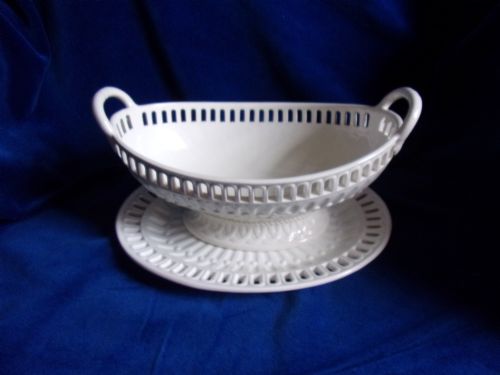
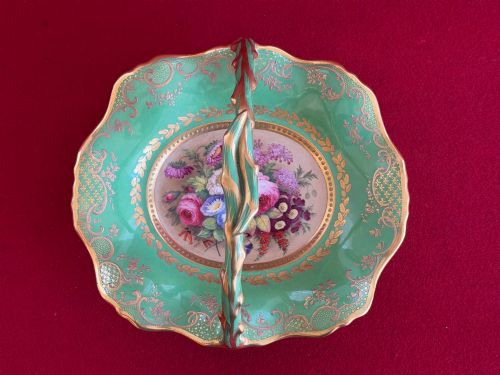
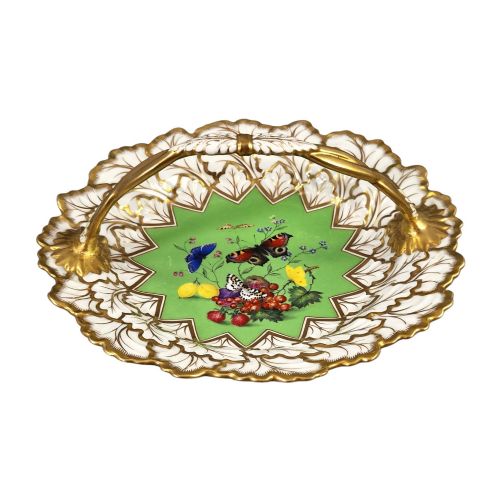
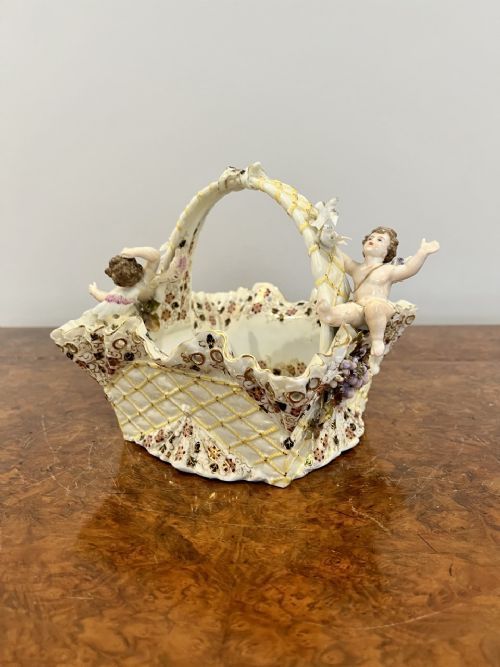
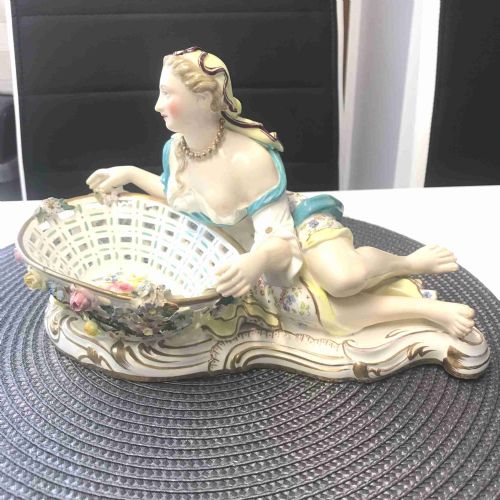
An antique porcelain centrepiece basket serves as a grand focal point for dining tables and sideboards, combining decorative openwork with sculptural figures or painted landscape views. When exploring an antique porcelain centrepiece basket, buyers frequently encounter intricate Victorian interpretations, German factory works from the nineteenth and early twentieth centuries, and Georgian period pieces from English manufactories.
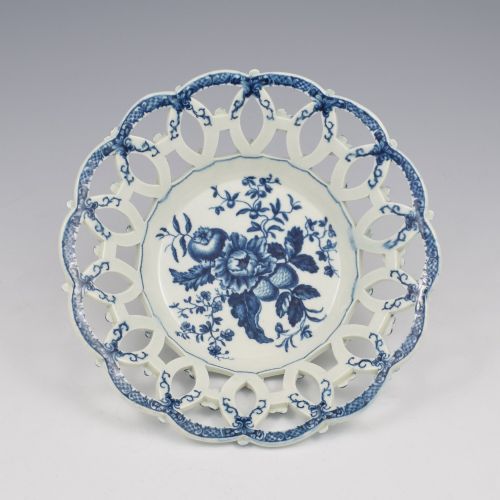
The forms span from traditional circular chestnut baskets and sweetmeat dishes to large figural centrepieces featuring cherubs and maidens. These objects often incorporate stands or covers, functioning historically to hold fruit, sweetmeats or arrangements of flowers during formal meals.
English origins are represented by Worcester and Derby productions, while continental examples hail from Meissen, Sevres and various German potteries in Thuringia and Saxony. The selection balances functional basketware with highly ornamental sculptural vessels.
How They Were Made
Makers utilised both soft-paste and hard-paste porcelain, shaping clay through moulding and hand-modelling techniques to create convincing wicker weave lattices and delicate applied flower encrustations. The openwork bodies required careful drying and firing to prevent warping before glaze application.
Decoration relied upon hand-painted enamel colours and gilding with gold leaf, often highlighting landscape views, botanical scenes or classical figures. Subsequent kiln firings permanently fused the pigments and metallic highlights to the ceramic body.
Several baskets come populated by ceramic cherubs who appear entirely unconcerned by the botanical weight they are asked to support.
What Varies in Quality
The finesse of the modelled floral encrustations and the crispness of the pierced basket weave dictate the upper tiers of quality. Finer examples display meticulous hand-painting on landscape views and expressive detailing in accompanying figural work.
The integration of sculptural elements, such as cherubs or maidens, with the main vessel body reveals the maker's skill. Superior pieces maintain balanced proportions across complex multi-part constructions like centrepieces with stands.
Derby Porcelain·Flight Barr And Barr·Rockingham Porcelain·Volkstedt Porcelain·C G Schierholz And Sohn·Royal Dux·Chamberlain Worcester·Sevres
The Antique Porcelain Centrepiece Basket Glossary
- Soft-paste porcelain
- An artificial porcelain composition fired at lower temperatures than hard-paste, producing a warm creamy body often found in early English pieces.
- Hard-paste porcelain
- A true porcelain made from kaolin and petuntse fired at high temperatures, yielding a dense white vitreous material common in continental European manufactories.
- Sweetmeat dish
- A small ceremonial dish designed for serving confectioneries, nuts or dried fruits during formal dining courses.
- Flower encrusted
- A decorative technique involving the meticulous application of individually modelled ceramic flowers and leaves across the surface of the vessel.
- Comport
- A raised decorative dish or bowl used on dining tables for displaying fruit or sweetmeats.
Antique Porcelain Centrepiece Basket: Frequently Asked Questions
What were antique porcelain baskets used for?
These pieces functioned primarily as ornamental tableware for presenting fruits, sweetmeats or small pastries during formal dining. They also served as decorative centrepieces on sideboards and tables.
Over time, their role shifted toward pure display, valued for their sculptural presence and hand-painted artistry.
How do I care for a porcelain centrepiece basket?
Display the piece away from direct sunlight and areas subject to accidental knocks, particularly protecting fragile applied floral elements and handles. Dust gently with a soft dry brush.
Avoid using water or chemical cleaners, especially where gold leaf or delicate enamel painting is present on the surface.
How can I tell English and continental porcelain apart?
English pieces from the eighteenth and early nineteenth centuries frequently utilise soft-paste ceramic bodies with softer translucency and distinct glaze characteristics. Continental works often employ hard-paste porcelain with crisper moulded details and factory marks specific to German or French houses.
Examining the style of painting and the nature of the paste helps identify the regional origin.
What is Rococo Revival style?
Rococo Revival is a nineteenth-century design movement that reinterpreted the asymmetrical scrolls, C-scrolls and naturalistic motifs of the eighteenth-century Rococo period. It embraced exuberant curves and florid ornamentation.
In porcelain, this translated to lavish gilding, pierced basketry and spirited figural additions.