


Antique Porcelain Candlestick Holder
An antique porcelain candlestick holder brings the delicate artistry of past centuries straight to the mantelpiece.
Antique Porcelain Candlestick Holder
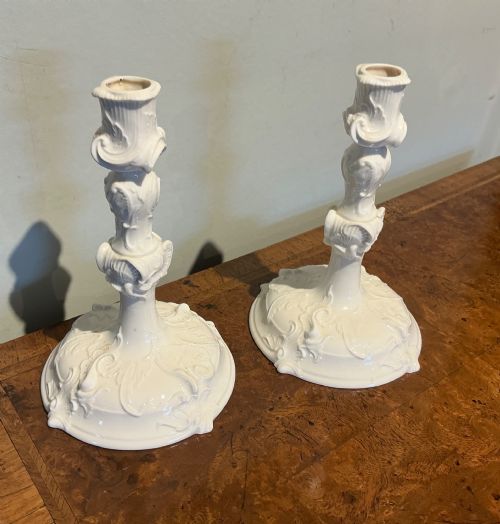
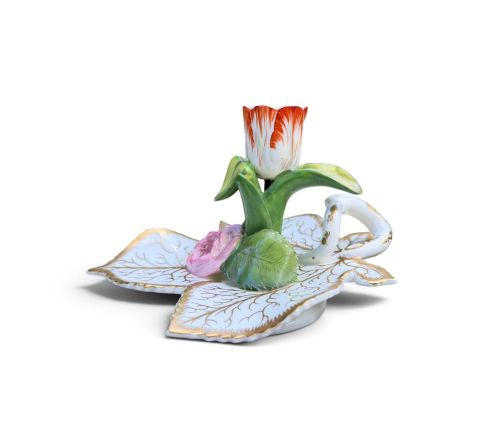
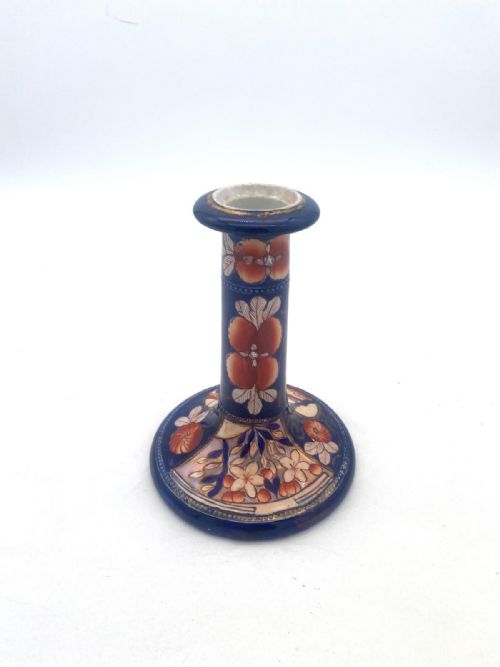
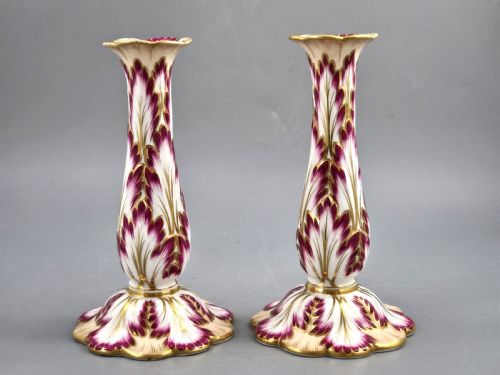
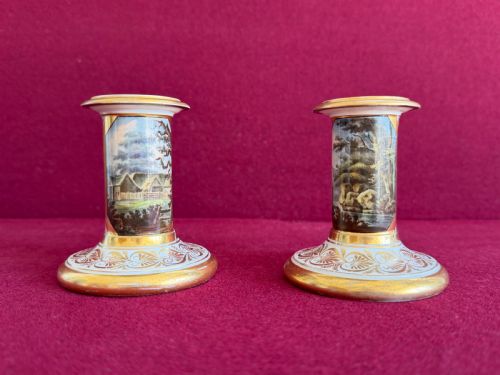
When you search for an antique porcelain candlestick holder, you encounter pieces designed to support candles while doubling as sculptural table ornaments. The selections range from Georgian chambersticks to ornate Victorian figural pieces decorated with painted motifs.
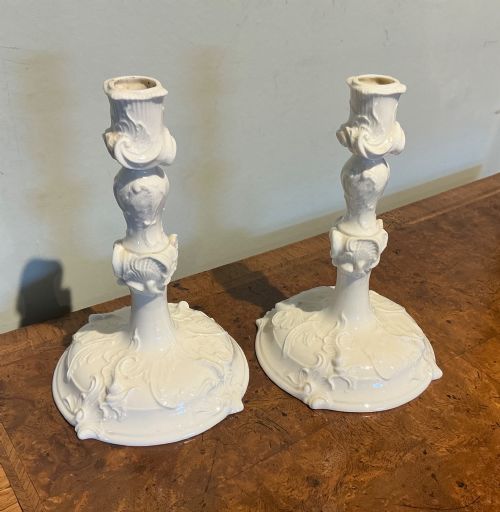
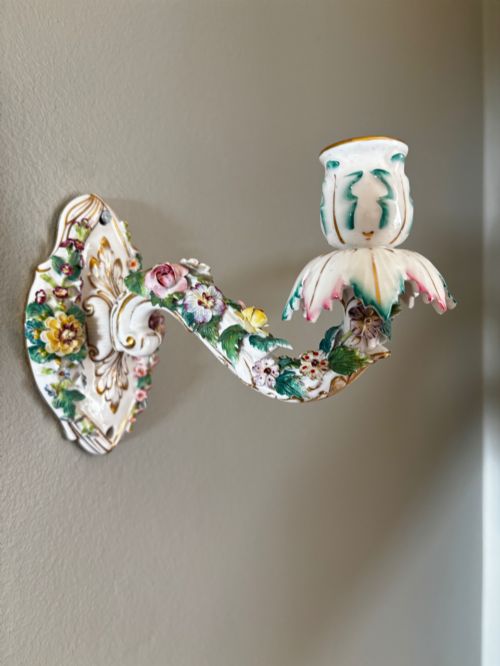
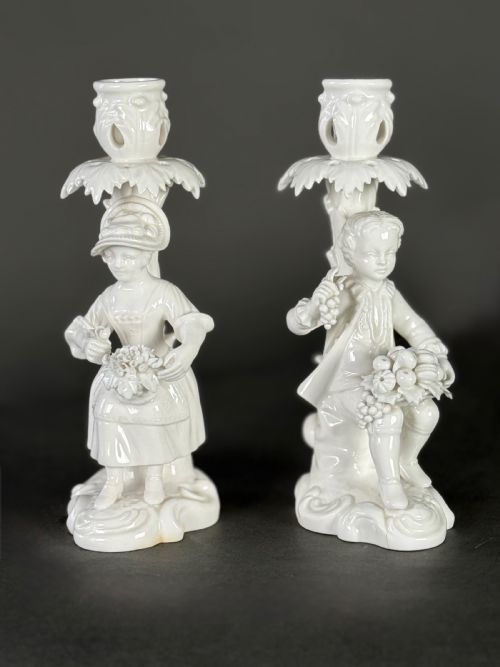
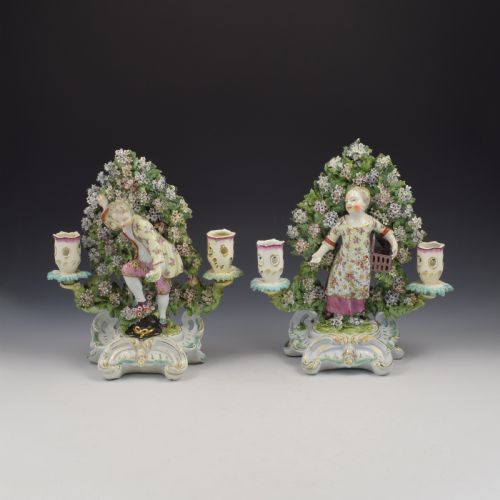
You are most likely to meet 19th-century German and English works on this page, including figures framed by floral bocage and Rococo scrollwork. Formats extend from single chambersticks to multi-armed candelabra and wall sconces.
The materials span hard-paste and soft-paste porcelain, often enriched with enamel painting, gold leaf, and ormolu mounts. Makers utilised these media to shape elaborate allegories, animals, and human figures.
Materials and methods of production
Potteries relied on moulded porcelain clay bodies, which workers then fired, glazed, and hand-painted with ceramic enamels. Many 18th- and 19th-century factories added intricate applied elements like floral bocage, leaves, and small putti figures by hand before a secondary glaze firing.
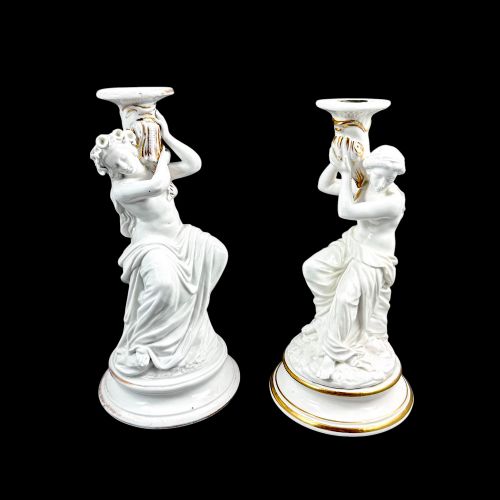
Gilding was applied using gold leaf or liquid gold highlights to accentuate the moulded Rococo or Regency scrollwork. Metal elements such as brass, gilt bronze, and ormolu mounts were frequently combined with porcelain shafts to secure stability and structural flair.
Several candlesticks transform innocent children and musicians into permanent candle-bearing hosts.
Judging the quality of porcelain candle holders
Quality rests primarily in the crispness of the porcelain moulding and the delicacy of the hand-painted enamel work. Superior examples show finely rendered facial expressions, cleanly applied floral bocage without excessive chipping, and precise gilding.
The reputation of the pottery also dictates standing, with documented works from factories like Meissen, Derby, and Chelsea holding distinct artistic merit above unsigned or generic regional output. Original pairing matters greatly in candlesticks, as matching pairs command higher regard than single survivors.
Nymphenburg·Masons Ironstone·Ridgway·Barr Flight and Barr·Meissen·Derby·Royal Worcester·Sutherland and Sons·Volkstedt·Sitzendorf·Spode·Chelsea·Minton·Helena Wolfsohn·Bow·Triebner ENS and Eckert
The Antique Porcelain Candlestick Holder Glossary
- Bocage
- Applied background foliage made of porcelain, commonly found behind figures in 18th- and 19th-century pieces. It frames the central subject with leafy branches and applied blooms.
- Chamberstick
- A low-profile candle holder fitted with a saucer base and a loop handle for carrying through a house. They were essential for lighting a path to the bedroom before electricity.
- Hard-paste porcelain
- A durable ceramic composition fired at very high temperatures, made from kaolin and petuntse. It resists scratching and possesses a bright, vitreous body.
- Ormolu
- Gilded bronze mounts used to accent or support porcelain figures and candle sockets. The technique involves applying a fine layer of gold amalgam to bronze.
- Putto
- A plump, winged child figure frequently modelled as a cherub in Rococo and Victorian decorative arts. They often populate the bases of figural candlesticks.
Antique Porcelain Candlestick Holder: Frequently Asked Questions
What is a chamberstick used for?
A chamberstick was designed for domestic illumination, allowing individuals to carry a flame safely from room to room along dark hallways. The wide saucer base caught dripping wax while the handle provided a secure grip.
Over time, these practical items evolved into decorative table objects valued for their miniature scale and detailed porcelain painting.
How do I date an antique candlestick?
Dating relies on observing paste composition, glaze characteristics, and factory marks stamped or painted underneath the base. Stylistic cues such as heavy Rococo scrollwork versus restrained Regency lines also indicate the era of production.
Comparing modelled details to documented factory archives helps narrow down the decade of manufacture.
What is porcelain bocage?
Bocage refers to the applied leafy arbours and floral thickets modelled around the backs of figural candlesticks. It provided structural support while adding a lush, naturalistic background to figures.
Because of its delicate nature, intact bocage is a focal point for collectors examining preservation.
How should I clean porcelain candle holders?
Cleaning requires gentle dusting with a soft brush to remove surface debris without harming fragile enamel or gold leaf. Water and harsh chemical cleaners should be avoided to protect old glazes and restoration work.
Keeping pieces away from direct sunlight preserves the vibrancy of the hand-painted pigments.