




Rococo Style Porcelain Candlestick
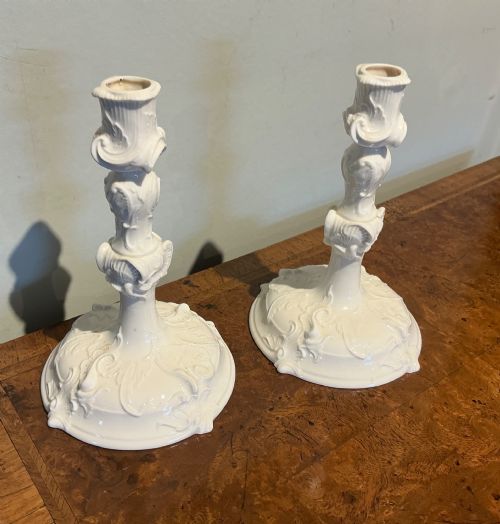
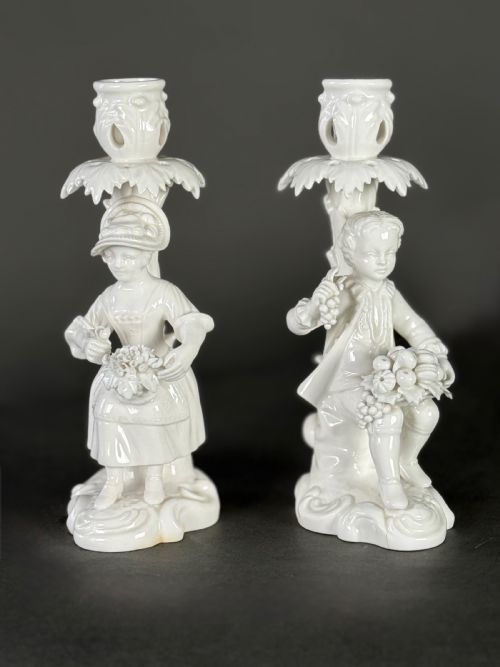
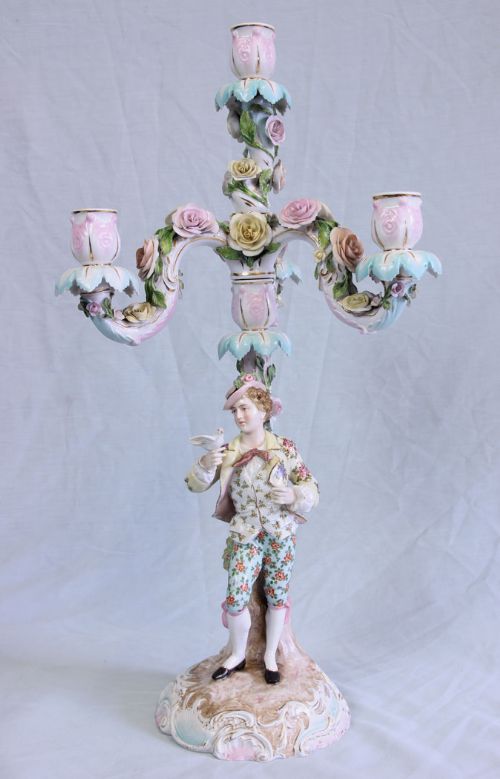
These rococo style porcelain candlestick pieces combine ornate scrollwork and figurative modelling, bringing theatrical eighteenth-century drama directly into a room.
How they were made
Makers utilised hard-paste porcelain and glazed ceramic bodies shaped through intricate moulding and hand-modelling. Artisans applied delicate enamel painting and gold leaf or gilt details by hand before firing.
Many elaborate examples integrate cast or chased ormolu and gilt bronze mounts to support the porcelain figures and candle branches. This combination required distinct craft traditions in metalwork and ceramic glazing to unite successfully.
What varies in quality
Finely modelled facial expressions, crisp detail in applied flowers, and meticulous hand-painting distinguish superior works from simpler productions. The integration between porcelain figures and their ormolu or gilt bronze armatures indicates the standard of workshop execution.
The sophistication of the scrolling base design and the balance of the asymmetrical rococo contours determine the aesthetic success of each piece. Early eighteenth-century examples display distinct potting characteristics compared to later nineteenth-century revivals.
The listings span porcelain, enamel, gold leaf, and gilt bronze materials across the eighteenth, nineteenth, and twentieth centuries.
Nymphenburg·Derby·Volkstedt·Minton·Sitzendorf·Helena Wolfsohn·Meissen·Sevres·Dresden
The Rococo Style Porcelain Candlestick Glossary
- Rococo
- An eighteenth-century style characterised by asymmetrical ornament, C-scrolls, and naturalistic shell motifs. This aesthetic forms the design foundation for the entire category.
- Blanc de Chine
- A white porcelain glaze originating in China and emulated by European factories like Derby. It highlights pure sculptural form without polychrome distraction.
- Ormolu
- Gilt bronze mounted onto or framing ceramic bodies. This technique adds structural stability and rich metallic contrast to porcelain stems.
- Hard-Paste Porcelain
- A dense ceramic composition fired at high temperatures using kaolin and petuntse. It creates a durable body capable of supporting complex, slender forms.
- Allegorical
- Representation of abstract ideas through human figures, such as seasons or music. These subjects frequently populate nineteenth-century figural candelabra bases.
Rococo Style Porcelain Candlestick: Frequently Asked Questions
How do I clean antique porcelain candlesticks?
Dust surfaces gently with a soft dry brush to protect delicate hand-modelled flower petals and gilt highlights. Avoid abrasive cleaning agents that might damage fragile enamels.
Keep moisture away from any exposed plaster or adhesive repairs within the ceramic structure. Professional conservation advice is best for stubborn accumulation.
Are these candelabra safe for regular use?
Many historical pieces serve primarily as decorative objects due to their age and intricate protruding elements. Burning candles close to antique enamel and gilt bronze risks heat damage.
If you choose to light them, monitor the flames closely and use properly fitted candles to prevent wax spilling onto the glaze.
What distinguishes German porcelain from English pieces?
German factories like Meissen and Sitzendorf often focused on elaborate multi-figure allegorical groups and complex ormolu integration. Their modelling tends toward high theatricality.
English works from Derby or Minton typically present more restrained domestic forms, including chambersticks with floral motifs and simple handled trays.
How can I tell a nineteenth-century revival piece?
Nineteenth-century revival items frequently employ brighter machine-mixed enamel palettes and distinct factory press marks beneath the glaze. The porcelain body often appears whiter and more uniformly dense.
Comparing the potting weight and base finish against documented eighteenth-century examples clarifies the manufacturing period.