
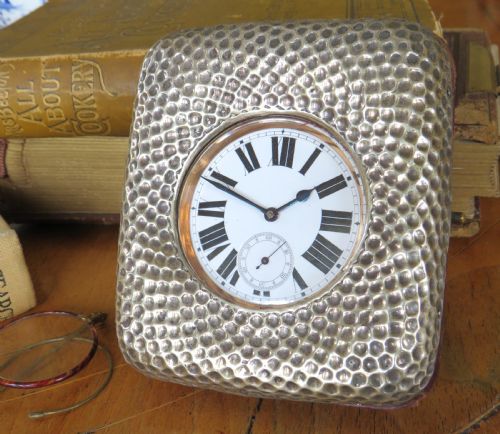


Antique Pocket Watch Clock
An antique pocket watch clock bridges personal timekeeping and domestic display, offering portable horology housed for the desk, bedside, or travel.
Antique Pocket Watch Clock
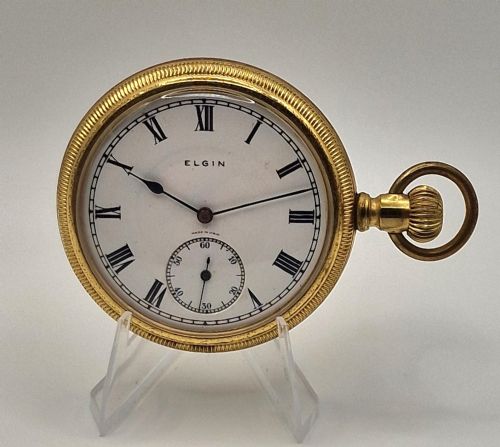
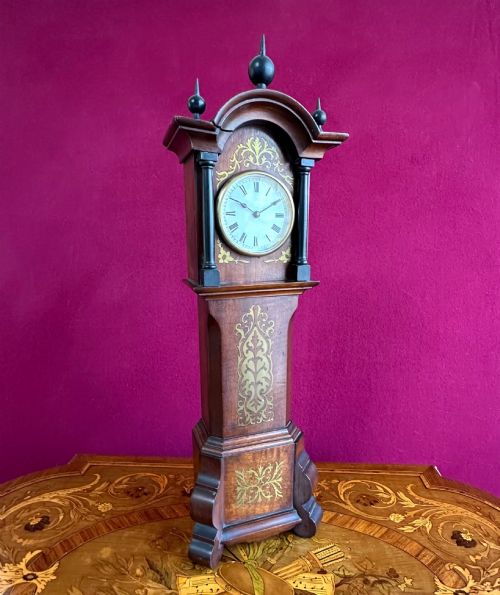
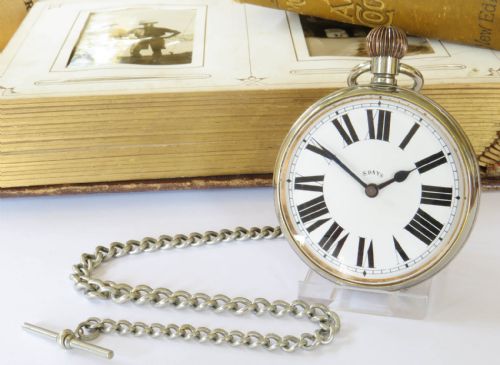
When you search for an antique pocket watch clock, you encounter portable timepieces adapted for stationary use through specialised travel cases, desk stands, or desk clocks. The pieces range from standard pocket watches displayed in miniature grandfather clock holders to large goliath pocket watches mounted in Edwardian mahogany cases.
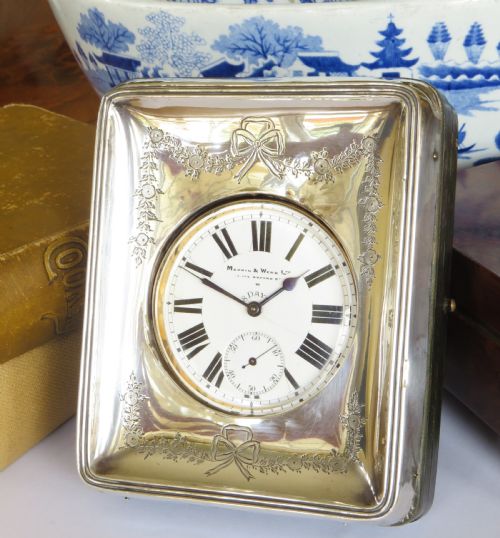
You are most likely to meet silver-cased travel clocks and goliath watches dating from around nineteen hundred to the nineteen twenties. These items combine the utility of a pocket watch with the presence of a small desk accessory, often incorporating folding sterling silver cases or enamel stands.
The selection also spans military and aviation contexts, including cockpit watches and First World War military issues alongside domestic pieces like capstan-shaped inkwells with integrated clocks. Origins stretch across the nineteenth century through the nineteen thirties, encompassing Victorian, Edwardian, and Art Deco styles.
Materials and Construction
Metals form the structural backbone of these pieces, utilising sterling silver, brass, nickel, steel, and gold filled cases alongside gilt bronze and champleve enamel. Silver is particularly common for travel clock cases, while brass and steel appear in mechanical movements and military issues.
Glass protects the dial faces, and decorative elements frequently feature guilloche enamel or inlaid mahogany and satinwood. Wood appears in treen grandfather clock holders designed to house pocket watches securely on a desk or bedside table.
Desk accessories combine timekeeping with practical items like inkwells or take the form of miniature wooden grandfather clocks designed to hold pocket watches.
Distinctions in Quality
The distinction between standard examples and superior pieces rests on the complexity of the movement, such as eight-day reserves found in goliath watches, and the sophistication of the outer housing. High-grade items display fully hallmarked silver cases, intricate champleve enamel, or specialist maker signatures.
Workmanship in the enclosing stands also defines the hierarchy, moving from simple turned wood to inlaid satinwood cases or fitted leather and silver travel folding frames. Better preserved dials show crisp enamel numerals without hairline cracks, while superior desk accessories integrate functional elements like inkwells or specialised stands.
Elgin·Mappin & Webb·Elliott Brothers·Barwise London
The Antique Pocket Watch Clock Glossary
- Goliath watch
- An oversized pocket watch, typically measuring significantly larger than standard pocket watches, designed to sit in a desk stand or travel case rather than a waistcoat pocket. These often featured eight-day movements requiring less frequent winding.
- Travel clock
- A portable timepiece housed in a protective case, often folding or hinged, allowing it to be safely transported and stood upright on a bedside table or desk.
- Guilloche enamel
- A decorative technique where a precise, intricate pattern is mechanically engraved beneath a translucent layer of enamel, adding depth and colour to watch cases or clock stands.
- Champleve enamel
- A method where troughs or cells are sunk into the surface of a metal object and filled with enamel powder before being fired, creating flush coloured designs.
- Treen
- Small handmade wooden household objects, ranging from pocket watch holders to miniature grandfather clock shapes, valued for their material and vernacular craftsmanship.
Antique Pocket Watch Clock: Frequently Asked Questions
What is a goliath pocket watch?
A goliath watch is a substantially larger version of the standard pocket watch, engineered to provide extended power reserves, often running for eight days on a single wind. Because of their weight and size, they were rarely carried in pockets and instead spent their lives in dedicated desk stands or travel cases.
These timepieces frequently feature bold dials and robust movements, making them practical for desktop use while retaining the escapement and face layout of smaller pocket watches.
How were travel clocks used?
Travel clocks provided portable timekeeping for journeys, allowing travellers to maintain a reliable schedule in hotels and temporary quarters. They were typically housed in folding silver, leather, or wood cases that protected the glass and dial during transit and opened to form a stable desk stand.
Many examples include fitted presentation inscriptions or hallmarked silver frames, indicating they served as gifts for significant occasions or personal milestones during the Edwardian and interwar periods.
What are pocket watch holders?
Pocket watch holders are small desk or bedside stands designed to display a pocket watch vertically so the dial can be read easily. They appear in various forms, including miniature wooden grandfather clocks and treen frames.
These accessories allowed owners to utilise a standard pocket watch as a stationary desk clock when not being worn, combining decorative carved wood or inlaid satinwood with practical utility.
How do I date an antique clock?
Dating these pieces involves examining hallmarks on silver cases, maker signatures on the dial or movement, and the prevailing stylistic traits of the housing. Hallmarks stamped into sterling silver travel cases provide exact assay office years, while trade signatures link items to specific retailers or workshops.
Stylistic shifts, such as the transition from Victorian heavy ornamentation to Edwardian restraint or Art Deco geometry, further narrow the period of manufacture alongside any accompanying presentation inscriptions.