


Antique Pleated Sewing Table
An antique pleated sewing table combines neat domestic utility with refined cabinetmaking, offering a tidy compartment for needlework.
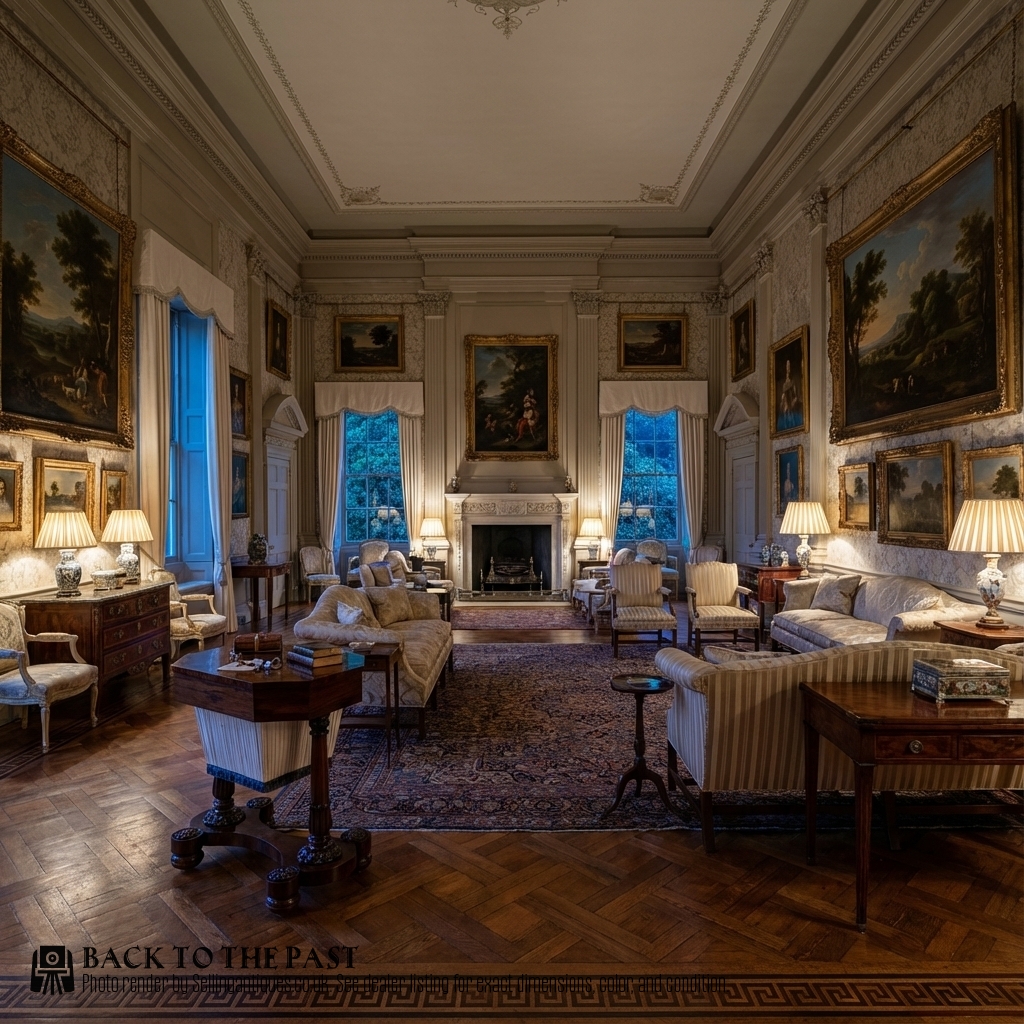
Antique Pleated Sewing Table
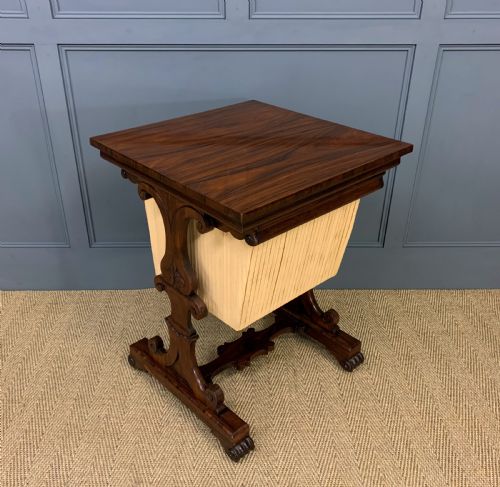
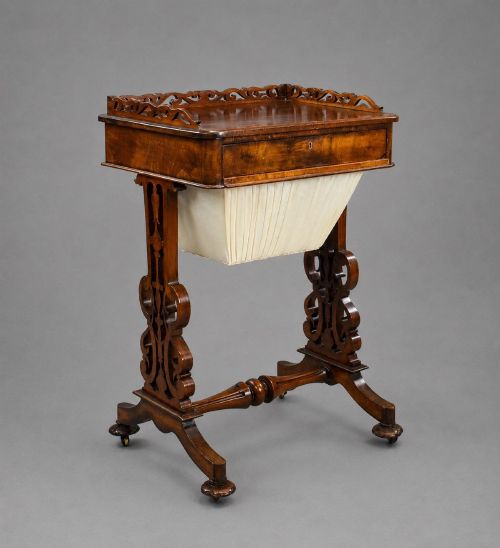
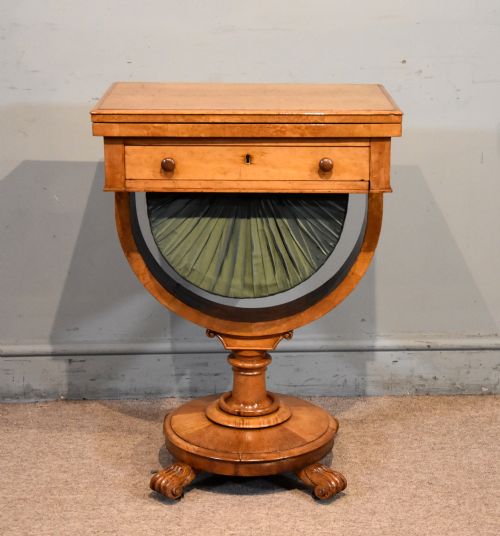
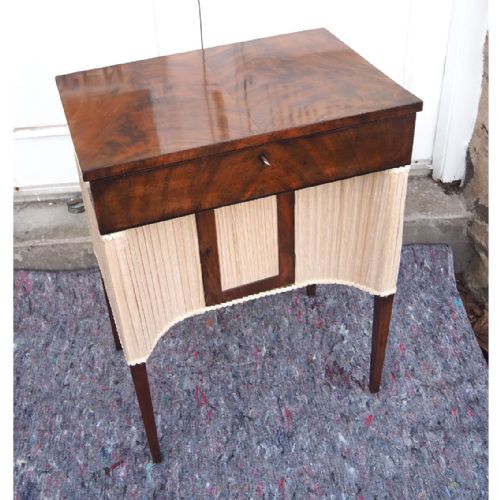
An antique pleated sewing table serves as a functional piece of furniture designed for holding needlework, threads, and small accessories. Buyers seeking an antique pleated sewing table will encounter various forms across this selection, primarily described as work tables, sewing tables, and occasional tables.
The surviving pieces span multiple nineteenth-century and early twentieth-century periods, including Regency, Victorian, Edwardian, and Georgian eras. These tables frequently integrate specialised compartments or hanging fabric bags, often pleated in silk or cotton, to store sewing materials beneath the main surface.
Makers utilised diverse timber forms, ranging from mahogany and rosewood to burr walnut and satinwood. Such pieces bridge the gap between practical domestic objects and decorative furniture suitable for drawing rooms and dressing areas.
How they were made
Cabinetmakers constructed these tables using solid timbers and rich veneers such as mahogany, rosewood, burr walnut, and satinwood. Surfaces often featured brass inlay, fine stringing, and figured wood grains to enhance the visual appeal of the primary structure.
The characteristic hanging compartments relied on textiles like silk and fabric, gathered into pleats beneath the wooden carcase. Joinery techniques varied from drop-leaf mechanisms to pedestal bases and fitted interiors containing compartments for spools and tools.
Some sewing tables secretly doubled as games boards, proving that Victorian needlework required occasional tactical distraction.
What varies in quality
The standard of execution depends heavily on the choice of timber veneer and the precision of decorative details such as brass inlay and figuration. Pieces utilising burr walnut, figured mahogany, or satinwood display superior grain selection compared to simpler domestic examples.
Construction complexity also dictates distinction, separating straightforward side tables from elaborate multi-functional pieces that combine sewing, games, and lamp table capabilities. The neatness of the pleated fabric bag attachment and the integrity of the internal compartments further mark the refinement of the piece.
GILLOWS of LANCASTER
The Antique Pleated Sewing Table Glossary
- Work table
- A small multi-purpose piece of furniture designed for needlework and domestic tasks. These tables typically feature a top drawer or hanging bag to contain sewing gear.
- Regency
- A British design period spanning the early nineteenth century. Furniture from this era often incorporates classical revival motifs, brass inlays, and rosewood or mahogany veneers.
- Burr walnut
- A highly figured wood veneer harvested from the burl growths of walnut trees. It provides intricate, swirling patterns prized by cabinetmakers for tabletops.
- Drop-leaf
- A table design featuring hinged flaps on the sides that can be raised to extend the surface area or lowered when space is limited.
- Satinwood
- A luminous hardwood with a yellowish sheen used extensively in fine cabinetmaking during the eighteenth and nineteenth centuries.
Antique Pleated Sewing Table: Frequently Asked Questions
What is a pleated sewing table used for?
These tables were historically used by women to keep needlework, threads, and small accessories organised during domestic leisure hours.
The hanging fabric bag beneath the table provided a soft, accessible receptacle for ongoing sewing projects while keeping the main tabletop clear.
How do I identify a Regency sewing table?
Regency examples typically date from the early nineteenth century and feature dark timbers like rosewood or mahogany. Look for classical proportions, brass inlay, and pedestal bases.
Many incorporate clever internal fittings or games boards alongside the primary sewing compartment.
Where should I place an antique work table today?
An antique work table functions exceptionally well as a bedside table, a side table beside a sofa, or a small lamp table.
Their compact footprints and compartmentalized storage make them remarkably practical for modern living spaces.
What woods were commonly used for these tables?
Cabinetmakers favored dense, attractive hardwoods including mahogany, rosewood, walnut, and satinwood. Many pieces also highlight decorative veneers like burr walnut or figured mahogany.
Inlays of brass or contrasting light woods frequently accent the primary timber.