




Dark Wood Sewing Desk
A dark wood sewing desk offers functional storage alongside period craftsmanship, making it a versatile addition to any room.
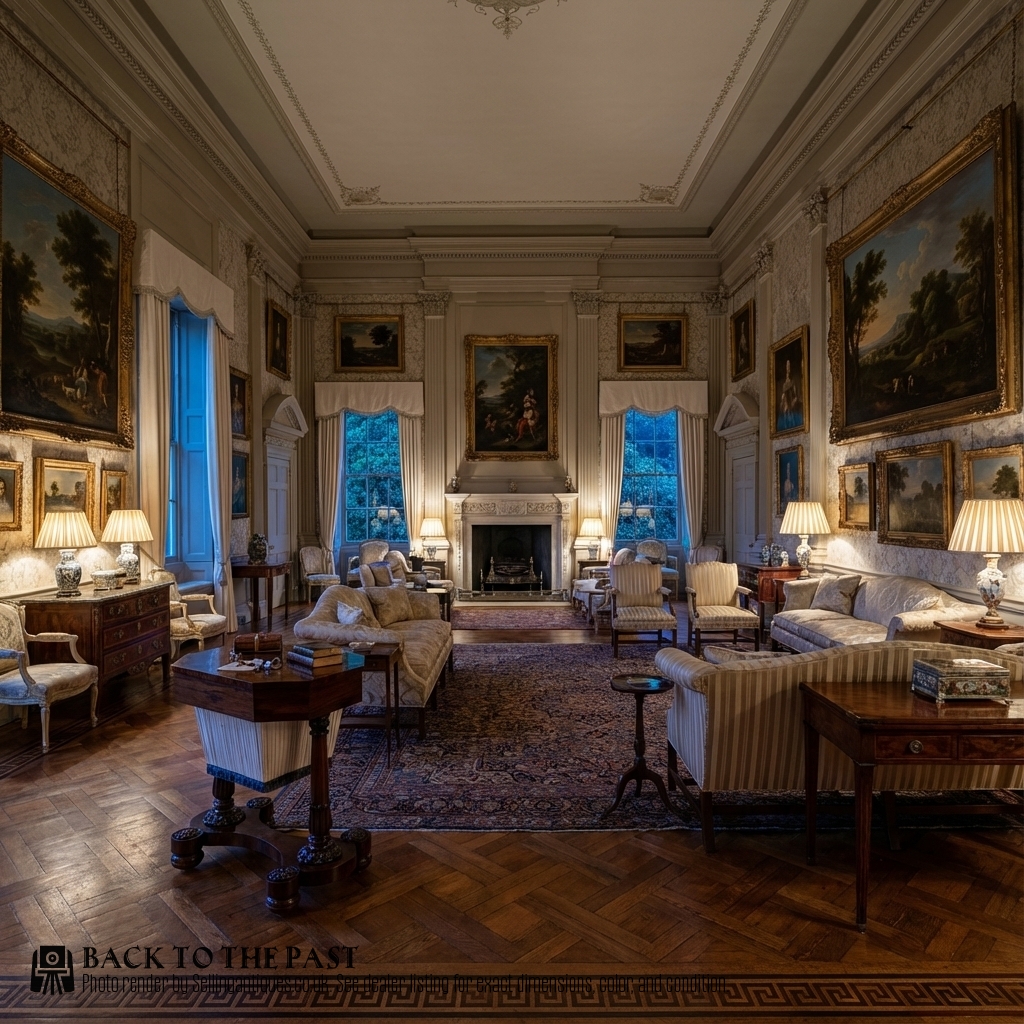
Dark Wood Sewing Desk
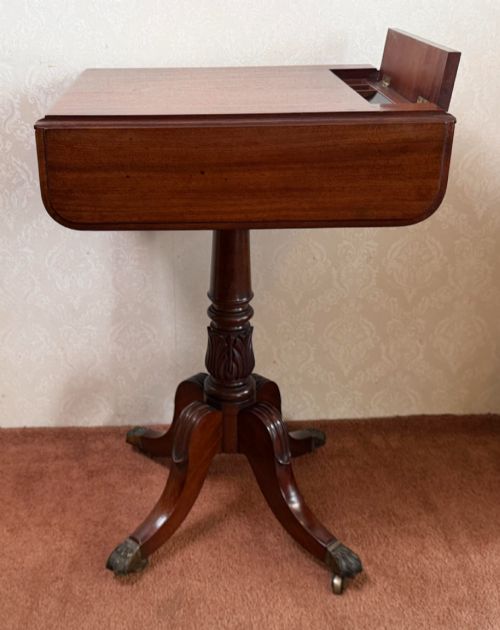
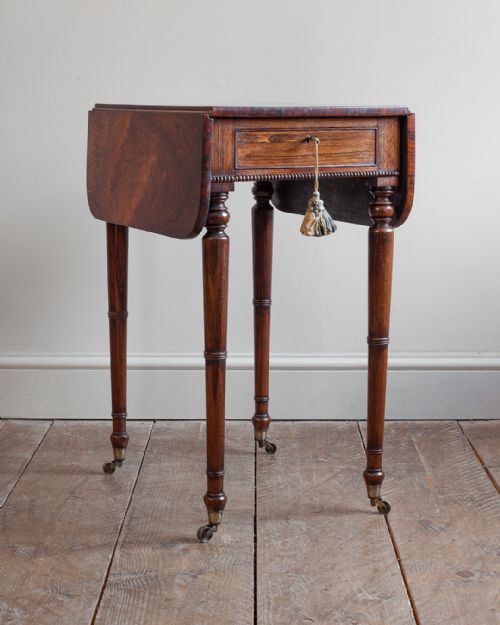
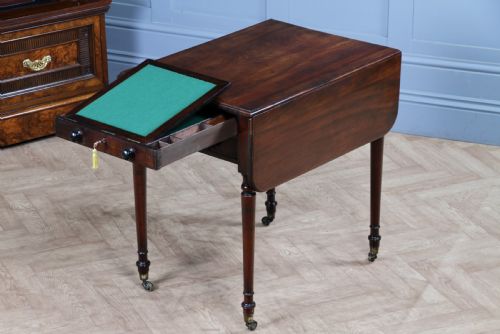
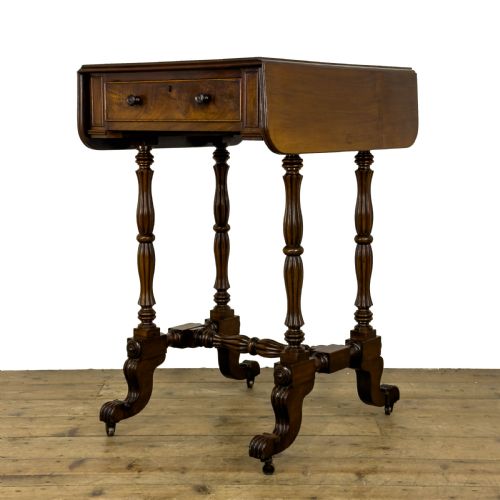
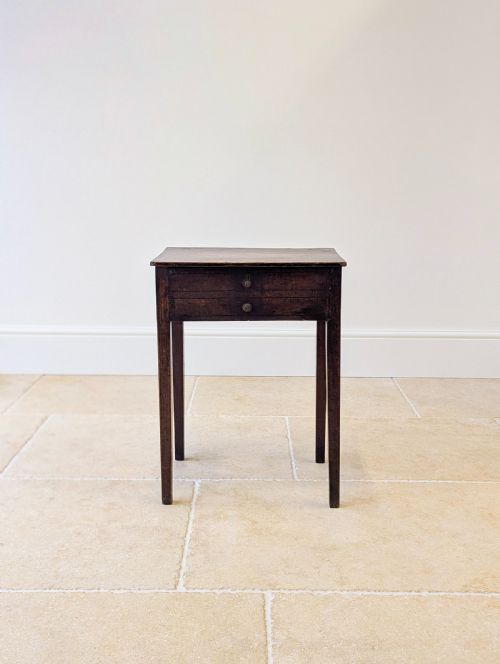
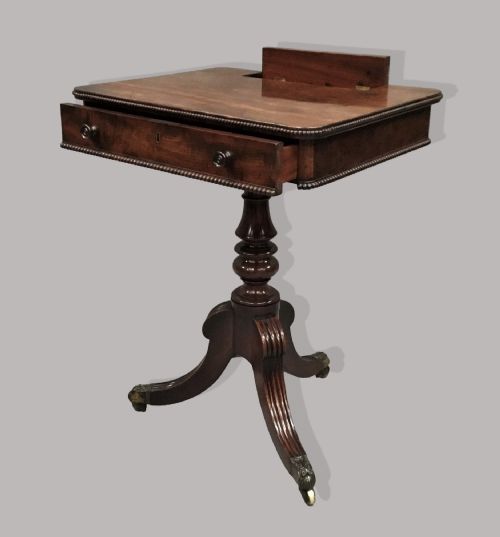
A dark wood sewing desk encompasses various forms designed for needlework and small writing tasks, predominantly appearing as work tables and sewing tables from the Georgian, Regency, and Victorian periods. These pieces frequently feature drop leaves and fitted compartments intended for threads, needles, and tools.
The versions most commonly met on this page include mahogany and rosewood examples from the nineteenth century, often incorporating folding tops or fabric bags suspended beneath. Alongside dedicated sewing tables, related forms such as writing tables and occasional tables demonstrate the overlapping utility of these compact household items.
How they were made
Cabinet makers utilised dense hardwoods such as mahogany and rosewood, applying skilled joinery to construct drop leaves, turned legs, and dovetailed drawers. Finer examples integrate brass hardware and decorative inlays alongside baize or fabric linings within the internal compartments.
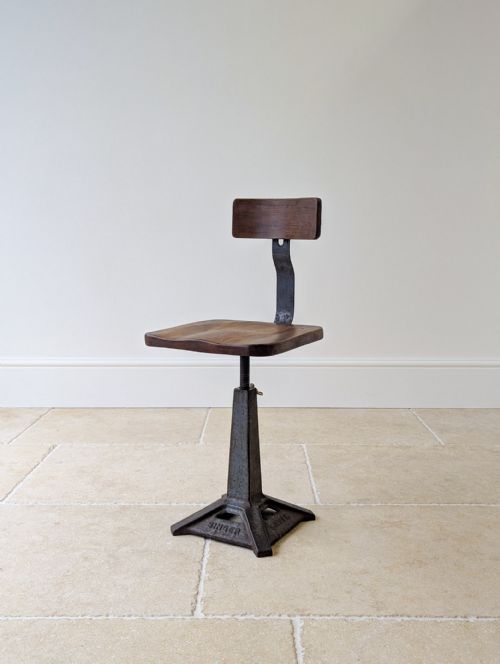
Structural support often relied on solid frames, while specialised elements like metamorphic mechanisms or drop leaves required precise hinge placement. Industrial iterations from the early twentieth century combined cast iron and elm, reflecting shifts in manufacturing techniques while retaining functional utility.
Dark Wood Sewing Desk Retail Price Guide 2026
Typical asking prices for dark wood sewing desk among the pieces listed under this phrase on Sellingantiques today, from the lower quarter to the upper quarter. They describe what is for sale here now, not the wider market.
Some Victorian sewing tables hide deep silk bags beneath their drawers, designed to catch stray balls of wool.
What varies in quality
The distinction between standard examples and superior pieces rests upon the choice of timber and the refinement of the internal fittings. Dense, well-figured rosewood or mahogany paired with intricate secondary veneers elevates a piece above simpler utilitarian versions.
Design complexity also defines the range, from straightforward drop-leaf tables to sophisticated metamorphic desks with integrated writing surfaces and fitted drawers. The precision of the joinery and the original integrity of the hardware further separate finer workshop output from more basic manufacture.
Gillow of Lancaster·Gillow
The Dark Wood Sewing Desk Glossary
- Work table
- A small multifunctional table equipped with drawers or a fabric bag for holding sewing materials and needlework. These pieces gained popularity during the Georgian and Victorian eras for domestic use.
- Pembroke table
- A small rectangular table featuring two hinged drop leaves on opposite sides. They often include a single drawer and were easily moved around a room.
- Secretaire
- A desk or cabinet containing a drawer that pulls down to reveal a writing surface and small pigeonholes. This combines writing functionality with enclosed storage.
- Poudreuse
- A French dressing table fitted with mirrors and compartments for cosmetics and personal items. Victorian examples sometimes overlap in form with work tables.
- Baize
- A coarse woollen material resembling felt, frequently used to line the interior compartments of sewing desks and the writing surfaces of tables. It provided a soft surface for delicate objects.
Dark Wood Sewing Desk: Frequently Asked Questions
What is a dark wood sewing desk used for?
These tables served primarily as domestic furniture for holding sewing supplies, threads, and needlework tools during the Georgian and Victorian periods. Many designs incorporated internal compartments, drop leaves, and suspended fabric bags to keep materials organised.
Over time, their compact proportions and fitted drawers made them equally suitable for light writing or as occasional accent tables in a sitting room.
How do I identify a Victorian sewing table?
Victorian examples typically feature dark hardwoods like rosewood or mahogany, often combined with turned legs, brass hardware, and fabric or baize-lined interior wells. Stylistic details range from plain classical forms to heavier revival designs influenced by French tastes.
They frequently include a lockable drawer or a hanging fabric basket beneath the main body to hold sewing paraphernalia.
What is the difference between a work table and a sewing table?
In historical terminology, work tables and sewing tables largely overlap, both describing small multi-purpose tables equipped for domestic handicrafts. A work table might emphasise general utility and writing, while a sewing table specifically focuses on compartmentalized storage for threads and needles.
Both forms commonly utilise drop leaves to expand the available surface area when needed during daytime pursuits.
How do I live with a antique sewing desk?
These compact pieces fit easily beside a sofa or chair, functioning effectively as lamp tables or small desks in modern interiors. The internal compartments remain practical for storing small modern items like stationery, craft supplies, or keys.
Placing the furniture away from direct heat sources and sunlight protects the polished hardwood surfaces and any original fabric linings from fading or warping.